Book review: St Paul: The Misunderstood Apostle
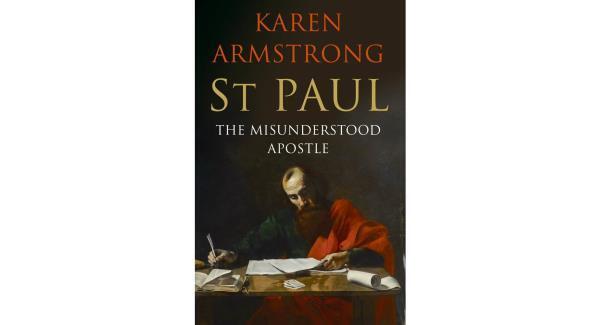
SAINT PAUL is a favourite target of feminists — they regard him, not unreasonably, as the man who sowed the seeds of misogyny in the early Church, a misogyny that was to take root and blossom down the centuries, and persists today, most obviously in the exclusion of women from positions of power and authority, particularly in the Catholic Church.
In support of their case, feminists invariably cite First Timothy 2: 11-15: “Let a woman learn in silence with all submission. For I do not allow a woman to teach, or to exercise authority over men; but she is to keep quiet. For Adam was formed first, then Eve. And Adam was not deceived, but the woman was deceived and was in sin. Yet women will be saved by childbearing, if they continue in faith and love and holiness with modesty.”
One scripture scholar, in a commentary on this passage from First Timothy, wrote: “All of this shows the priority, as well as the superiority, of man over woman.”
Obviously, an ecclesiology influenced by views such as this is enough to provoke the ire, not just of feminists, but of women generally who resent the second-class treatment by an all-male hierarchy that, even under Pope Francis, shows little sign of changing.
But what if Paul was not the author of First Timothy? What if he didn’t actually write that Epistle? This is one of the central contentions of Karen Armstrong, in her spirited defence of Paul, the apostle who, far more than Saint Peter (traditionally regarded as the first Pope, even though the word “pope” was not in common use until the fourth century after the death of Jesus Christ), left his mark on the early Church, so much so that some scholars talk about “Pauline Christianity”.
There is nothing particularly new in Ms Armstrong’s claim that Paul was not the author of First Timothy. New Testament scholars have been satisfied for quite some time that not all the epistles ascribed to Paul were actually written by him.
The 1985 edition of Harper’s Bible Dictionary says that First and Second Timothy and the Epistle to Titus are not genuine Pauline compositions.
Later scholarship has established that more than these three epistles, traditionally attributed to Paul, were actually produced by other authors.
Karen Armstrong makes this the kernel of her book, arguing that the epistles written after Paul’s death and written in his name were actually used to alter Paul’s theology.
She wrote her first book on Paul in 1983. It was called The First Christian, and was written at the beginning of her career, after leaving the nunnery, to accompany a six-part television series.
“At the beginning of this project I thought that this was my chance to show how Paul had damaged Christianity and ruined the original, loving teaching of Jesus. Paul is an apostle whom many love to hate; he has been castigated as a misogynist, a supporter of slavery, a virulent authoritarian, and bitterly hostile to Jews and Judaism.
“When I started to study his writings in a first-century context, however, it did not take me long to realise that this was an untenable view. In fact, as I followed in his footsteps during the filming, I grew not only to admire but also to feel a strong affinity with this difficult, brilliant and vulnerable man.”
She tells us that one of the first things she discovered was that Paul did not write all of the letters attributed to him in the New Testament.
“Only seven of them are judged by scholars to be authentic; 1 Thessalonians, Galatians, 1 and 2 Corinthians, Philippians, Philemon, and Romans. The rest — Colossians, Ephesians, 2 Thessalonians, 1 and 2 Timothy, and Titus, known as the Deutero-Pauline letters — were written in his name after his death, some as late as the second century.”
These, she explains, were not forgeries in our sense.
“It was common in the ancient world to write under the pseudonym of an admired sage or philosopher.”
But her argument is that these letters were an attempt to “rein Paul in and make his radical teaching more acceptable to the Greco-Roman world”.
But what of the anti-woman passages (11: 2-16 and 14: 33-36) contained in First Corinthians? Harper’s Dictionary suggests that Paul’s “notorious restriction of women” in these passages are regarded by “some scholars as later interpolations” and “may have resulted from disturbances caused by some women in Corinthian society”. Be that as it may, the passages stand and carry the authority of Paul.
Now Karen Armstrong has an impressive track record. She is one of the world’s leading commentators on religious affairs. She spent seven years as a Catholic nun in the 1960s, but then left her teaching order in 1969 to pursue a course of studies at Oxford.
In 1982, she became a full-time writer and broadcaster, and is the author of more than 25 books. Her last book, Fields of Blood: Religion and the History of Violence, caused a considerable amount of controversy.
The themes of her latest work do not convince.
If it was not unusual for documents such as epistles to be written by one person and then published under the name of another, even to the point where this became a convention, it must surely be highly unusual to avail of this convention to subvert the message of the person in whose name the document is to be issued.
When that person was as well known as Paul was within what Ms Armstrong calls “the Jesus movement”, it would not be at all surprising to find evidence of protest from his friends, followers, admirers or acolytes over any misrepresentation of his views.
Given Paul’s status and authority, any radical rewriting of Paul’s teaching (and this contention is at the core of Ms Armstrong’s thesis) would surely have elicited howls of protest from his most ardent admirers, of whom there were many.
Yet we know of no such evidence.
In Saints & Sinners, his acclaimed history of the Popes, Eamon Duffy of Cambridge University has this to say of Paul:
“He was, without any question or rival, the most important figure in the early history of the Church ... Paul’s authority was immense, even beyond the churches he himself had founded”.
It is hardly credible that the teaching of a person such as this could be deliberately subverted without protest. No record of any such protest exists.
Ms Armstrong herself acknowledges that some feminist theologians would find her argument a “cop-out”. That’s exactly what it is: she fails to prove her case that Paul was not responsible for the long tradition of Christian misogyny.
“Within the Catholic Church, the voice of women is never heard,” says Mary T Malone, author of The Elephant in the Church.
“All is prescribed for women by men. There is not the slightest interest in what women think about anything, even the most intimate issues of their lives.”
There was no more telling illustration of this than the recently concluded Synod on the Family in Rome, where 300 celibate males discussed the future of the family in the 21st century as though there had never been any kind of women’s liberation movement or sexual revolution.
CONNECT WITH US TODAY



Be the first to know the latest news and updates














