Nadja Spiegel story collection offers startling intensity in cut-glass detail
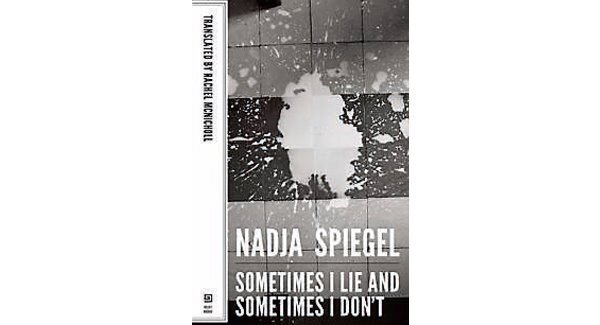
THE 20 stories that comprise Sometimes I Lie and Sometimes I Don’t are startling in their intensity. 
Nadja Spiegel story collection offers startling intensity in cut-glass detail

The vast majority of them are first person narratives and very short, with only a handful running to more than five pages, yet the muscular weight of the prose and the beguiling allusiveness of the storytelling sets them at a far remove from the trend of so-called ‘flash fiction’.

Where these stories are concerned, short doesn’t mean bite-sized; in fact, brevity is critical in keeping the fierceness on offer from overwhelming the reader.

Choosing stand-outs is difficult given the collection’s consistency and uniform excellence, and several seem worthy of particular mention. The opening story, meta plays the violin, sets the standard: a dizzying, schizophrenic account of a young woman contemplating the wildly different sides of her nature in the face of a burgeoning new relationship.

Elsewhere, in the stately ‘how it is’, another young woman speaks from her rut, of a numb life given its little shape by a dead-end job in a low-star hotel kitchen. Struggling with loneliness and a diluted sense of self, her sense of repression in further heightened by a constant feud that exists between her strict mother and her domineering actress sister.

And in arguably the book’s finest offering, the beautifully pitched and achingly sad someplace else, the narrator — whose sex is never defined — falls into a secretive romance with the school’s outcast, a plain-looking foreign girl named Malika, while also carrying on a relationship with one of the class’s more popular girls, Linda. Malika’s family run a spice shop and adhere to herbal remedies, which causes her to be mocked in school as a witch.

Throughout, these narratives, such as they are, keep a kind of slow circular motion, and they work in little sensory explosions that have the cut-glass feel of prose poetry. The writing is wonderful; Miss Spiegel has an artist’s eye for the diamond moments in any situation, and her stories hit the page vivid in their details but with the kind of oblique style that makes them feel bottomless in depth.

Nadja Spiegel was born in the town of Lustenau, close to the Swiss border, in 1992. Winner of several awards for her work, including, at just 17, the Meta-Merz-Preis, one of most prestigious honours for young writers in Austrian literature, she was still in her teens when this collection was first published, to effusive acclaim, back in 2011.

Now that the book has finally reached the English-language market, in a skilled and very readable translation by Rachel McNicholl, courtesy of Dalkey Archive, hopes must be running high that it can at least repeat its initial success.

This is a writer who deserves a wide and attentive audience, and a collection that announces the arrival of a significant and precocious European talent.

Don’t read these stories for their plots, which are often intentionally scant. The wonder of this work is to be found in the ferocity of its realism and the ambitious and innovative quality of the style.

Miss Spiegel, who seems impossibly young to be writing in such an assured fashion, has a rare gift for capturing the minutiae of a down-at-heel life and reflecting the innermost traumas of people, often teens, as they struggle to make sense of who they are and the world in which they find themselves.

The subject matter — coming of age, family problems, relationship breakups, a relentless sense of disconnection — is familiar enough territory for literature, but it is by her delivery that the author succeeds in breathing rich new life into each situation.

Sometimes I Lie and Sometimes I Don’t

Nadja Spiegel

(translated by Rachel McNicholl)

Dalkey Archive, €9.50

x

More in this section

Cookie Policy Privacy Policy Brand Safety FAQ Help Contact Us Terms and Conditions

© Examiner Echo Group Limited










