Five rules to follow for perfect funeral etiquette
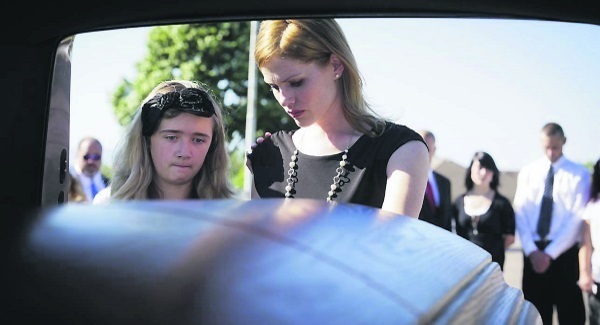
DECEMBER is coming and while we might be trying to avoid the ‘c word’, there is also a ‘f’ word that will likely abound. Funerals are a fact of life but especially in the winter months. Statistics show that deaths rise by more than seven per cent in the winter months compared to summer months. In 2013 almost 800 more people died in December than in August. And so, along with visiting Santa’s grotto, many of us will find ourselves attending a funeral in the coming months.
Apparently we Irish do them well. While our American counterparts find the idea of a ‘wake’ ghastly, we seem to wear the tradition like a badge of honour. Something that sets us apart. Something we excel at.
Ah yes, there’s nothing quite like an Irish funeral: the enormous queues, the trying to get there early so you can ‘run in and out’, the endless handshaking, the groups of four and five standing under the one half broken Penneys’ umbrella blessing themselves as the hearse pulls off.
Or are we that good at funerals? Are we just kidding ourselves?
Recently I attended the funeral of a close friend’s mother and I noticed the same anxieties crop up every time. And looking around the room on the evening of the wake I realised I wasn’t the only one.
People were avoiding the obvious. Avoiding eye contact with the bereaved. And so the question arose: Does anybody really know how to act at an Irish funeral? (Before the whiskey starts flowing.) Have we confused “doing funerals well” with being drunk or even just slightly tipsy. Perhaps it’s about time we all had a refresher course in funeral etiquette.

RELATED: Here’s how funerals are getting funnier in Ireland and around the world
Rule one: It’s not about you
Who amongst us doesn’t feel the stage fright setting in as they join the procession of condolence givers? It’s not so much about forgetting your lines-it’s that you never knew them in the first place.
The generic clichés ride the carousel in your mind as you shuffle up. “I’m sorry”… “how are you?” keep whirling by. You dismiss them of course. How can you ask how they are? And everyone says they are sorry. But suddenly you’re up. And, under the spotlight and the glare of the congregation behind you, you hear your auto pilot self say- “I’m sorry. How are you doing?”. It’s the “I carried a watermelon” of condolences and you kick yourself just as much as Baby did in Dirty Dancing. But remember, it’s not about you.
The person who’s grieving probably didn’t even hear what you said. They’re grieving. They just saw that you came and you cared enough to let them know that you do. What you say is irrelevant.
Rule two: Know when to go
The person, people, family, friends are exhausted. Your company is a welcome distraction but it’s not an episode of Come Dine With Me. They shouldn’t have to entertain you beyond the allotted time. Most removals will be announced with a start and finish time — and for good reason. What tends to happen is the opposite of the aforementioned tongue tied condolence giver scenario. It’s the mourner who doesn’t know when to shut up. Less is more. Say your piece. But more importantly listen. Perhaps the bereaved has their very own anecdote they want to tell. One that trumps the vague story you struggle to tell in an effort to avoid a grief filled silence.
Don’t suddenly ignore all the social cues you have learnt over your lifetime. If a person is yawning in your company — even if they are grieving- it means they are tired and you should go.
Rule three: Out of sight

Every funeral has them. The funeral version of the bridesmaid or groomsman. And we could all learn a thing or two from them. They are the organisers. Behind the scenes they help coordinate the food, clean the cups, talk to the priest and top up the wine. They do it all quietly and without fuss. They won’t let you know which cake they baked or ask for it back. You probably don’t even notice them.
These people realised a long time ago — it’s not about them. We should be shadowing them instead of learning our lines.
Rule four: Don’t pretend
You are only there to see the living and drink the tea. Pay your respects to the one who has passed. Visit the casket. Don’t avoid it because you’re uncomfortable. You’re supposed to be. They are the mother or father that put a plaster on your grazed knee when you tripped over yourself in the rain. Or who let you take over their kitchen till the early hours to discuss men.. or heartbreak.. or men. Thank them now by having the courage to say goodbye. You owe it to them and the family.
Get over yourself — it’s not about you.
Rule five: Come back
There’s strength in the funeral number. For you. But, remember, it’s when the crowds have gone and the dust quietly settles in the weeks and months that follow, that the grief will truly start. It’s then that your company is really needed. Then, more than ever, that story you struggled to tell on the day of the funeral needs to be told- and heard.
RELATED: Here’s how funerals are getting funnier in Ireland and around the world
CONNECT WITH US TODAY



Be the first to know the latest news and updates














