Book review: I Saw a Man
Robert Stone, who died earlier this year, was one of the most successful at getting under the fingernails and into the veins of soldiers and into their shattered minds as they wipe the dust of battlefields off their feet and walk around their old homes.
There are echoes of that kind of writing in the intelligent and finely written new novel by Owen Sheers.
Even though war zones are a great distances from the domestic scenes depicted in I Saw a Man the shadow of war haunts the pages.
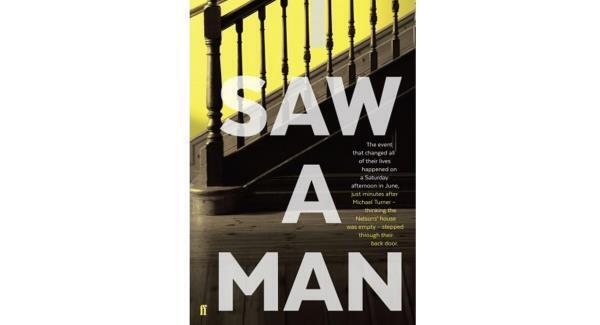
The opening scene is of a man walking through his neighbour’s house. He has gone to get back a screwdriver he lent to his friend but when he discovers the house apparently empty he becomes almost intoxicated by both the familiarity and otherness of the place until he steps deeper and deeper into the rooms of his neighbour’s home.
Rather than revealing what happens during this intrusion suffice it say that the rest of the book spirals from what does occur.
The first half of the book is structured around the increased sense of foreboding with which his visit is described.
The backstories are pegged from the description of each step he takes on the stairs of his neighbour’s house.
One of those backstories concerns how the narrator — an American writer who ends up moving to London — met his partner, a journalist who went to cover a warzone only to be killed when her vehicle was accidentally targeted by an American officer.
While this part of the story is central, the weight of it does cause the narrative tension to sag because it is fitted in around the central character’s wanderings through the house, which is the part of the story that carries greatest urgency and mystery for the reader.
Once we find out what happens in the neighbour’s house the novel actually gets more engaging still, as the moral consequences of actions here and in a faraway warzone are woven together.
What Sheers is after here is much more nuanced than the war at home idea, it is actually a very real sense of the collateral damage that comes from wars that are carried out at a greater remove.
It is not an exploration of the technology that makes death less tangible for those doing the killing, it is instead an intricate consideration of the consequences of actions and the unpredictable human damage much further down the line of dominoes.
The American who pressed the button causing the death of the journalist becomes central later in the story, as he tries manfully to take ownership of what he has done and follow through with his moral responsibility.
Other characters in the story equivocate as it becomes a challenging moral conundrum for the reader when the domestic echoes the geo-political as governments reach for concepts such as the greater good to wash their hands of blame. Violence becomes stealthy to the point where it can be disowned in this twistingly moral meditation.











