The sad song at the bottom of the bottle for Ireland's talented women
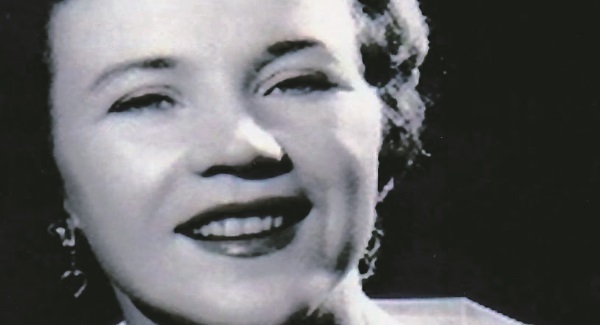
Irish people have always had a love hate relationship with alcohol and none less than our artists. As a new book is written about Bridie Gallagher, Suzanne Harrington examines why hugely talented women take refuge in drink.

The sad song at the bottom of the bottle for Ireland's talented women

Are some of the greatest singers the ones who have suffered the most emotionally — and who drank to make things better?

When it comes to Irish women, the answer seems to be yes. Mary Coughlan (below) has been called Ireland’s Billie Holiday, while country superstar Nanci Griffith says she dare not call herself a singer as long as Dolores Keane is still around.

Both have channelled their pain into their music and performance to raw and devastating effect. But how was it for a singer from an earlier, even more conservative generation? A singer who had to keep a smile plastered on her face while performing, even in the midst of chronic depression?

Bridie Gallagher, known as ‘The Girl From Donegal’, was Ireland’s first international pop export. In a career that began in the 1950s, she went on to perform in places like London’s Palladium and Albert Hall, the Sydney Opera House, and New York’s Lincoln Centre and she continued performing until 2000.

After her death in 2012, her son Jim Livingstone and her former manager, collated her memoirs and turned them into a book.

“She was very glamorous and quite unique in that she revived old Irish ballads for performance,” Jim tells me. “In her prime she was a very big name, a star, but at home she was just mum, wanting to know if I’d done my homework.” But then, in 1965, in the midst of Gallagher’s success, something happened. Her marriage ended in an era when marriages, no matter how dysfunctional, were not allowed to end. “So she hid the fact from everyone, even her own parents,” says Jim. “She was terrified it would become public and so she carried her secret for years. That’s when her depression started, and she would have a drink to try and alleviate it.”

Bridie performs with the Martin Costello Band in New York on her 1959 tour

Worse was to come. In 1976 her younger son was killed in a motorbike accident, aged just 21. “Her depression deepened,” says Jim. “She struggled on, having cancelled all her engagements, but it was getting worse. In the end I persuaded her to go back on stage, and within a year she was performing at Sydney Opera House. Performing helped her.”

However, it was while she was back home after touring that her depression was at its worst, and she would self-medicate with alcohol.

“In show business no one wants to know about your pain,” she once said. “You’re expected to always be ready to perform with a smile and make other people happy, even when you’re not.”

Jim, a psychologist, encouraged his mother to change her patterns to treat her depression – instead of medication, she began walking, swimming and painting. It worked.

“We created a diversion in her life,” he says. “Which meant that the depression was rerouted via creativity, exercise and routine. She kept it up until her death and she also wrote down her memories, which helped her process her pain and later provided the genesis for the book.”

Bride Gallagher dancing the twist with the club’s professional dancers at New York’s Peppermint Club in 1960

Jim says Bridie Gallagher was not an alcoholic. This sets her apart from Mary Coughlan, Dolores Keane, Frances Black, and Margo O’Donnell, all of whom have been open about their alcoholism.

“I sang Bridie Gallagher’s Two Little Orphans when I was four,” Mary Coughlan tells me. “We had all her records.” Coughlan, in recovery for 22 years, published her story in her 2011 book Bloody Mary. Prior to sobriety, her early life had involved abuse, followed by addiction, and the chaos that addiction invariably brings. Did her suffering make her a better singer? Or is there more clarity now that instead of using alcohol and other drugs, she practices qi gong before going on stage?

“It’s just weird seeing kids on the X Factor singing about things they know nothing about,” she says. “Think of all the old blues guys, and all the great jazz singers – Billie Holiday, Bessie Smith, Sarah Vaughan, Peggy Lee – it was their stories that made them what they were. But for me, in sobriety I can reach down into myself when I’m singing. It’s clearer. It’s very different. It’s better.”

Margaret O’Donnell, whose alter ego is the country singer Margo, and who at the height of her career performed with Johnny Cash, Loretta Lynn and Dolly Parton, recently celebrated 50 years in the music business. Yet she says that she is not into the glitzy side of showbiz at all. That she is actually quite shy.

“I started singing when I was 13 and still at school,” she says. “It was a fun thing for me. Then my father died suddenly in 1968, just after I’d recorded my first record. It got in the charts, and I was offered £100 a week with a car and a driver, which meant I could support my mother and siblings. But although I love music and singing, I’d never wanted to be a performer – I wanted to be a nurse, get married and settle down.” A bad car crash in 1974 led to her using alcohol to address performance nerves. Her first show after the crash, was headlining at the Albert Hall, and she drank to combat her stage fright. “I thought I’d found the perfect solution,” she says. “But when I was drinking, I wasn’t singing properly. I was slurring. When I got sober 30 years ago, everything was different. When I got better, everything got better. I was able to enjoy life without fear. And today, I have a wonderful life.”

Bridie Gallagher with Daniel O’Donnell and his sister Margo

Dolores Keane, whom Nanci Griffith calls “the voice of Ireland”, has also made a well-documented recovery from long term chronic alcoholism, at one point via the same treatment centre as Margo, Cuan Mhuire in Limerick. After the death of her sister from TB when Keane was a small child, her mother had a breakdown and Keane was sent to live with relatives; she learned early on to hide her feelings. She kept things to herself, and as is the case with millions of alcoholics everywhere, found some kind of release via drinking.

Frances Black’s recovery from addiction proved so transformative that she trained as an addiction counsellor and worked at Dublin’s Rutland Treatment Centre. She went on to set up the Rise Foundation in 2008 to support the families of addicts (who go through almost as rough a time as the addicts themselves), and edited a book, You Are Not Alone, a series of personal accounts of those whose lives have been impacted by addiction.

She writes, “Openness is key to the healing process. Often, it is all too easy to keep our feelings bottled up….we can convince ourselves that holding on by a bare thread is better than letting go and trusting that our fall will be safely broken.” Does such sentiment reflect progress in Irish social attitudes towards alcoholism? Are we getting better at opening up? Almost thirty years ago, in 1977, the country singer Gloria had a number one with her version of One Day At A Time. The song stayed in the Irish charts for 90 weeks, making it, to date, Ireland’s biggest hit. Clearly, it resonated with the Irish public; today, we have evolved to do more than just listen to sad songs about addition — these days — we take action.

More in this section

Cookie Policy Privacy Policy Brand Safety FAQ Help Contact Us Terms and Conditions

© Examiner Echo Group Limited













