Leon Bridges is a man with soul
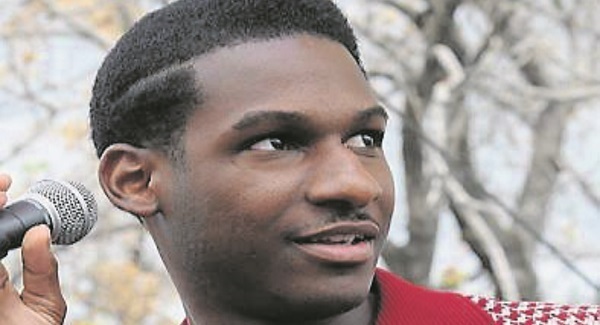
Leon Bridges isn’t quite sure how he got here.

Leon Bridges is a man with soul

Just yesterday, it seems, he was a hard-toiling nobody with a head full of impossible dreams. Now he is the anointed saviour of soul music, variously acclaimed as the American Adele and heir to Marvin Gaye. He shrugs. If that seems strange to everyone else, imagine how he feels.

“I’ve always been ambitious,” muses the softly spoken 26-year-old. “The problem at the beginning is that I didn’t know how to get where I needed to. I was playing music around town, trying to put my name out. It wasn’t happening. I didn’t think it would ever happen.”

Bridges’ sweet voice harks back to the halcyon era of African-American soul men of the 1960s and early ’70s. Indeed, it seems almost mandatory to speak of him in the same breath as the giants of the age, in particular Gaye and the tragic, under-appreciated Sam Cooke, a golden boy cut down before his time.

But Bridges was scarcely aware of these artists until friends began to point out the technical similarities between their voices and his. Growing up in sleepy Fort Worth, Texas, his ambition was to be an r’n’b star. Soul music was not on the radar. In suburban Texas it wasn’t on anyone’s radar.

His big break reads like something from a hokey music biopic. With his career on go slow Bridges had taken a job as dishwasher at a local restaurant and, just for kicks, was singing at open mic spots around town. Here, he came to the attention of Austin Jenkins of local indie crew White Denim. This was a far more significant development that it might sound. Kind of a big deal in garage rock, White Denim also wield considerable influence in the Fort Worth music scene. With the band banging a drum for their unlikely protege, Bridges recorded a set of professional demos and soon had a record deal. In a finger click a star was born.

“I’m confident. But I do feel self-conscious on occasion,” says Bridges.

“I’m still learning. It is crazy to me that I’m going to places like Ireland and singing my songs. It is humbling and beautiful and I hope I never, ever, take it for granted.”

As his star has ascended Bridges has gained admiration for his progressive dress as much as for his music. The guy certainly puts it out there, with a look 50% Mad Men dandy, 50% thrift store junky.

“It isn’t a uniform,” he says. “It’s not like I wear this on stage and then go home and put on sweat pants. I’ve always thought carefully about how I wanted to present myself. I started out as a dancer — that taught me the importance of dressing appropriately.”

He still lives in Fort Worth and doesn’t plan on moving. A vast suburban sprawl (and 16th largest city in the United States), it adjoins Dallas and, by Bridges’ telling, is the kind of place where nothing much ever happens. Some artists might find this a stifling environment in which to grow up. In suits the humble Bridges just fine.

“The pace of life is slow,” he nods. “It isn’t glamorous — not like a big city. It has its charms. There are various historical spots I consider beautiful. And of course, my friends and family are here. One thing it has never had is an r’n b or soul scene. Those things just don’t exist in Fort Worth.”

There’s a world of tenderness in his singing and no small amount of pain too. Where these feelings come from exactly he cannot say. Bridges has had a relatively normal upbringing.

“I’ve never had a broken heart,” he says. “I’ve had a lot of happiness in my life. But then, you look at someone like Sam Cooke — he wrote a lot of happy songs too. Just because you’re a soul artist doesn’t mean you have to sound a specific way. You just have to sound like yourself.”

Ed Power

Leon Bridges’ debut album is Coming Home. He plays the Olympia in Dublin on Friday

More in this section

Cookie Policy Privacy Policy Brand Safety FAQ Help Contact Us Terms and Conditions

© Examiner Echo Group Limited













