How to prepare your child for primary school
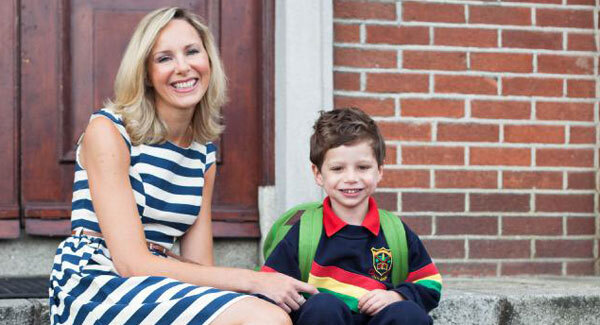
FOR the past month, you’ve had your soon-to-be junior infant try on his school uniform whenever visitors call.
You’ve emphasised the excitement of big school at every turn.
Now you’ve started to count down with him the number of sleeps until the big day.
“Stop!” say experts. Making too big a fuss of big school can build excitement up to unbearable levels for your child.
“Treat it as like going to a new supermarket, something very normal,” says Montessori lecturer Clare Healy Walls.
She advises going low on the drama — ‘yes, you’re starting school on Monday’, so child thinks ‘Mum isn’t getting too fussed about it so I’ll be okay’.
Primary school will require huge adjustment, even if your child has been to pre-school. The children in the school yard will be bigger, there will be more of them.
It’s going to be noisier and your child will have one teacher who can’t give him the individual attention he’s used to.
He’ll need to be more independent — take off and hang up his coat, open and close his school bag/lunchbox, go to the toilet alone.
“The normal securities are gone — Mum used to come to the pre-school door to collect him, now she comes to the school-gate. He has to put out his own lunch — in pre-school the teacher did it for him. Little things [like these] can upset a child,” says Healy Walls.
Teresa Heeney, CEO of Early Childhood Ireland, says the free ECCE pre-school year has resulted in more confident junior infants. But the transition still brings challenges.
“The school uniform can be challenging. They don’t like the feel or weight of it. They have to figure out how to eat their lunch in a specified amount of time.”
Heeney says because of the Aistear curriculum — framework for pre-school and first two years of primary — junior infants should recognise something of their pre-school in their classroom.
“They should see areas — play areas, book and block corners, sand and home corners. The room should reflect the insight that children learn through play activity.”
The junior infant curriculum is very enjoyable, agrees Deirdre Sullivan, training and development officer with the National Parents Council Primary (NPCP). But the day is longer and learning is more structured.
“In pre-school, children can choose what activity they want to do and when to do it. In a junior infant class of 30 that can’t happen. A specified time is spent on each activity.
"Everybody does it together and moves to the next activity at the same time. This more structured learning requires greater concentration, so children will be tired.”
Mum-in-residence at MummyPages.ie Laura Haugh was a new mother at the school-gate last September, when her son, James, now six, started junior infants.
“The biggest change for him was definitely the noise level. He found it intimidating in the first few weeks — there were 30 in his class, the noise in the corridors and in the schoolyard at playtime.
"His Montessori had a play area with 20 children — now there were 250 children in the yard. He didn’t like playtime.”
The situation was managed with teacher’s help, who kept a special eye on him in the yard.
“They twinned him with a child in first class who looked after him for the first eight weeks. After mid-term, he was totally fine.”
Heeney says schools recognise the impact on newbies of being the smallest in the community. Her children had ‘helping angels’ — an older child, who played with them in the yard and showed them around, helping them negotiate the transition.
Primary school represents a change in the order surrounding the child’s life, says Healy Walls.
“In this age group, routine and order are important to children. They can cope with change but not too much. Parents should make everything else in the child’s life as stable and orderly as possible.
" Don’t come home from holidays the day before. Have a rhythm... so that school is the only big change.”
Parents have to adjust too. The big challenge is they don’t have as intimate a connection with the child’s life now, says Healy Walls.
“In most pre-schools, they’d have got feedback on everything. The [primary school] teacher doesn’t have time.”
While Laura Haugh enjoyed the extra ‘me time’ her child’s longer school day afforded, she found homework the biggest surprise.
“I wasn’t expecting him to come home with homework from week two. It was quite academic from the beginning.
"We had to spend 25 minutes every evening learning phonic sounds. After Christmas it increased — there was a lot of reading and letter formation.
Sean Cottrell, Irish Primary Principals’ Network CEO, says it’s important parents allay their anxieties and avoid letting any negative school experience they had colour how they communicate with their child about primary school.
“It’s a significant milestone to leave pre-school and enter the beginning of formal education. Some parents can be very anxious — it isn’t in a child’s best interests to display that anxiety.”
Visit www.npc.ie for ‘Going to Big School’, leaflet published by Early Childhood Ireland and National Parents Council Primary.
* Create opportunities to chat about what s/he’s looking forward to and what s/he’s worried about. Keep conversation relaxed.
* Acclimatise child to school route. Visually acquaint child with school, even from the outside.
* Arrange play-date with senior infant child, who can tell yours what he remembers about his first days: what classroom’s like, where to hang coat, says Early Childhood Ireland CEO, Teresa Heeney.
* Involve child in preparations — choosing lunchbox/school bag/pencil case; sticking labels with name on books.
* Ensure s/he’s comfortable with uniform, for example, how to take jumper off, if too hot.
* Get child in good sleep routine.
* Give nutritious breakfast and lunch.
* Once you’ve settled child, don’t stand around too long, says Heeney. Reassure you’ll be back to collect, and do so on time.
* Don’t expect feedback from teacher. “It’s unrealistic to expect any in the initial settling-in fortnight,” says Heeney.
* Avoid asking too many questions beyond ‘how did you get on today, did you have a nice time?’
“Too many questions overwhelm children. Just because he doesn’t talk about school doesn’t mean he’s unhappy,” says Montessori lecturer, Clare Healy Walls.
* Deirdre Sullivan of the National Parents’ Council Primary, says be comfortable in the silence if your child doesn’t want to answer a question.
“They’ll tell you the bits they want you to know, not what you might think is important.”
* At this time of change, be observant of your child, says Healy Walls. Does s/he seem afraid to go to school? Is s/he having nightmares? If so, sit with child and gently ask him to tell you some stories about school.
* If child’s upset at your leaving over first few days, give him something of yours — key ring, scarf — that reminds him you’re thinking of him, says Laura Haugh, of www.MummyPages.ie

CONNECT WITH US TODAY



Be the first to know the latest news and updates

















