Newman’s vision a degree too far for traditionalists
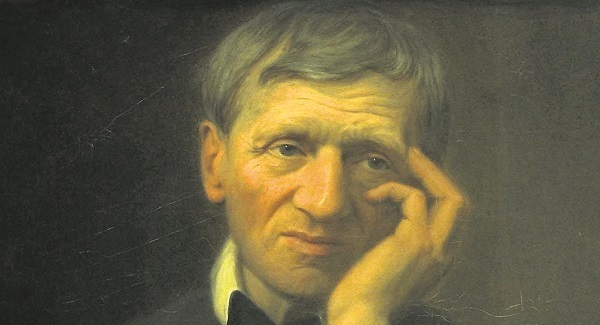
In 1854, John Henry Newman, a well-bred English convert to Catholicism who had abandoned his career as an Anglican cleric to become a Roman priest, arrived in Dublin. He had been asked by Cardinal Paul Cullen to be Rector of the new Catholic University.

Newman’s vision a degree too far for traditionalists

Beginning with a scattering of buildings in and around Stephen’s Green, Newman’s job was to set up an institution from scratch, one that would flourish in its own right but also rival mighty Trinity College down the road and see off the challenges posed by the newly-formed Queen’s Colleges in Dublin, Cork and Galway.

The new university would be filled with men from Ireland and abroad, including English converts like Newman himself. Women were not yet part of the conventional idea of a university.

However, mid-nineteenth century Ireland was a febrile place. The Famine had just ended. The after-effects of the Penal Laws were still coursing through the country’s bloodstream.

Land agitation was underway and new forms of nationalism were on the rise. Society was riven with tensions, contradictions and splits. This was a tough setting for Newman to try to make good his vision for a great university.

His task was made even harder by holding two positions at the same time in different countries: he was also responsible for setting up a fledgling community of priests in Birmingham.

In his eyes, the new Dublin university would be a place where established and aspiring scholars lived together in pursuit of a great ideal: “the making of men”.

Men, that is, who would grow in knowledge, wisdom, piety and manners before going forth into the wider world. For all of this to happen, Newman saw it as essential that students and tutors should reside together in colleges.

If forced to choose between a university that offered degrees but no collegiate living, and a university that didn’t offer degrees but gave students and scholars the chance to live and learn together, he would champion the latter.

“When a multitude of young men, keen, open-hearted, sympathetic, and observant come together and freely mix with each other,” he wrote, “they are sure to learn one from another; the conversation of all is a series of lectures to each.”

Newman’s vision put him on a collision course with the very man who had invited him to Ireland, Cardinal Cullen, who wanted something more reminiscent of a seminary than an Oxford college.

Paul Shrimpton, an English schoolteacher of long experience and an expert on Newman’s approach to education, (and like Newman a graduate of Oxford University), has written a book about the whole Dublin endeavour.

Shrimpton emphasised how Newman saw a university as a chance to give young people an “education in freedom, to launch them into the world with care, to take an interest in their whole development, to help them learn from one another and from close contact with scholars.”

This is what Newman laboured to create in Dublin, with only partial success. Modern universities fall a long way short of the Newman template. Shrimpton happily acknowledges the great strides that have been made by universities in transmitting information and in developing professional expertise.

But lecture halls, laboratories, timetables and examinations are not enough. He speaks with dismay, for instance, of an English university that has recently outsourced all of its student accommodation to a private firm.

“They have washed their hands completely of the pastoral side. Tom Wolfe, the American novelist, has put his finger on it. Parents send their children off to a university because they want them to get “a punch on the ticket for starting off in any well-paid career. But they don’t seem to ask whether life at that university will make their child a better person or a worse one.”

Shrimpton mentions Wolfe’s novel I Am Charlotte Simmons, in which the main character, a high achiever from a poor background, finds herself cast adrift in the amoral world of an elite university.

“There is no end of books, especially in America, diagnosing the problem,” he notes, “and some of the liberal arts colleges in the States are an attempt to do things differently. My book shows how Newman went about solving the problem in a tangible way.”

Shrimpton argues forcefully that those who rely solely on Newman’s classic essay The Idea of a University in order to understand him as an educator will fall short. His own exhaustive, engrossing book shows Newman (later to be made a Cardinal and beatified in 2010), as a man of action, a decision taker, an administrator, a mentor to many, and not just a thinker and a theorist.

But, beyond the history, reading this book may even shake up your assumptions about what third level education is about.

Paul Shrimpton’s ‘The Making of Men: The Idea and Reality of Newman’s University in Oxford and Dublin’ is published by Gracewing.

More in this section

Cookie Policy Privacy Policy Brand Safety FAQ Help Contact Us Terms and Conditions

© Examiner Echo Group Limited







