Inside the emotions of Inside Out
The latest Disney/Pixar movie, ‘Inside Out’, is wowing both adults and children for the way it looks inside an 11-year-old’s mind. But what do psychologists think of the show? Richard Fitzpatrick found out.

Inside the emotions of Inside Out

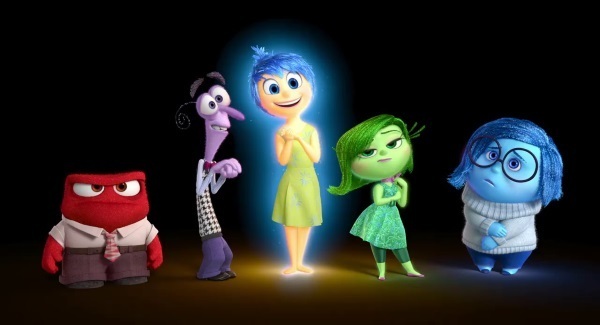
If you’ve children between the ages of six and 16, the chances are you will have seen – or you will shortly see – the latest Pixar movie, Inside Out, this summer’s big blockbuster. Inside the mind of an 11-year-old American girl called Riley are five emotions; Joy, Sadness, Disgust, Anger and Fear. They operate her moods from a control panel and are wrestling for control of the girl’s emotions.

Beyond their headquarters lie the endless, Daliesque recesses of Riley’s mind, populated with “trains of thought”, “islands of personality”, “the Subconscious where they take all her troubles and her darkest fears like broccoli”, and so on.

The movie pivots around Riley’s meltdown when she has to move from Minnesota to San Francisco. Sadness and Joy are ejected from Headquarters, and things start to go awry for her at home and her new school because her remaining three emotions – Disgust, Anger and Fear – are out of kilter.

One of the ideas the film delves into is that it is OK to be sad sometimes, which flies in the face of modern culture’s obsession with being happy. But Riley’s emotions aren’t the only part of the human mind that the film engages with, it also has fun with: memories, abstract thought and feeling multiple emotions at the one time. So what does it tell us?

1. Sadness

“It is OK to be sad,” says Joan Long, a psychologist from The Clinic Cuanín. “In the film, poor old Sadness is a blue blob that is making mistakes according to Joy. Sadness keeps apologising for herself but viewers see Sadness needs to be accepted as part of the normal part of reality. Nowadays in a time of ‘the immediate fix’ everyone wants to be going around feeling happy constantly which isn’t right. I say to clients all the time there is nothing wrong with allowing your child to see you in tears. It is good for the child to see you in tears and that you can gather yourself again, and that you’re OK to go on and get on with the rest of your day. It’s OK for them to see that Mom or Dad gets sad at times. They learn from that that it is OK for them to be sad as well and they can move on from it too.”

2. Joy

Is the character of Joy a bit too heavy-handed with her effervescence and big eyes? Why is she called Joy at all as opposed to Happy? It is arguable that joy is a stronger version of happiness. Joy is euphoria; in comparison, happiness is joy “lite”. When we think of joy, we think of Wordsworth’s gushing poetry or Luke’s gospel: “Joy to the world, a Saviour is born!” Happiness is an everyday experience but only rarely in our lives do we experience unadulterated joy. Maybe it’s because Happy is already trademarked in the world of fairy tales as one of Snow White’s seven dwarfs that Pixar went for the big sell with a happiness character called Joy.

3. Anger

“There is an idea derived from evolutionary psychology that we need our emotions for survival and that we need them all,” says Brendan Rooney, a specialist in emotional engagement from the UCD School of Psychology. “They each play a role. For example, there are times when it is important that we get angry, as they show in the film, to ensure the protection of justice. The character Anger is concerned with ensuring that things are fair. It shows that emotions play a role in our life which aren’t necessarily all positive or negative.”

4. Disgust

“People often think of disgust as this emotion around rotten food or bad tastes but there is work by an American psychologist called Paul Rozin and he talks about how we use the same ideas of disgust when we talk about moral issues like racism – we can be disgusted by racism, for example,” says Rooney. “The idea that disgust serves not just to protect our body from infection but also from social contamination. I was surprised to see the Disgust character in the film playing out that role; it was sophisticated.”

5. Fear

“When the character of Fear is introduced by the character of Joy, she says, ‘Fear keeps Riley safe.’ Those sorts of anxieties or caution that we have are also the ones that stop us from running across the road in front of a car or keep us running away from threats,” says Rooney. “For example, there is a scene when Riley is in her school. Joy is trying to make sure that everything is OK in her first day at school. She puts Fear on the job of identifying all the things that could possibly go wrong. Fear says, ‘We’re fine as long as the teacher doesn’t ask us a question.’ Then the teacher does ask the question so it is about drawing our attention to those things that might need attention.”

6. Memories

“Core memories are central to personality development. That was really well done in the film,” says Maria O’Halloran, a clinical psychologist. “Riley’s personality was a collection of all these memories. If you think of cognitive behavioural therapies or psychological treatment, memories are the main therapy that is looked at. Essentially, in the film the child is having a mini-breakdown. Her personality is beginning to crumble. She has core sets of personality – friendship, family, ice hockey, her imaginary friend, Bing Bong – which she is trying to hold onto as memories and core beliefs. That’s what cognitive behavioural therapy is about – we all have a core set of beliefs and senses of ourselves that drives our behaviour. She is protecting these all the time because if they are destroyed something would be fundamentally broken in this child, which couldn’t be recovered.”

7. Abstract thought

“The film could have explored abstract thought more,” says O’Halloran. “That is the phase a child moves through – from thinking of the world in a concrete way to more abstract thought. Concrete thought is the idea that if you do X, Y and Z, this will happen. She has a close relationship with her parents, which she never thinks out. She might have thought, oh, I’ll go and talk to Mom and Dad about this; maybe they will give me a different perspective. In this respect, the film was a little one-dimensional. She was an 11-year-old child but you might expect her to have some ability to reflect on her situation.”

8. Feeling several emotions at once.

“The movie was exceptionally accurate in how it depicted the complex interactions we experience in terms of emotions,” says Mark Smyth, Senior Clinical Psychologist. “It showed how we can flip from one strong emotion to another in an instant and experience multiple emotions at the same time and how confusing that can feel. It also nicely demonstrated how the emotions of other people, the Mum and Dad in this case, can influence us and that adults experience and can struggle with the same emotions as kids.”

Overall, the psychologists were impressed at the movie’s sophistication especially the notion of ‘embracing sadness’ but learning how to move on from it too.

More in this section

Cookie Policy Privacy Policy Brand Safety FAQ Help Contact Us Terms and Conditions

© Examiner Echo Group Limited













