Millions of movie fans holding out for a hero
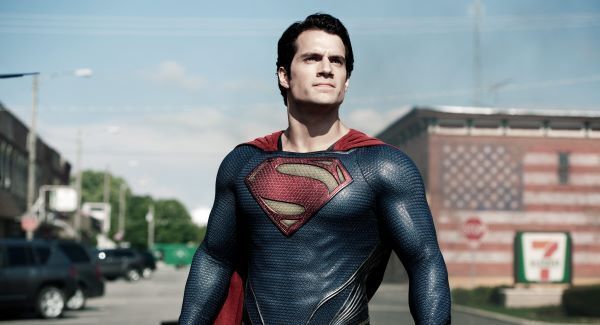
With more than 30 superhero movies in production, Declan Burke looks at the rise of the genre. Where once the cowboy saved us in the Western, now we turn to Batman or The Avengers to take on the bad guys. They are figures of hope - and a welcome distraction.

Millions of movie fans holding out for a hero

You could blame it all on Bonnie Tyler. All the way back in 1984, Bonnie was holding out for a hero who wasn’t just fast, strong and fresh from the fight, but a street-wise Hercules, no less, who was larger than life.

By then Richard Donner’s Superman had appeared in 1978 as the first big-budget superhero movie, in the process immortalising Christopher Reeve as Clark Kent, but it was in the 1980s — Hollywood responding, no doubt, to Bonnie’s husky rallying call — that the mania for superhero flicks really took hold. Superman II (1980), Flash Gordon (1980), The Toxic Avenger (1985), Robocop (1987) and Batman (1989) all appeared in that decade, to be followed by Batman Returns (1992), The Shadow (1994), Batman Forever (1995), The Phantom (1996) and Mystery Men (1999).

All of which looks like an impressive roster of (mostly) men with X-ray vision, bullet-stopping strength, lightning-fast speed and — ignoring at their peril Edna Mode’s “No capes, darling” advice in The Incredibles — snazzy shoulder-wear, but it’s a list that might well constitute a single year’s superhero movie output these days.

Already this year we’ve had Avengers: Age of Ultron, Big Hero 6 and Jupiter Ascending, with Ant-Man and Fantastic Four on their way. Next year we’ll see Deadpool, Batman v Superman: Dawn of Justice, Suicide Squad, Captain America: Civil War, The Sinister Six, X-Men Apocalypse and Doctor Strange.

The latest Spider-Man reboot is planned for 2017, along with Wonder Woman, Guardians of the Galaxy 2, a Wolverine sequel, Venom, The Justice League Part One and Thor: Ragnarok.

There’s a good reason for the huge number of superhero movies, of course, and it’s that Clark Kent may as well strip off his civilian duds to reveal a dollar sign emblazoned on his chest instead of the iconic red ‘S’.

Any Hollywood studio producing a superhero flick is tapping into a long-established market of successive generations of American youth weaned on comic books. The increasingly widespread dissemination of graphic novels, Manga, et al has given the comic book hero a cultural significance that goes much deeper than his ability to zap-pow the bad guys and fly faster than a speeding bullet.

Comic books became hugely popular in the US in the late 1930s and 1940s, a time when the world was still reeling from the aftershocks of the Great Depression and facing the rising threat of fascism in Germany and the Far East. The solitary figure with the power(s) to combat vast numbers of an evil enemy was wish-fulfilment in gaudy colours and dramatically drawn panels, as Superman, Captain Marvel and the rest of their heroic ilk took on hordes of bad guys and triumphed.

By then the concept of the lone hero was already familiar to the American public, via the classic Westerns that Hollywood was churning out so often during the 1930s and 1940s that they became known as ‘oaters’ and ‘horse operas’. With a tin star pinned to his vest, Gary Cooper, John Wayne and Randolph Scott strode down the dusty main streets of America’s Wild West, facing down the lawless villains who threatened the good burghers of those little outposts of civilisation.

Shane, Will Kane and the Ringo Kid might have needed to be every bit as callous as those wearing the black hats when the bullets started zinging in the inevitable shoot-out, but they were our ruthless killers, defenders against the barbarian hordes at the gates, sanctified by their courageous desire to protect the weak and the vulnerable because that was the right thing to do.

The Western remains the quintessential American contribution to film genre, but today the superhero movie could lay claim to the same title.

Parallels can be drawn between the 1930s and now, as successive generations of youth drag their eyes away from a variety of screens to observe a world in flux, crippled by economic uncertainty, torn apart by religious conflicts and facing the existential threat of climate change.

To the impressionable it might seem, as Yeats wrote in the aftermath of WWI, a world of mere anarchy, in which the best lack all conviction, while the worst are fully of passionate intensity. It’s no wonder that the indestructible superhero, the linear descendant of the Western hero, is such an appealing fantasy.

And yet, as Bonnie Tyler suggests, the roots of the superhero’s appeal go much deeper into our culture. All the way to Homer and the dawn of Western civilisation, in fact, and Greek mythological heroes such as Heracles, Achilles, Medea, Theseus, Jason, Helen and Perseus (or, in the case of Chris Hemsworth’s superhero character Thor, the Norse sagas).

Some of the heroes were fully human, and performed superhuman feats; others benefited from the particular protection and guidance of a god or goddess; while still others were demi-gods, half-human and half-divine, with all the gifts and supernatural abilities that that entails.

The names may be different but the songs remain the same. Odysseus displays phenomenal courage and cunning as he survives the Trojan War and makes his long, meandering way back home to Ithaca to rescue Penelope from her phalanx of suitors.

Achilles is the peerless warrior in the war against the Trojans, undone only by a cowardly arrow to his vulnerable heel. Perseus beheads the cruel Medusa and lays the foundations of Mycenae and classical Greek civilisation.

Theseus, on behalf of the Athenians, confronts the Minotaur in his labyrinth and wrenches power away from Crete and establishes Athens as the dominant Greek city-state. Again and again, good — or the Greek way of life, at least — triumphs, and evil is vanquished.

In both the superhero movies and the myths of ancient Greece we can detect the spiritual desire for life to deliver more than we can see, feel or touch, for a connection with an otherworldliness that confirms that life is not simply nasty, brutish and short.

There is the desire, whether promised by a resolute man in a cape with his underpants outside his trousers, or immortal beings peering down from their Olympian heights, for a sense of being protected and watched over in a chaotic world.

The myths of antiquity offered a different kind of storytelling, of course, not least of which was a brutal Bronze Age perception of morality and the cause of righteousness.

Even though the last decade has seen a number of big budget movies based on Greek mythology, only 300 — the story of the Spartans facing down the Persian Empire at Thermopylae — has delivered on its box office expectations.

Ultimately, and given that every generation believes that its era is the most uncertain and fragile the world has ever seen, people will always crave heroes, and particularly those with bullet-proof chests, lightning in their fingertips and a little magic up their sleeves. We want a superman to sweep us off our feet. Just no capes, thanks.

Ant-Man goes on general release on July 17

More in this section

Cookie Policy Privacy Policy Brand Safety FAQ Help Contact Us Terms and Conditions

© Examiner Echo Group Limited













