Lisa Lamert was ’morbidly obese’ and is now Unislimmer of the Year
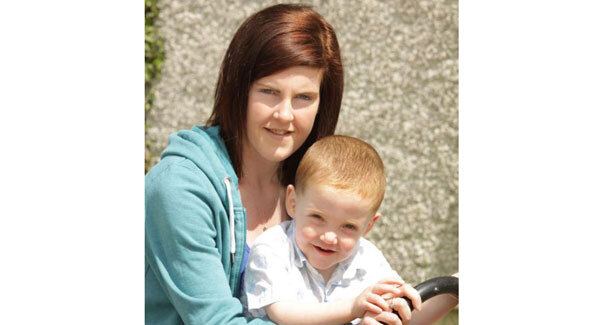
After seeing a doctor write the words ‘morbidly obese’ on her chart after she gave birth, Lisa Lambert resolved to change her life, says Clodagh Finn.

Lisa Lamert was ’morbidly obese’ and is now Unislimmer of the Year

LISA LAMERT (21) remembers the day she gave birth to her first baby with remarkable clarity.

She was 18 years and 24 days old when Mark Joseph (MJ) was born at 30 weeks, but five days would pass before she took him in her arms.

After an emergency Caesarean section, MJ was taken to University Hospital Waterford for observation while his mother recovered in the intensive care unit at Wexford General Hospital.

Lisa hopes to have more children but she never wants to relive the horror of her first labour — just as she never wants to see a doctor write the words ‘morbidly obese’ on her medical chart ever again.

No wonder she’s celebrating her phenomenal weight loss — she went from nearly 20st to 9st 12lbs in 18 months and was recently crowned Unislimmer of the year.

But she also remembers the sickening guilt she felt when she thought her excess weight had put her baby’s health, as well as her own, at risk.

Her experience is particularly resonant at a time when nearly one in five Irish mums-to-be is considered obese.

While an overweight woman can have a perfectly normal pregnancy and birth, a recent study by Trinity College found that overweight mums-to-be are more likely to encounter health risks to themselves and their babies compared with women who are within the normal weight range.

The researchers found that pregnant women with a Body Mass Index (BMI) of 30 or greater face a greater risk of developing issues such as gestational diabetes, high blood pressure, pre-eclampsia and depression compared with women within the healthy 18.5 to 25 BMI range. Also, caesarean sections are higher among overweight mothers.

When Lisa was diagnosed with pre-eclampsia at 30 weeks she felt awful. She had high blood pressure, dizziness, swelling and heartburn. But perhaps worst of all, she thought it was all her own fault.

“One doctor said it was my fault and another said it could happen to anyone. My age and weight went against me, but I still felt responsible,” she says now.

She promised herself there and then that she would lose weight. She had lost her own mother when she was 10 and did not want her son to have to go through the same ordeal.

But as anyone who has tried will know, it takes more than a decision to lose weight.

Her eating had been “out of control”, as she puts it, since her mother died.

“I didn’t think I had a problem because I never ate breakfast, but at lunch I would eat the legs off a table.”

She recalls a diet of convenience foods: pot noodles, sausage rolls, crisps (one, two or three bags) and pizzas.

Though she always felt that she stood out — she remembers buying a pair of size 18 jeans for her first school disco — she says she was never bullied growing up in Carnew, Co Wicklow.

Body image was never a problem either. She met her partner Mark when she was 15 and he accepted her as she was.

Becoming a mother, however, gave her a wake-up call and she pleaded with her partner to help her lose weight.

The couple went go-karting regularly around their home in Gorey, Co Wexford, and she lost four stone.

But the weight started to creep on again and one day in July 2013 she got this horrible feeling that if she didn’t do something, she would die before she was 25.

The next day she joined Unislim.

“Some people say they can’t lose weight because it’s in their genes, but it’s also on their dinner plate,” she says, explaining how Unislim helped her devise — and stick to — a balanced programme of three meals a day and two snacks.

“The big thing for me was to start having breakfast. I eat more now, but I’ve been eating to fuel my weight loss,” she says.

She also does more exercise: “I walk. I can’t run!” And her advice to others? “Ask for help. It’s not a sign of weakness. Do it for yourself, not for a wedding or to fit into a dress.”

Looking ahead, Lisa and her partner hope to have another child, but this time the pregnancy will be very different.

“The next time, I want a birth with a baby in the cot and balloons over the bed.”

Weighty issue facts

ALMOST one in five Irish mums-to-be are obese – and that number is growing.

Obesity in pregnant women is on the increase, just as it is in the general population, but the risks for expectant mums (and the 200 babies born in Ireland every day) are more immediate.

A University College Dublin study in 2010 and another published by University College Galway two years later highlighted a marked increase in obesity in pregnancy over the last decade.

At the time, UCG Professor John Morrison said the findings showed that overweight women had more complications in pregnancy and were more likely to deliver their child by Caesarean section.

They were also more at risk of pre-eclampsia, congenital malformations and foetal growth abnormalities.

Medical research has also shown that there are long-term risks too – of diabetes and cardiovascular disease for the woman and an increased risk of childhood obesity for her child.

Krysia Lynch, co-chair of AIMS, the organisation that lobbies for improved maternity services, says obesity in pregnancy is an increasing problem.

Women who are categorised as obese have fewer healthcare options, such as home birth and midwife-led hospital services, she says, adding that it helps to physically prepare for pregnancy a year before conception if possible.

Lynch recommends Introducing a healthy diet, regular exercise and folic acid at that point ensures the best chance of a healthy pregnancy and birth.

More in this section

Cookie Policy Privacy Policy Brand Safety FAQ Help Contact Us Terms and Conditions

© Examiner Echo Group Limited













