Sex and the City author Candace Bushnell has a new book out

I’M ON MY way to see Candace Bushnell when a photographer who shot her portrait recently rings me with a word of advice.
Chris Lane’s appointment with the author of the original Sex and the City columns had taken place the previous day and during the shoot he observed that people must ask her about her sex life all the time.
He asked Bushnell if she minded. Great question, I say.
“Well,” he says. It turns out that she does mind. According to Lane, she also minded being asked if she minded.
“She’s really lovely,” he says.
“But I did briefly worry that she was going to cut my balls off. Anyway, I wanted to let you know. She’s a bit of a firecracker.”
It was nice of him to try to warn me, but at the time I just thought: “I’ve been around the block a few times. I think I can handle Candace Bushnell.”
We’re meeting to discuss her new novel, Killing Monica.
It is about a writer who creates a character who is so adored by her readers that she finds herself living in the shadow of her own creation. The character is called “Monica”.
The actress who plays Monica in a spin-off television series becomes famous, while the poor author, whose name is PJ, struggles through a nasty divorce.
Poor old PJ wants to write something more literary, but the public clamours for more Monica.
What can have inspired this angry story? I don’t think you need to be a literary detective to suspect that there might be a few similarities between this middle-aged fictional author and Bushnell, 56, whose sometime alter ego, Carrie Bradshaw, loomed so large over New York City, spawning the Sex and the City television series and igniting the career of Sarah Jessica Parker.
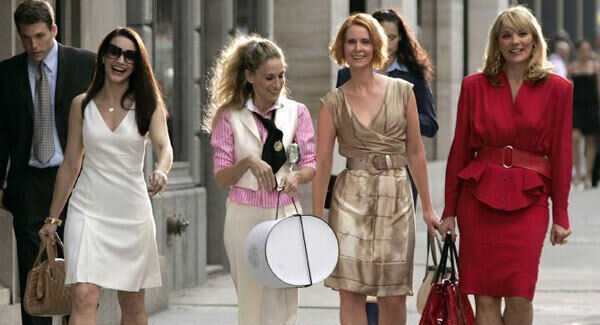
Parker is now a good deal more famous than Bushnell. Surely the two things are connected, inspector?
Hurrying to her flat in Greenwich Village, I can’t imagine it will take us long to crack this case. Then I can ask her if she minds being asked about sex the whole time.
“This is me, OK?” she says, after letting me in, and gesturing at her casual attire, in case I expected her to be wearing a cocktail dress.
I must admit that Bushnell is so muddled, in my head, with Carrie Bradshaw that I can only really imagine her in a cocktail dress, or sitting at her keyboard in her lingerie, tapping away, underneath a ponderous voiceover.
“Everyone thinks that and I was like that for a bit,” she says later. “That was a phase.”
Today she is in a baggy cardigan, T-shirt and charcoal leggings, which have something to do with riding. Everyone wears them at horsey events in Connecticut, apparently. She is thin, blonde and raspy-voiced.
The flat looks empty. Bushnell moved to Connecticut a few years ago, renting out her flat and abandoning Manhattan for the country, prompting elegies about the end of an era.
However, the rules in her New York apartment building state that it can only be rented out for two years at a time. The tenants have just moved out.
“We’re just doing some work,” Bushnell rasps, pointing towards the living room where a muscular young Hawaiian with a ponytail is pacing about on a rug. I assume he must be a builder.
A young woman sits on the windowsill holding an iPhone attached to a selfie stick. Bushnell tells me to take a seat too, and steps out of the room. Music begins to play: a thumping baseline, a raspy voice singing the melody.
Then Bushnell leaps through a doorway and begins to dance with the builder. They jiggle and gyrate. The woman with the iPhone films them, using the selfie stick as a camera stand. I sit in the corner, baffled.
Then Bushnell turns off the music. “I think it’s too static,” she says. The builder nods.
“What I’m envisioning is, when the girls break away, she is going to fall and roll,” he says.
He demonstrates on the rug. He really is quite a mover. He is even better than that builder in the Village People.
It turns out that he isn’t a builder at all. His name is Matt Del Rosario, a choreographer.
“I wrote this pop song,” Bushnell says. That’s my voice!”
She says it is “a companion piece” to Killing Monica.
The woman beside me, recording them, usually serves as an assistant to Bushnell’s PR.
I tell Bushnell I’ve never interviewed a novelist who had to interrupt proceedings because of an urgent need to make a pop video.
I assume Bushnell will be in her music video.
“No,” she says, panting slightly as she twirls about the room.
“Monica makes this look like a sexy movement rather than a middle-aged woman doing crazy stuff.”
But I thought Killing Monica was partly about the Sex and the City generation in their middle years, squaring off against the ageist, sexist male establishment. She says Monica is about an attitude.
“I probably can’t explain it to a man,” she says.
“Monica’s always described as being happy. She’s so very, very happy. What I’m trying to get at there is this thing that women are supposed to be happy all the time and if you are not it’s your fault and there is something wrong with you.”
In Killing Monica, several characters deliver “Here’s what I’ve learnt, folks” type speeches about how men are imposing their own designs on women and reaping all the profits.
“I always have those radical feminist ideas nagging at me, and I think it’s good,” says Bushnell.
“But it’s very frustrating because there aren’t really any answers and one does have to live in a world with men.”
That’s unfortunate, I say.
The music video rehearsal halts and we all make our way into the dining room for lunch, which is sushi.
“I do think if you scratch the surface, men are making all the profits,” says Bushnell.
This is what she sees when she looks at the dating scene in New York as it is now, conducted through the medium of phone apps like Tinder.
“I think all of this technology is created by men and they create it to their advantage,” she says.
“And it’s created by a certain type of man who wants to be able to get a woman without having to be, you know ... brawny or whatever.”
I tell her about a site a friend of mine uses, which connects male graduates of America’s top universities with vetted young women.
The dynamic reminded me of a Jane Austen novel: a class of male aristocrats sifting through the gentry to freshen up their gene pool.
“It sounds like a mail-order bride,” says Bushnell.
Bushnell and I go up to the roof of her building and sit at a table beneath a parasol.
Bradshaw sits sideways, her head tossed back, her legs over the arm of her chair, while I hunch up in my seat, crossing and uncrossing my arms because it is so cold.
I say writing a book about killing off a famous character must have been pretty cathartic.
“No,” she replies.
“It wasn’t.”
She says the idea of a fictional character who becomes bigger than the writer came to her via the Philip Roth novel Zuckerman Unbound.
“I said, ‘That’s an incredible comic conceit and because something similar in a way has happened to me — I’m taking it!’” she says.
“But do I have that relationship withCarrie Bradshaw? No. Not at all.”
Sex and the City was a phase of her career, she says. “People are always going to be like: ‘Oh my God, is that how you feel about Carrie Bradshaw? And do you have a thousand pairs of shoes?’
The questions are equal. I don’t have a thousand pairs of shoes,” she says. “And Monica is not the same as Carrie Bradshaw.”
Like the writer in Killing Monica (and Carrie Bradshaw), Bushnell grew up in Connecticut, scion of an old American family.
“One of my ancestors invented the submarine that was used in the Revolutionary War,” she says.
Her mother was a businesswoman, a self-starter. Her father, who is still alive, worked on the fuel cell that was used in the Apollo space missions. He took over the cooking after their mother went back to work.
“I feel like my parents worked as a team,” she says.
“It was a happy home. As soon as you left the house it was a different world.”
She recalls being angry at “the realisation that being born a woman was being born a second-class citizen”.
She thinks progress has been made, though she is still pretty angry.
“When I first moved to New York, in 1979, there was no place you could go where you would not be hassled or harassed by men,” she says. “It was just a given.” I ask was it harder for her because she wrote a column about sex?
“Sweetie, are you a f***ing idiot?” she yells, sitting bolt upright and slapping her forehead with her hand.
“I’m talking about when I was in my 20s.”
I laugh. I quite often have the impression people I’m interviewing think I’m a f***ing idiot but they so rarely say so.
OK, but in your 30s, I say. I just wonder if that made it harder still.
“On the street, no,” she says. She calms down.
“Don’t put in that I yelled at you saying you’re a f***ing idiot.” I might do, I say. I probably sound a bit sulky.
“Poor Will,” she says, gripping my hand for a moment across the table. “You’re the best kind of guy because women yell at you and you laugh.”
She continues to butter me up, saying I am different from other men because I am a journalist and I ask questions. “Most men aren’t like that,” she says.
Hmm, I say. I don’t know. The fact that I do not offer a proper defence of all men at this moment is probably yet another black mark against me. Or us.
I read somewhere that she sold the TV rights to Sex and the City for a mere $60,000.
“That’s not true,” she says. “But put it like this: I make 90% of my money from books.”
I say, I read this and thought: were I in your shoes, I too would have thought that men had taken all my money. I mean this to be an empathetic question.
“Oh, listen,” says Bushnell, sitting up again.
“That’s so interesting that that’s your reaction. You’re coming back to me. You’re not seeing the larger truth because the fact of the matter is that men do control all the money.”
I wasn’t trying to question that, I say. I just thought you might have personal experience... “I don’t feel that way because a man took my money!” she cries.
“I feel that way because it’s a reality. Look around!” She waves around her. I look, as instructed, but there is no one else here; only other, taller buildings, and the two of us at this table: Bushnell bellowing, sprawled across her chair and me beside her in a thin cotton shirt, hunched up against the cold.
"I think an anthropologist, observing us, would draw certain conclusions about the balance of power on this rooftop.
“Aye yai yai!” she shouts. Then she starts laughing.
“Your instinct is to make me out as the bitter woman,” she says.
Oh, now I see why she is upset. She launches into a lecture on how men control the money: in retail, in gambling, in Hollywood. Killing Monica contains “something women want to say,” she says.
“F*** you to the male establishment!” She says it now, throwing her head back and roaring: “F*** you!”
In Killing Monica the male characters are dreadful people. Bushnell says she made the writer’s ex-husband “exaggeratedly awful”: she is quick to say that he bears no relation to her own ex-husband, the ballet dancer Charles Askegard. She cannot talk about him anyway, under the terms of their 2012 divorce.
“But my sense is that women are becoming increasingly dissatisfied with men,” she says.
“I say, ‘You must be so happy, you’re married.’ [They say,] ‘No, let me tell you something, I hate my husband. I hate him all the time.’ I really feel an increasing anger from women towards men and I think that anger is very, very justified.”
Isn’t this specific to New York? Where there are so many fabulously beautiful women, looking to settle down, and so many men, frolicking happily like children in a sweet shop, hoping to try everything before making a choice.
Women here sometimes complain that men are all looking for a woman with thebrain of a rocket scientist and the body of a Victoria’s Secret model.
“Darlin’, scratch the surface and every man everywhere is looking for that,” Bushnell replies.
In Manhattan, she says, “They have the privilege of doing it in person.”
She says many of the women of her generation feel trapped at home, bullied and disrespected by their husbands.
“Men have no comprehension,” she says.
“Things would go a long way if men would stop feeling like they are entitled in the home. Men should enter their home, as a guest, as the most wellbehaved guest on the planet.”
Her voices rises, like that of a Baptist preacher at the climax of a sermon. “Then there will be harmony!” she declares. Hallelujah.
I am now absolutely freezing. “OK, we can go downstairs now,” says Bushnell.
She sends out Mills, her assistant, to buy wine, and lends me a yoga cardigan, which I button up over my shirt. “You look good,” she says. I suspect I look ridiculous.
She opens a bottle when Mills returns and pours me a huge slug of white wine. I don’t usually drink while working, but in this case I knock it back like medicine.
E DISCUSS the oddest thing that happened to Bushnell while writing Killing Monica.
As she was preparing to stick it to the male establishment, a Romanian taxi driver who was also trying to stick it to the establishment hacked into her email account and stole a draft of her novel.
Marcel-Lehel Lazar believed that the world was run by a shadowy cabal of bankers, aristocrats and industrialists called the Illuminati.
Having targeted bankers, diplomats, the friends and family of George W Bush, and members of his administration, he went after Bushnell. Bushnell knew she was being hacked. She kept being locked out of her computer.
“I’m at my house in Connecticut, running back and forth like, ‘What shall I do? I’ve been hacked.’” She leaps to her feet to enact the scene.
“Guccifer” posted the unfinished drafts of her novel on her own Twitter and Facebook pages, which he had also hacked.
“No one noticed,” she says.
“The only reason it ended up being a story is because he called The Smoking Gun” — the news website — “and told them. Now, how embarrassing is that? It’s like, dude, you hacked the person with 2,000 Twitter followers.”
Can we just settle this, I say. Are you a member of the Illuminati?
“I don’t know what to say!” she cries, for she is still in full flight. “Oh my God! I should put Guccifer in my song!”
After the story broke, “The FBI called me, which was so cool.” She whispers: “A guy from the FBI and the CIA.”
They gave her their telephone numbers! She attempted to help them with their investigation. She also worried that she had been hacked because she had lately googled the words “How to make a bomb?” in the course of her research.
“The basis of an explosion is just a huge amount of heat in a contained space,” she says.
“That was the one thing I did that was unusual in the months before. I have such a boring life, you have to understand.”
She lives alone, she writes, she shops and cooks dinner between 4pm and 7pm.
“There are sometimes two or three days when I don’t see other people.” She eats healthily; she does Pilates; she rides horses. And, “I do try to keep up with the Botox,” she says.
That means injections, every three months. And I did go to this plastic surgeon, because everybody was like — even my freaking old man, my father said to me, ‘I would think someone like you would be getting plastic surgery.’”
I don’t think you should have surgery, I say. “You know what? I’m sure I will,” she replies. “I’ll probably have the lower face done.”
She plants her hands on her cheeks and pulls back her face. “It’s just better to have a bit of a sharper jawline.”
She does not think it will make her look younger. “I’d like to look a little more fake,” she says. “I’m not doing it to be a great beauty.”
I ask her is she happy?
“Do I not seem overjoyed today?” You seem happy most of the time, but ... “Oh, I’m just dramatic. You can’t read too much into that. I’m just so loud. It’s just part of my voice.”
I tell her I wasn’t expecting it. The photographer had tried to warn me.
“I’m like a bomb!” she says.
“It’s a lot of energy in a container.”
I had this image of you writing in your underwear, I say. This might be the white wine talking. I tell her I even thought of writing this article in my underwear too, in homage to Carrie Bradshaw. She says this will not be necessary.
“I wouldn’t want to be writing in my underwear. I wouldn’t want to see my body,” she says.
“I’m not a big lingerie person.” She favours long johns and slippers. “Let me tell you, sweetie, glamour comes from the inside.”
Nor will she offer us a moral about love, wrapped up in a Sarah Jessica Parker voiceover.
“There are different kinds of love,” she says. She was once in love with her husband.
“But ultimately, the truth for me is, being in love with a man is never going to be enough for me.” She giggles, huskily. “I mean look at me,” she says, leaping to her feet.
“I should be controlling a fleet!” She throws both arms into the air. She really does look like an admiral on the bridge, albeit one who has had to come straight from a Pilates session.
I mention a 2008 interview in which she said women should keep faith in finding true love. Carrie Bradshaw probably felt thesame way. She laughs. I suspect she must have changed her mind.
“Honestly, that’s one of those things that makes everybody feel good,” she says. “It makes other women say, ‘Oh, she wants love, just like the rest of us.’ And we all know love is the most important thing, OK?” She pauses. “Yeahhhhh,” she says. “I lied, OK? What can I tell you?”
Killing Monica by Candace Bushnell is published by Little Brown on June 23

CONNECT WITH US TODAY



Be the first to know the latest news and updates









