Movie reviews: Jurassic World, Let Us Prey, West
A tongue-in-cheek statement that acknowledges that much of the wonder intrinsic to Jurassic Park (1993) was in simply watching dinosaurs roam around Isla Nublar.
Two decades worth of computer-generated dinosaurs later, the fourth movie in the Jurassic Park series sets out to reboot the franchise by upping the ante significantly, pitting human against rogue giant reptile when the fearsome Indominus Rex breaks out of its supposedly secure paddock to hunt down anything that moves.
However, there are also dinosaur against dinosaur in titanic clashes that bring to mind the battles between Godzilla and whatever T-Rex it happened to encounter.
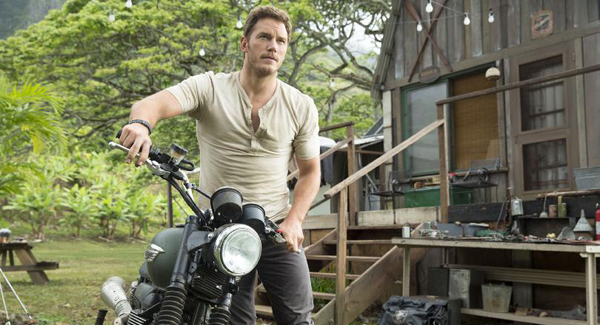
The story, which is almost incidental to the spectacle, involves Clare’s nephews Gray (Ty Simpkins) and Zack (Nick Robinson) visiting Jurassic World — by now a vast and thriving theme park — and going missing when Indominus Rex goes on the rampage, which forces Claire to reluctantly recruit ex-boyfriend and Raptor-wrangler Owen (Chris Pratt) to track down the boys.
Bryce Howard and Pratt contribute an endearingly old-fashioned love-hate ice queen/muscle man romance, but for the most part Jurassic World is all about the dinosaurs, and the screen fairly teems with prehistoric lizards of all shapes and sizes, all of them brilliantly rendered (there’s even a mass pterodactyl attack reminiscent of Hitchcock’s The Birds).
Set in the claustrophobic confines of a police station in the remote Scottish town of Inveree, (18s) stars Liam Cunningham as Six, a man who exerts an unholy influence over his fellow prisoners in the station’s cells. But is Six actually a man or something altogether more sinister?
PC Rachel Heggie (Pollyanna McIntosh), experiencing a rather hellish first day on the job, witnesses Six being knocked down by teenage joy-rider Caesar (Brian Vernel), but can find no body; when Six later turns up at the police station, he declares that in terms of justice he is not particularly interested in modern policing methods, and that he has come ‘to do things the old-fashioned way’.
A chilling statement of intent, given that the police station is full of guilty consciences and tortured souls, not all of them behind bars.
This feature-length debut from Irish director Brian O’Malley is drenched in gothic imagery from the opening credits, when we see Six emerge from a stormy sea dripping black feathers, and O’Malley maintains a deliciously arch gothic tone throughout as he constructs a revenge thriller that owes a heavy debt to Clint Eastwood’s Man with No Name flicks.
Liam Cunningham (right) is brilliantly cast here as ‘a vagabond in the air’, aka an avenging angel, his brooding character a darkly divine catalyst lifted wholesale from the pages of Milton’s Paradise Lost with a disturbingly literal take on Christian scripture, whose supernatural meddling eventually sparks an explosive orgy of brutal violence.
Nelly Senff (Jordis Triebel) escapes from East Germany in the 1980s with her young son Alexej (Tristan Gobel), hoping for a better life in the (15A).
Soon, however, Nelly discovers her future will be defined more by history than geography when she finds herself living in the limbo of a refugee centre, interrogated by German and American intelligence agencies about her dead husband, the suspected Russian spy Wassilij, and desperately trying to maintain an air of normality for the sake of Alexej.
Directed by Christian Schwochow, West is on one level a satire — and one with contemporary resonances — on the extent to which an ostensibly democratic state can nullify the freedoms of expression and movement every bit as effectively as a nakedly repressive regime.
Jordis Triebel’s performance ensures that we don’t get bogged down in political allegory, however, and her nuanced turn as an intelligent woman frustrated at every turn transforms West into a powerful drama.















