Art Review: Sean Scully - NGI
4/5

Art Review: Sean Scully - NGI

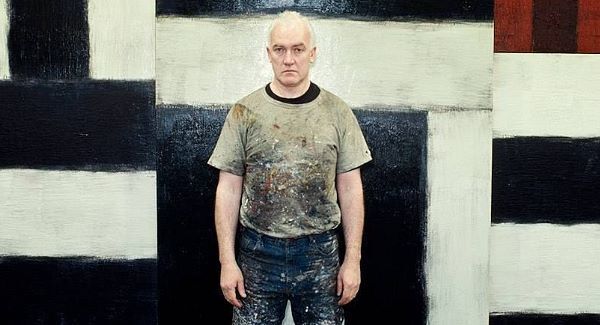
The first painting to catch the eye in the National Gallery’s Sean Scully show is the newest, ‘Window One’, from 2014. It is divided between a blue vertical section on the left and, on the right, stripes of alternative light and dark, with an inset panel in yellow. Here we find all the usual Scully tropes, but they work, as the title suggests, like a curtain being pulled back, letting us see the sky blue opposite. Neither are the stripes bold or geometric as they are in the large scale works we are invited to contrast them with, sharing the same room: ‘Coyote’ from 2000 and ‘White Window’ from 1988.

Perhaps we are witnessing the beginnings of a freer, late style? But there is enough in these three paintings alone of progression, development and persistence with a theme to show just how much potential Sean Scully has found in his idiom of geometric shapes, stripes, panels and blocks. He has found numerous ways to animate and allude through abstraction, without reversion to figuration or landscape.

Scully’s path to this distinctive style is hinted at by a selection of works from the early 1980s. They are of cleaner, thinner lines, more diverse colour. Of them, ‘How It Is’ is worthy of its nod to Samuel Beckett, its alternating columns of vertical and horizontal lines suggesting Beckettian anxiety and inertia.

None, though, match the intensity of a work like ‘Paul’, from 1984. Here the mature artist is spreading his wings. The painting has a physicality heightened by the raised middle panel. Dedicated to the artist’s dead son, this compensatory sense of presence makes for a stark study in grief.

But mostly, the best work here is about the pleasure of the form — the way it draws the eye in the horizontal and vertical plane. They way the works are redolent of Scully’s confidence in abstract painting, in an age of concept and irony.

The artist’s Aran photographs from 2005 form something of a footnote. Here we have the islands reduced to their manmade elements — piles of stone in vertical and horizontal planes. Walls, houses, ruins. If they didn’t exist, it would have been necessary for Scully to invent them. They send you away thinking that the paintings have made a long journey back to a place that has, even at a remove of many years, still influenced their creator.

Until September 20

DISCOVER MORE CONTENT LIKE THIS

x

More in this section

Cookie Policy Privacy Policy Brand Safety FAQ Help Contact Us Terms and Conditions

© Examiner Echo Group Limited













