Seven madmen get author’s seal of approval in magical Argentina
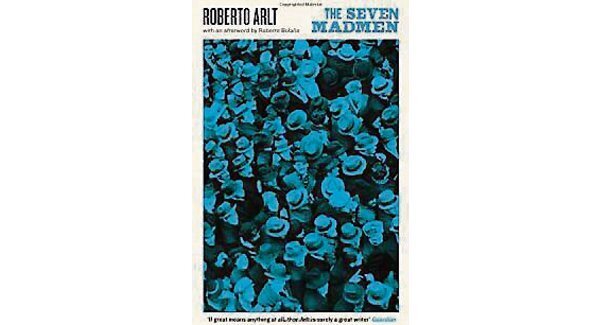
IMAGINE Dostoevsky and Flann O’Brien had an adventure and you got to hear about it second-hand from Haruki Murakami. That is what it is like to read Roberto Arlt’s 1929 novel Los Siete Locos — or, as it is presented here, The Seven Madmen — a rollicking and prescient dive through the anxieties of an urban Argentina on the cusp of transformation.

Seven madmen get author’s seal of approval in magical Argentina

The Seven Madmen

Roberto Arlt

Serpent’s Tail, €13.50: ebook, €8.72

Review: Val Nolan

The novel’s antihero Remo Erdosain lives in daydreams as much as he does in the slums of Buenos Aires. A swindler and a thief, he has lately stolen 600 pesos (and seven cents!) from his employers and been discovered. He must repay the money or face the consequences. And so with The Astrologer — madman number one — he hatches a plot to kill his wife’s rich cousin, refund his employers, go into the brothel business, and just maybe overthrow the state.

“I don’t know if our society would be Bolshevik or Fascist,” The Astrologer says. “The best thing would be to concoct such an unholy mixture that not even god could untangle it”. Prostitution, he believes, “will guarantee enough income to support the growing number of ventures the society undertakes,” everything from revolutionary training camps to grandiose schemes “for reshaping the universe”.

Yet where The Astrologer embodies the unbridled, indeed unrealistic aspirations of certain facets of South American society at this time, the down-on-his-luck Erdosain functions more as a surrogate for Arlt himself.

Born in 1900, Arlt grew up in the tenements which feature so prominently in The Seven Madmen. He worked as a journalist and as an inventor (with a keen but professional interest in women’s stockings) while publishing his fiction to neither critical notice nor popular acclaim. His novels are those of a Modernist who seemed to perceive the anarchic arrival of postmodernism, arguably even Latin American magic realism, far in advance of those around him. It would be decades before the originality and importance of his work became apparent, primarily through his influence on subsequent generations.

On reading The Seven Madmen it is easy to understand why authors such as Gabriel Garcia Marquez and Roberto Bolano held Arlt in such high esteem. His stories may be as surreal as they are brutal but, by linking the outlandish to the matter-of-fact, Arlt found an effective means of interrogating the spiritual weariness he perceived in early 20th century Argentinian society. Erdosain, forced to very literally search out the physical location of his own soul as the story develops, is the best possible example of this tendency.

Meanwhile, the titular madmen — The Melancholy Thug, The Major, The Gold Prospector, and so on — shed light on the threats to progress and liberty as Arlt saw them. Fantasy and reality collide in exploring these fears. The novel thus casts its eyes on not simply the seedy but vital and multicultural melting pot of the author’s contemporaneous Buenos Aires, but also forward in time towards the particular strain of South American fascism which, paradoxically, is rooted in the same optimism and potential of the continent’s 1920s.

Eighty five years after it appeared, The Seven Madmen remains frenetic, engrossing, and incredibly satisfying. This new edition of Nick Caistor’s English translation preserves the spirit of Arlt’s characters and world but, more than that, it conveys the immediacy of the author’s vision.

One consequently never feels the distance – from the novel’s original context. Certainly that’s an accomplishment for a work so firmly rooted in its time and place.

x

More in this section

Cookie Policy Privacy Policy Brand Safety FAQ Help Contact Us Terms and Conditions

© Examiner Echo Group Limited













