Book review: Making Nice
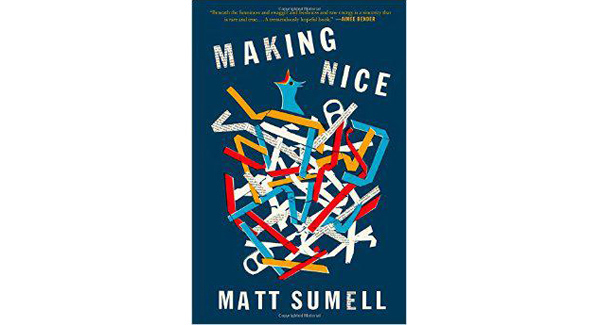
ALBY behaves badly. All the time. So badly, in fact, that his mother doesnât call him to her death bed until the last, unavoidable minute. Itâs clear he is a trial to her.
But he canât control the rage that overcomes him for the slightest thing.
A readerâs natural impulse is to empathise with the protagonist. So, in spite of Albyâs actions, which consistently thwart our inclination, we persist.
He is contradictory, impulsive, unpredictable, and therefore exciting. What self- destructive act will he commit next? Thereâs something almost underhandedly likeable about him.
He would love to be sexually promiscuous, and has certain âmovesâ he tries out on women he manages occasionally (miraculously) to snare. But he sabotages every opportunity for a relationship. And Albyâs brain is bombarded with details because he is indiscriminately and intensely observant. It all goes in.
He moves from an observation of diseased trees to diseases in general: feline AIDS, dog cancers, mad cows, raccoons with rabies, acute bee paralysis virus, koi herpes, goat polio, fish flu, turkey pox. He mourns roadkill. He rescues a bird and studies how it ârefuses to be happy/excited except in an off-hand wayâ.
But when a kitten doesnât submit to him petting it, he throws it into the shower, turns it on and squirts dandruff shampoo on its head. His beloved dog Jason gets the same erratic treatment.
His brother asks him: âAre you gonna do the dishes?â âYeah, Iâll do the dishes.â
âCool.â âIs Mom still alive?â âYeah.â âCool.â
She dies a week later, he tells us. And in the same breath, âI got a job gutting houses.â
At the funeral, his speech is less a eulogy than an obnoxious rant against the world at large, so offensive that a girl he had a crush on in primary school and hasnât seen since walks out without offering condolences.
The grief seeps out years later, when Alby thinks his dog has died. But itâs only when thereâs no one around âto judgeâ him that he does what comes naturally: âI prayed to my dead mom to help me find my dumb dog and kicked pine cones until I hurt my big toe after mistaking an unfortunately shaped rock for one.â
Something breaks when he finally sees his dog lying motionless at the front of his house: âIn my ears a white noise like radio static turned real low. My heart, a pond in a hailstorm, concentric circles of cold radiating out.â
This is Sumellâs strength: Letting images do the telling.
Time is fluid. The story is told at rally driver speed, but while you are being propelled wildly past events of the moment, you catch a glimpse of the future, before reeling back. You just hold onto your seat and try to keep up.
As with a comedian whose material is bitter, you find yourself laughing aloud and wincing, if not outright groaning, at the same time.
Albyâs saving grace is the way he manages to come through for his chronically depressed father, though even this is catastrophic at times. In return, his father offers him the gift of sailing, âthe slippery happiness of being pulled along by something larger than myselfâ.
A cross between an adult version of Christopher in Mark Haddonâs The Curious Incident of the Dog in the Nighttime and the outsider- rebelliousness of a Tom Robbins character, Alby sees the world in a surprising, revealing way. Written in a style that is exhilarating and vivid, Making Nice is magnificent. Highly recommended.















