House-building has finally been regulated
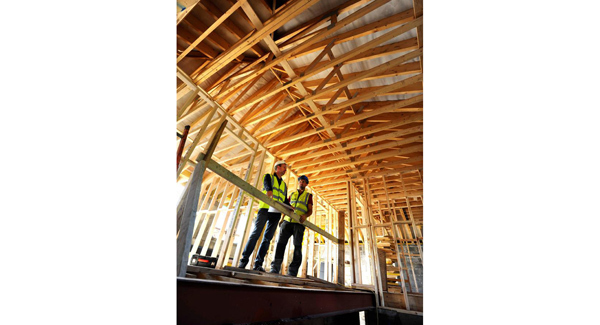
On March 1 of last year, new building controls (SI.9) came into law, requiring property owners to demonstrate adherence to the building regulations of their new house or larger extension.
In the past, once planning permission was granted, meeting the design and staying within building regulations was largely a self-policing affair.
Rarely (unless there was a complaint by a neighbour, for example), would an officer of the local authority pop down to see how things were going with that two-storey extension to Number 22, Anywhere Street.
Mistakes could have been spotted at the survey or conveyance stage â otherwise, poor workmanship, ropey engineering and shoddy materials could be neatly entombed in the build.
You wanted to be the builder of your own house? If the planning permission was in order, you could clamber into a boiler suit and start waving lads around a site, posting off a commencement notice to the local council.
Thatâs all over. Two new individuals will be involved in your project, before and during your build â the design certifier (who signs-off on the design as being compliant with building regulations, at commencement and completion; and the assigned certifier (an inspection and certification role in the construction phase).

One individual can perform both roles âfor example, your architect. It makes sense to stamp measurable, real standards and safety on a house or extension, layer by layer, as itâs created, and for this reason building control is standard in Britain and US.
We should require professionals to do a professional job. What you, as owner of the property, is left with is a âregisteredâ house with a comforting paper trail of compliant, quality construction on public record for any prospective buyers to inspect.
The certification on-site is registered electronically in a suite of certs, from the commencement notice through to completion, and the formal registration of the finished house, or extension, with the Building Control Management System (BCMS).
Some stages of the build will require an inspection by the certifier or a sub-contracted specialist; others will have to be witnessed. Certificates are signed by the owner, the builder, and the certifier and necessary ancillary certificates are gathered and signed-for along the way.
Assigned certifier is an intimate, hands-on job that demands a high level of technical understanding, deft people skills and huge responsibilities.
Only three groups have been deemed qualified to act in this capacity: a registered architect (RIAI); a chartered surveyor; or a chartered engineer. These three professions are not only qualified in the building or altering of a house, but they carry vital professional indemnity insurance.
It would seem natural to use your architect as both the design certifier and construction (assigned) certifier, but not all members of the RIAI were keen to get involved beyond signing-off on the plans.
Architect Andrew Lane says âself-build is finishedâ.
He is currently navigating the complex BCMS with two âlive projectsâ uploading in a formal sequence of electronic paperwork.
He is happy to take on the challenge of the suite of certificates and ancillary certificates (excruciating in detail) and regards the process as an officious evolution of what he was doing for his clients.
âMy level of liability is what it always was. Itâs unlikely anyone from the BCMS or local authority would check whatâs going on on-site, but with the new system, if they did they would know exactly where we were in the build and where we were going.
âThereâs a full schedule and sequence of works and inspections that benefits everyone, including the builder.â
Every element of the build is ultimately forwarded to the BCMS and recorded.
âIf we install a radon barrier, itâs going to carry a certâ, be legal, and be laid in good practice. If we order blocks and mortar, we require a certificate from the supplier stating that itâs free from pyrite,â says Lane.
âI have to content myself that the materials are appropriate and the work spotless. The responsibilities of the assigned certifier are enormous, with a huge legal liability.
âThere is a lot more paperwork for the builder, too, so they need to be PC-savvy. In terms of fees, acting as assigned certifier effectively doubles my fees on the build, which I regard as on the low side, but some figures being bandied around for this role are nothing short of ludicrous.â
And what are those fees? According to a recent survey, fees can range from as low as âŹ8,000 for engineer-designed and certified homes to âŹ15,000 to âŹ20,000 for a full design service.














