Irregular heartbeat condition Long QT explained
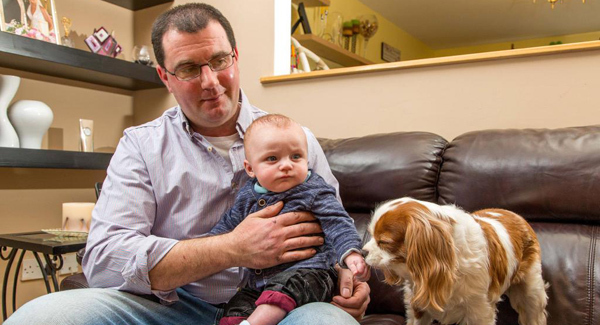
Doctors said his first blackout was stress related and gave him sleeping tablets. But when Noel McGrath’s heart stopped, tests proved he had the irregular heartbeat condition, Long QT, says Catherine Shanahan

Irregular heartbeat condition Long QT explained

THE scene that greeted Noel McGrath after his blackout was like a clip from a movie: his apartment was crawling with cops, paramedics and firemen.

“That’s what happens when you call emergency services in New York,” he says, half-laughing, although there was nothing funny about it at the time.

It was 2008 and he was in bed with his wife, Aisling, when she noticed that his eyes had gone white and his lips blue. He blacked out — and awoke to chaos. He was rushed from his Yonkers home to the emergency room of Bronxville Hospital.

The blackout was attributed to stress, after he told them he hadn’t been sleeping since taking a more responsible job in construction.

He was given medication to sleep, but during the night his heart stopped. Fortunately for him, he was in the right place at the right time.

The crash team brought him back and he was given an ECG, a test that translates the heart’s electrical activity into line tracings on paper.

The tracing showed that his heart muscle was taking longer than normal to recharge between beats and he was diagnosed with a syndrome known as Long QT.

He was put on beta blockers, which blunt how a Long QT syndrome-affected heart reacts to adrenaline in times of stress, fear or exertion.

He was later fitted with a defibrillator, a device placed under the skin which delivers an electric shock to restore a normal heart.

In May, 2009, Noel, a Donegal man, returned to Ireland. He set up home in Sligo, but on Christmas morning, 2012, he woke early feeling nauseous. He threw up in the bathroom and went back to bed.

His wife dialled 999, as she watched his eyes go white and his lips turn blue. They set off in the car for the hospital to meet the ambulance en route.

“I was starting to get shocks at this stage,” Noel says. “They weren’t too bad, initially, but by the time we were halfway to hospital it felt like I was being hit in the chest with a sledgehammer.”

It took five hours to stabilise his heart. He was in intensive care for a week. He was then referred to consultant cardiologist Dr Joe Galvin, at the Mater Hospital, where they run a family heart-screening clinic.

Dr Galvin, an expert in treating Long QT syndrome, says the condition often goes undiagnosed, but may be responsible for some otherwise unexplained deaths.

“If a teen drops dead and the autopsy shows cardiomyopathy (disease of abnormal health muscle), then we know exactly what to look for in other family members,” Dr Galvin says.

However, a syndrome call SASs (sudden arrhymthic adult death syndrome) shows no abnormality in autopsy. In cases such as this, Dr Galvin says, it’s understood to be electrical diseases of the heart, such as Long QT.

There are 13 genes associated with Long QT. While warning signs include unexplained fainting spells and blackouts, it can cause sudden death, due to an arrhythmia triggered by adrenaline.

Those who know they have Long QT Syndrome should avoid strenuous exercise, swimming (because of danger of fainting in the water and drowning) and sudden fright or shock.

“People with Long QT type 2 are at risk if they experience a sudden auditory shock, such as a mobile phone ringing in the middle of the night. We’ve treated a number of those cases,” Dr Galvin says.

Noel (38) has type 1 and has made lifestyle changes — improved diet, no alcohol — to maintain his health. The arrival of his first son, Shea, now four months old, gives added impetus.

One of his sister’s has been diagnosed with a long QT interval, so Noel asked to have his son checked out. So far, the omens are good, following several ECG tests, but Noel is still waiting to have him genetically tested for a gene from Noel’s father’s side of the family.

“I just want to have him tested, for peace of mind,” Noel says.

* The Mater’s family heart-screening clinic, which has just screened its 1,000th family, depends on fundraising. To donate, go to www.materfoundation.ie  or phone 01-8303482.

* For information on SADS, log onto www.cry.ie

What is Long QT syndrome?

An ECG measures electrical impulses as five distinct waves, which doctors label P, Q, R, S and T.

The space between the start of the Q wave and the end of the T wave (Q-T interval) corresponds to the time it takes for your heart to contract and refill with blood, before beginning the next contraction.

By measuring the Q-T interval, doctors can tell whether it occurs in a normal amount of time.

Long QT syndrome results from abnormalities in the heart’s electrical recharging system. However, the heart’s structure is normal. These abnormalities may be inherited, or acquired due to an underlying medical condition or medication.

More than 50 medications can lengthen the Q-T interval in otherwise healthy people.

* See www.qtdrugs.org

People at risk of Long QT syndrome

Children, teenagers and young adults with unexplained fainting, unexplained near-drownings, unexplained seizures, or a history of cardiac arrest.

Also. first-degree relatives of people with known long QT syndrome, people taking medications known to cause prolonged Q-T intervals, people with low potassium, magnesium or calcium blood levels — such as those with the eating disorder anorexia nervosa.

How many does it affect?

One in 2,000. Every week, one person under the age of 35 dies suddenly from an undiagnosed heart condition.

More in this section

Cookie Policy Privacy Policy Brand Safety FAQ Help Contact Us Terms and Conditions

© Examiner Echo Group Limited













