Thin Lizzy’s Scott Gorham is between rock and a hard place
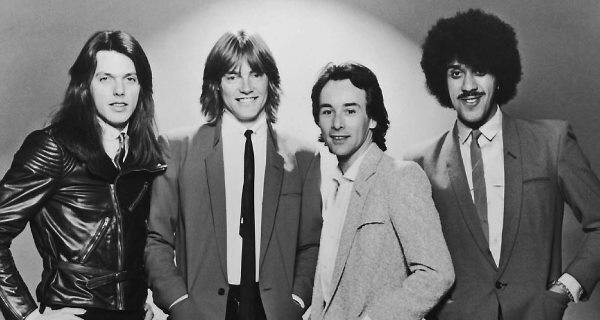
SCOTT GORHAM is a gruff old rocker of the sort they truly don’t make any more. His frizzy, shoulder-length curls are sported without irony, as are the indoor mirror-shades and studded leather jacket. But one subject splinters his hard-boiled exterior: the death of his friend and Thin Lizzy bandmate, Phil Lynott. Three decades on, Gorham still struggles with the loss.
“Phil would have turned 65 last year,” the guitarist sighs. “I try not to think about it. Everyone misses Phil. Everyone wishes he was here. We keep soldering on as best we can.”
Upon hearing Lynott had collapsed suddenly at his home in London in December, 1985 , Gorham’s first response was disbelief. Frontman Lynott had been a party monster par excellence. He was the toughest, the strongest, the most fun-loving.
With Lynott, the pedal was always pressed hard to the floor. He’d contracted hepatitis and shrugged it off. Gorham had thought ‘Philo’ was indestructible. Then he received a phone-call saying Lynott had suffered a heart-attack. A few days later he was dead. How could that be?
“He was such a charismatic guy,” says Gorham, a lump in his throat. “He had incredible presence. If he was in a room, then it was like he was the only person in the room. Everything else faded into the background. He was front-and-centre. Phil was the man.”
Gorham is proud of Lizzy’s accomplishments and has worked hard at keeping the band’s legacy alive. Several years ago, the group reformed, with a succession of vocalists standing in for Lynott. Some fans were aghast; others understood the noble intentions.
Behind the get-together was a fear of Gorham’s that Lizzy were in danger of being forgotten.
By the early 1990s, when rock was lost in a fug of angst, their uncomplicated sound was the apotheosis of naff. Outside of Ireland, they were largely regarded as relics.
But across the last decade Thin Lizzy’s stock has soared — and Gorham’s tireless campaigning has surely played its part. As has the cheerleading of acts such as Metallica and Mastodon, credible hard rockers proud to proclaim themselves disciples of Lizzy.
“I want people to be aware of the band’s accomplishments,” says Gorham. “To allow it just be forgotten would not be good. You want to keep the memory alive. We owe it to Phil and we owe it to what we achieved.”
At the risk of over-egging the Spinal Tap comparisons, Gorham’s first meeting with Lynott reads like something from a satire lampooning the inherit ridiculousness of rock and roll.
The guitarist was in London for a try-out with Supertramp, the popular progressive rock band.
But he became lost en route and instead found himself auditioning for Thin Lizzy ( at an African restaurant near Twickenham, of all places). He and Lynott hit it off immediately; thus was forged one of the enduring alliances in rock music. From there began the group’s ‘classic’ period, soundtracked by albums such as Live and Dangerous, Jailbreak and Bad Reputation.
Gorham was born on St Patrick’s Day, 1951. He grew up in Stockdale, a suburb of Los Angeles, joining his first band aged 13. By the early ’70s, he had fetched up in London, where he crossed paths with Lizzy, then reeling after the departure of original guitarist, Eric Bell. Together with second axe-man, Brian Robertson, the American patented the group’s trademark ‘twin guitar’ aesthetic. For the band, and rock music generally, nothing would ever be the same again.
It was out of respect for Lizzy that Gorham’s latest project, Black Star Riders, came into existence. In essence, the outfit is the most up-to-date Thin Lizzy touring line-up (minus drummer Brian Downey). They changed the name because they are now writing and performing new material — it would be disrespectful, in Gorham’s view, to release these songs under the Lizzy moniker.
“I was always uncomfortable with the idea of putting original stuff out as Thin Lizzy,” he says. “We’d always be asked in interviews, ‘so are you guys putting out anything new?’ And we’d say, ‘Yeah…we’ve got a few ideas’. When it came to it, I didn’t want to do it. It felt wrong.”
That isn’t to say they have entirely turned their back on Lizzy. With their second album recently released, Black Star Riders have more than 20 original tunes. But they upholster their sets with lots of Thin Lizzy material — their way of giving back to the fans that have stayed with them.
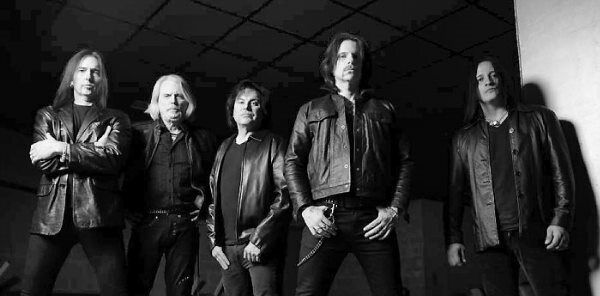
If he’s being honest, Gorham didn’t always know if there was going to be a second Black Star Riders album. The first one was largely a lark, but they had accumulated all these songs. Why not put them out?
“On the original record, we had no idea what to expect,” Gorham says. “As it turned out, it went great. Better than we could have anticipated. It recouped its costs. The label came to us and said, ‘Hey you guys — why don’t you do another?’. It was great, because we were able to take our time. On the first one, we had just 11 days in the studio. This time, we worked with a producer, had three weeks. We were pretty much happy-campers, working in the hills of Tennessee.”
The group will visit Ireland next week for a co-headliner with Europe at Dublin’s Olympia. Playing Lynott’s home town is always special. “It’s the spiritual home for all of us,” Gorham says.”That’s where it started. A gig in Dublin always feels unique for that reason. You want to give the fans the very best you can.”
- Black Star Riders play Olympia, Dublin, March 2, together with Europe
CONNECT WITH US TODAY



Be the first to know the latest news and updates

















