It can take years of hard work to become a great writer
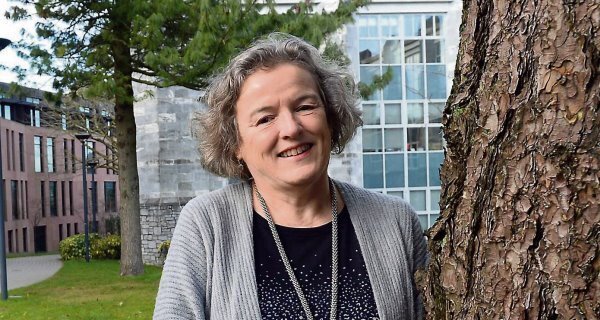
WRITER Mary Morrissy, who also lectures on the masters in creative writing at University College Cork, says she would have benefitted from such a course when she began her career.
But Morrissy, long-listed for the 2015 IMPAC literary award for her novel, The Rising of Bella Casey, admits she spent years making basic mistakes.
“I kept on making them, because there was nobody to point them out to me,” she says.
“Maybe it was character-forming, but if somebody had come along, I would have been quite happy to learn I was making mistakes. The MA in creative writing in Ireland really only started in the 1990s.”
Morrissy reckons the most common mistakes are flat characterisations and non-dramatic writing.
“Dialogue is often a problem for writers starting out,” she says.
But can creative writing be taught?
“You can’t make up for raw talent. But, at the same time, nobody asks this question of musicians that go to colleges of music, or of artists who go to colleges of art. There is a huge amount of technique in writing, that can be taught, and there are advantages from being in a learning environment.”
As to whether creative-writing courses result in formulaic novels, Morrissy says it depends on the workshops.
“There is certainly no conscious decision made that there’s a kind of workshop story that’s middle-of-the-road and acceptable to the consensus. There’s a huge range of responses to a piece of writing. It’s very subjective.
“I think there is a danger that, as a student, you might write to please the workshop, but that’s something to do with how you perceive the workshop.
“There’s a lot of superstition about writing and most of it is just that. Most workshops are full of individuals who probably couldn’t write to order, if you were to ask them to do that.”
UCC’s MA in creative writing has a comprehensive fiction component, divided between two terms.
The first term focuses on reading, looking at different forms, such as the novel and the short story, and practising their techniques.
“The second term is, basically, a workshop class where students are generating their own work, which is critiqued by their peers. I think the critiquing is as important as the writing, because the idea of the workshop is to learn how to read other people’s work.
“Ideally, you should be able to do that with your own work, knowing what’s wrong with it. All writers need to be able to do that. That’s editing, knowing what to cut out and recognising what’s not written clearly,” Morrissy says.
There are seven students undertaking the MA at the moment. It is a year-long course, but there is a part-time option, with the masters spread over two years.
“The numbers in the MA year are small and that makes a difference. Students are getting the full attention of three academic staff, as well as visiting writers. We also have a course on the business of writing, where literary agents and editors come in.
“Jools Gilson teaches writing as an experiment, which includes writing for radio. We don’t strait-jacket people. We look at distinct genres, including memoir writing with Eibhear Walshe.” A poetry module is taught by UCC writer-in-residence, Leanne O’Sullivan.
The media component will cover that area where fiction and journalism overlap.
“Students will look at non-fiction essays, arts critique and arts journalism. There’s also food writing with Regina Sexton, Darina Allen and Denis Cotter (from Cafe Paradiso). We will be looking at blog-posting and setting up websites, which all writers are almost required to have as a kind of shop window for their work.
“ A lot of these areas reflect areas that I have expertise in,” says Morrissy, who trained as a journalist and has decades of experience working in national newspapers, including a stint as a sub-editor at the Irish Examiner.
Morrissy says that while creative writing used to be considered a soft option in universities, it is now being adopted by corporations such as Google and Microsoft.
“IT companies say they can teach anybody technology, but they can’t teach them how to string literary sentences together.
“If someone has been through a creative-writing programme, they know how to do that and, in the US now, creative-writing graduates are considered ahead of almost any other graduates in terms of employment,” Morrissy says.
Being able to work full-time as a fiction writer is a luxury. Morrissy spent “three or four years” trying to get The Rising of Bella Casey published, before it was picked up by Brandon.
It tells the fictionalised story of the sister of Sean O’Casey, whom the playwright ‘killed off’ in his autobiography a decade before her death.
The book is one of five novels nominated by libraries for the €100,000 IMPAC award. Altogether, 142 Irish and international writers have been long-listed.
Morrissy has written another novel, which remains unpublished.
“I was facing into two novels sitting in the bottom drawer, until Bella Casey got published. Of course, that affected me. In many ways, it was like being invisible.”
Things certainly have picked up on the publishing front for Morrissy, and she has a collection of short stories due to be published next year by Jonathan Cape.
Getting published is difficult.
“Now, with celebrity publishing and the general squeeze on publishing and online competition, publishers take fewer and fewer risks.
“But I think it’s important not to get too hung up on publishing on an academic course. What we’re teaching is technique and craft and enabling students to be the best they can be, while steering them towards publishing possibilities.”















