Grace Dyas brings her play Heroin to Cork
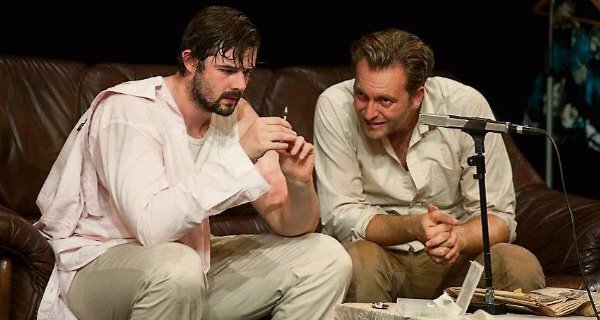
First staged in 2010, Heroinās themes include housing, mental health, the economy and citizenship. But its heart is how people value each other and why they take drugs.
Dyas grew up in Rialto, Dublin, between Fatima Mansions and Dolphin House, and was aware of drugs and addiction from a young age.
Her parents worked in community activism. āI was reared with the idea that addiction is a symptom of systemic failure, as opposed to it being the individualās own fault,ā says Dyas.
@THEATREclub National #HeroinTour for booking for all venues hit up http://t.co/xlUj77zFVr Please RT pic.twitter.com/ZDYpzTj5yn
— Grace Dyas (@gracedyas) January 19, 2015
Plays centred around activism interest Dyas and her Temple Bar-based Theatre Club.
Heroin was inspired by Dyasās work in a phone shop in Dublinās south inner city. āA lot of the time, the people coming in were drug users who needed to buy SIM cards. I developed a rapport with them. I wouldnāt have seen them as being any different to others on the street.
But other people in the shop had different perceptions of these customers. They were afraid, and sometimes understandably so. I was interested in the distance between my attitude and their attitude.ā
One day, Dyas was involved in an altercation at the shop. An angry drug-user, who was having problems registering his phone, spat at her.
āI went downstairs, cleaned myself up and came back. People were really angry, worried that I had Aids. They thought the drug-users should be rounded up and shot and they were saying things like āsterilise them and send them off to an island.ā
"I became interested in this commonplace demeaning of an entire group of people. I wanted to make something that would bridge the gap between the perception I had, which was probably too liberal and naive, and the perception of my colleagues,ā she says.
'How come he don't want me, man?' #HEROINtour #freshprince pic.twitter.com/3Wy4L77qrq
— THEATREclub (@THEATREclub) January 28, 2015
Dyas spent two years researching the subject. āI compiled an ethnographic history of heroin in Dublin, from the 1960s up to the present day,ā she says.
The resulting play, which is improvised by three actors, but within the framework of rules and games, creates āa feeling in the audience, rather than just telling them the storyā.
Conflict arises between the addict and another character, who represents society.
The play has also had input from Rachael Keogh, a former drug addict and author of Dying to Survive.
She made the headlines in 2006 when she risked losing her arms because of drug addiction, yet couldnāt get into a treatment centre.
Dyas hopes to have a broad mix of people in her audience, from students to those involved in combating heroin abuse. From speaking to people in Cork, Dyas heard that heroin had previously been kept out of the city.
āBut itās becoming a problem in Cork, because itās more available and thereās a proliferation of people dealing. There is this feeling that history could repeat itself, which is really frightening. Cocaine was massive in Cork during the boom.
Now, weāre hearing about heroin. Itās basically up to communities and services as to whether it becomes an epidemic or remains a relatively small problem.ā















