Lippy gets great word-of-mouth
It has since been to New York and the Edinburgh Fringe, with a run in London to come.
Before that, via a run on the Abbey Theatreâs Peacock stage, Lippy has a chance to cease being the best new play no-one has seen, and to get the audience it deserves.
Lippy is full of striking elements. At its core is the true and chilling story of how, in 2000, three sisters and their aunt starved themselves to death in a house in Leixlip.
Around that, it meditates on lip reading as a metaphor for the dramatistâs trade: putting words into othersâ mouths.
It begins with a post-show discussion of a play the audience hasnât seen, and uses framing devices, sound-effects and choreography to generate an emotional, visceral context around the deaths, the truth of which can never really be known.
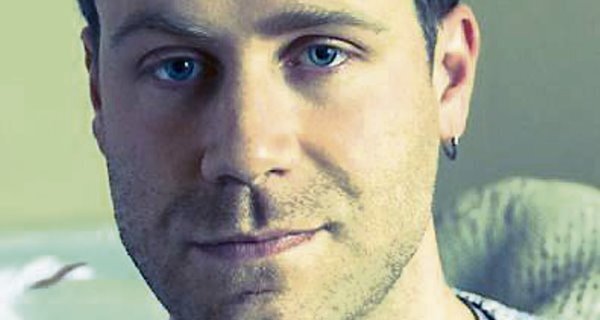
Lippy has been widely lauded as meta-theatrical and daringly experimental. Yet, for its creator, Bush Moukarzel, Lippy is not a comment on theatre, but on his own all-encompassing, maximalist approach to his art.
âI donât know how other peopleâs minds work,â he says, âbut I canât think of anything in isolation. With all that over-stimulation, with there being a post-show talk, films going on, this reference to Beckettâs Not I, itâs like a hyper-text, everything is connected and resonant.
The ridiculous and the sublime are always courting each other.
âSo it seems an honest way of rendering something, in that way. Iâm not trying to be deep or clever. Thatâs the simplest way I can put it.â
Moukarzel says all artists are realists. Then he pauses, to think who said that. This prompts an aside on the nature of memory, ideas and plagiarism.
Itâs fun talking to him; his intellectual hinterland is an interesting place â Beckett, Charlie Kaufman and David Lynch rub shoulders. Moukarzel was an acolyte of cultural critic Slavoj Zizek before it was cool.
An interest in French psychoanalyst Jacques Lacan brought Moukarzel from the UK to Dublin, where he studied psychoanalysis at Trinity College.
Powerful LIPPY coming to @AbbeyTheatre this Jan.http://t.co/9OWNSMTI3r http://t.co/cjbv7MFgxC
— Dublin Gigs (@RealDublinGigs) January 27, 2015
Then, he began working with PanPan Theatre Company, before forming his own company, Dead Centre.
âThe different strategies of artists are just ways of capturing reality. Realism, per se, is deeply artificial. But with this post-dramatic, meta-theatrical whatever it is, the goal is still realism.
Theatre as a subject is not that interesting to most people. You canât really be commenting on theatre all the time.
The thing about these tropes is you want them to tap into the feeling, to ring true at a basic emotional level, and not just be some intellectual game or joke.â
Moukarzel describes himself as ânot a line-by-line playwrightâ. He starts with images, he says. In this case, the idea of lip-reading, and the idea that it might be âjoyousâ to start a show with a post-show discussion.
Around that, he says, the plan was to insert a central story, but the company had qualms about including such sensitive material.
âInitially, we said ânoâ, it would be irresponsible to do the Leixlip story. We have no right to do that story.
We felt a bit odd, too, as Englishmen in Ireland and this seemed such an Irish story, but nothing was as compelling.
So, we finally said, âYes, itâs going to be these womenâs storyâ,â Moukarzel says. âAnd all those questions: the right to tell a story, the ethical implications â thatâs what the play became about.
We kept talking about what a Tom Murphy play about the Leixlip women would be. Weâre not superior to that idea, we just knew we canât do that. So, we thought, âWhatâs the other wayâ?â
The other way is a haunting speculation. The dead refuse to tell their tales. But we see them. The play taunts us with the unknowability of their experience, raising questions about not only drama, but human relations.
Thereâs been nothing like it on an Irish stage.















