Mick Flannery is not worried about his current musical dry spell
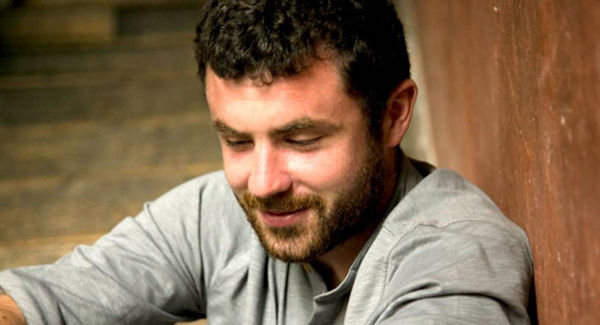
MICK FLANNERY doesnāt know where his next song will come from.
The cult troubadour is creatively becalmed, in the middle of the longest dry spell of his career.
Should he worry? Heās not sure.
āMusic feels āoldā to me,ā he says.
āI havenāt been writing as much. Itās been a while since I finished anything. I miss finishing a song: itās a nice feeling.ā
Flannery, 31, rents a cottage in rural Clare, just outside Ennis.
He moved here with his girlfriend after a sojourn in Berlin.
The contrast is, needless to say, huge. But the change in location hasnāt fired his creativity.
He shrugs: thatās just how it is.
āThis is the longest period Iāve gone without writing a song. I donāt panic about it. I still tip away on tunes. I play guitar every day.ā
The problem, it seems, is that he is in a happy place in his life (though he would never say as much out loud).
Stability is wonderful for most of us: for songwriters, though, it has serious drawbacks.
With no misery to channel, what do you sing about? Flannery is still trying to answer that question.
āI have less to say ā nothing to say, actually,ā he explains.
āIām not a huge fan of firing off some lyrics for the sake of it. Iād prefer to have a vested interest in what Iām putting out there. Iāve toyed with various conceptual ideas, in the hope something might kick-start me. Iām still waiting.ā
Writerās block aside, itās been a good year for Flannery.
He negotiated a potentially tricky transition between record labels after EMI, with whom heād worked with all his career, essentially ceased to exist in Ireland.
With its constituent parts sold off to other labels, Flannery found himself signed to Universal, the worldās biggest record company.
In April, it put out his fourth LP, By The Rule.
āMy experience on that last record was particularly good, I have to say, for someone on a major label. In the context of Universal being a major, well, I work with the Irish subsidiary. Itās not as big, it doesnāt feel like a monster. They were very hands-off and let me do what I wanted, which I appreciate.ā
For the most part, he leaves the non-musical side of the job to his manager, he adds.
āItās a business,ā he says.
āI donāt think anyone sees the point of becoming lifelong friends. Itās cut and dried: if they donāt want you , thatās it. There arenāt going to be any Christmas texts afterwards. So itās best to keep a certain distance.ā
Early on, Flannery developed a reputation for intense shyness.
There is the oft-repeated anecdote about him throwing up before a high-profile appearance on The Late Late Show.
Such reticence in the spotlight was sometimes mistaken for grumpiness (in fact, in conversation, Flannery can be witty and charming).
Thankfully, as his career has progressed, so the jitters have declined.
It helps he is no longer performing in super-intimate venues ā curiously, he finds it easier to headline larger spaces such as the Olympia in Dublin than cosy clubs.
Itās more straightforward when you canāt see the whites of the audienceās eyes.
āI still get worried, especially if Iām performing in an imitate setting,ā he once said.
āIt crosses my mind that I might not be able to hold an audienceās attention, because of the style of songs I do and the fact Iām not a virtuoso at guitar ā I canāt fill in the gaps between songs with astounding solos. On the other hand, experience makes things easier. You think āWell , I have performed 300 times before and I havenāt died. I can do it againā.ā
Flannery is recently returned from a tour of Australia, with John Spillane.
Though both are from Cork and nominally in the singer-songwriter tradition, as artists, the two arguably do not have a great deal in common.
However, Flannery enjoyed their time together.
āIt was kind of a āpackage dealā,ā he laughs.
āWe did four cities in New Zealand and four in Australia over quite a short period. We had a flight almost every day: it was hectic. It was enjoyable. I felt a good deal less pressure. When youāre sharing the headliner spot, the responsibility isnāt as onerous.ā
With his own gigs, he sometimes feels he is begging the indulgence of the crowd.
Flanneryās songs can be bleak ā too bleak in his opinion. After 60 minutes or so, he believes he has subjected the room to more than enough angst.
He wants to pull back the shutters, let some daylight in.
āI wonder if Iām going on too long,ā he says.
āItās like Iām bombarding the audience with misery upon misery. I try to break it up with some stories. Nevertheless, I usually feel an hour is enough. After that, maybe they should go away and take some Prozac.ā
A native of Blarney, heās enthusiastic about his upcoming New Yearās Eve concert at Cork Opera House.
Hometown shows can be nervy affairs ā thankfully the crowd is usually on his side and their enthusiasm carries him along.
āThe audience nearly always puts you at ease. A lot of these gigs attract people home for Christmas. Thereās a great hometown vibe: it does have a positive effect.ā
After that, a busy 2015 awaits.
Flannery enjoys a substantial German following and is looking forward to going back for a tour in the New Year.
He would not describe himself as ambitious in the commercial sense. Still, the prospect of taking his music outside Ireland excites him.
āThe album is being promoted in Germany in February. The last time I played there, a lot of the gigs were sold out. The venues were 150, 200 capacity. I always remind myself that if the 15-year-old me was to be told that heād be going to Germany and playing gigs for money he wouldnāt believe it. I try to keep that in mind.ā














