Movie Reviews: The Hobbit
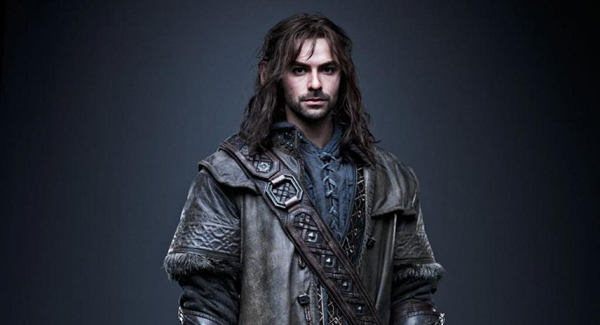
Peter Jackson doesn’t waste much time ramping up the drama in the third instalment of The Hobbit trilogy, Ousted from his mountain lair at the end of the previous movie, the wicked dragon Smaug (voiced by Benedict Cumberbatch) swoops down on Lake-Town to wreak a fiery revenge. Led by Bard (Luke Evans), the bedraggled human survivors subsequently take refuge on the mountain’s slopes, only to find themselves trapped by the advancing armies of Elves, Orcs and Dwarves, all of whom have designs on the vast horde of gold in the mountain’s caverns, which is defended by the Dwarf king Thorin Oakenshield (Richard Armitage) and his tiny band of loyal followers and the less-than-faithful Bilbo Baggins (Martin Freeman).
What follows is as visually spectacular as anything Peter Jackson has served up in the past, the dramatic landscapes and stunning interiors providing a suitably impressive setting for the conclusion to JRR Tolkein’s mythical epic. The story is jam-packed with incident, reversals of fortune and extended action sequences, which come so thick and fast that they almost, if not quite, obscure the myriad plot-holes. Richard Armitage takes the acting plaudits for his turn as a once-noble king corrupted by unimaginable wealth and power, but for the most part very few of the characters are given enough screen-time to allow them make anything more than the most fleeting of impressions (Billy Connolly, galloping into the story as a marauding dwarf astride a giant pig, is one of the few exceptions). As might be expected from the title, the superbly choreographed battle provides the movie’s centre-piece, a long and involved series of brutal encounters that might have been shorter and even more brutal had just one of the armies involved employed even a modicum of basic military strategy.
As always with the Lord of the Rings / Hobbit movies, however, the normal rules of engagement do not apply. What the audience craves is magic, myth and spectacle, and Peter Jackson, for what he promises is the very last time, provides it in spades.
offers a very different kind of magic, spectacle and myth-making, and one that will likely press all the right buttons for its target audience. Adults willing to give it an opportunity to impress, however, will discover a sub-textual message that certainly aims for profundity.
Tinkerbell’s (voiced by Mae Whitman) fairy friend Fawn (Ginnifer Goodwin) prides herself on her knowledge of Pixie Hollow’s fauna, so she’s perplexed when she encounters a huge, shaggy and fearsome creature who appears to have emerged from a very long hibernation to begin building odd towers from stone.
When Scout Fairy Nyx (Rosario Dawson) discovers that the infrequent appearances of Gruff, as Fawn calls him, always coincide with a massive lightning storm that threatens to destroy Pixie Hollow, she sets out to banish the beast.
Directed by Steve Loter, the movie offers the usual Tinkerbell blend of fairies interacting with nature in a colourful, beautifully animated setting in order to deliver a learning experience. This it does, with verve and style, but while the takeaway message for young children is a conventional lesson on not judging books by their covers, adults might note the iconography employed for the NeverBeast’s more dramatic moments of self-sacrifice on behalf of his friends, and the unusually downbeat ending, and conclude that this movie is one that might have been better timed as an Easter release rather than a Christmas one. Recommended for young and old alike.
The FBI reckoned it was something of a Communist manifesto — how dare Frank Capra bash those caring, sharing bankers like that? — but survived official disapproval and a lukewarm reception on its original release back in December 1946 to become one of the most well-loved Christmas movies of all time (the fact that it didn’t go on general release until January 1947 probably didn’t help its box-office appeal).
James Stewart plays George Bailey, an unusually well-liked bank manager in the small town of Bedford Falls, who makes a mistake on Christmas Eve that plunges him into despair. Believing that the town and his family will be better off without him, George tries to take his own life, only to be saved by his guardian angel Clarence (Henry Travers), who then shows George what life and the lives of those around him would have been like had he never been born.
The very definition of heartwarming stuff, and essential viewing at this time of the year (IFI and selected cinemas).

CONNECT WITH US TODAY



Be the first to know the latest news and updates

















