Poet Theo Dorgan is making the most of it all
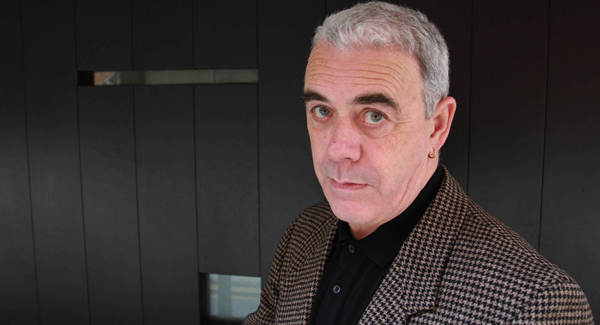
Theo Dorgan tells Alan O’Riordan about keeping busy on the incredible journey of life

Poet Theo Dorgan is making the most of it all

EXTRAORDINARY. It’s a word one hears often in conversation with Theo Dorgan. Its repetition speaks to his ability to appreciate life – something that could be a lesson to us all. But it also works, punningly, as a description of his work.

Dorgan comes often to the ordinary, and adds a little bit extra — a renewing turn of phrase, an injunction against taking things for granted, an invitation to stop and observe, to notice landmarks on this one-way, once-off journey with a shared inevitable end.

We are discussing his latest collection of poetry, Nine Bright Shiners, in a Dublin cafe, its high windows overlooking Kildare Street and College Park. “There are a lot of elegies in the book,” he says, “partly because you arrive at a certain age, but also because you spend a long time in your life learning how to deal with grief, how to permit grief to find its way into the words and not be making a cheap effect of it. It takes a long time to allow the impress of someone else’s life come into harmony with your own thoughts and feelings.

“There are so many elegies because there are so many people dead who matter to me but also, I think, because I found an equilibrium in myself and an ability to accept grief rather than try to dismiss it. But there are lots of love poems too.”

The Cork-born poet’s elegiac bent takes him beyond those he has known to some extraordinary – that word again – meditations, including the death of his great grandmother, giving birth to his grandfather on board a ship rounding Cape Horn, a journey the poet himself has undertaken in his late vocation as a sailor.

There at the end of the world, her house of memory caving in,/ in lamplight, maybe, or in weak daylight failing, the cold,/ it would have been cold, her fear for the child, the ebb/ in her blood, her last thought a nurse for the child.

That nurse is the reason Dorgan is here. It’s a stroke of randomness that chimes with his evident gratitude for the simple fact of being here at all. “Out there,” he says, “in the void of history, there might not have been a wet nurse for my grandfather and none of us would have come into existence. It was as arbitrary and as accidental as that. It was after I’d written about that, in one of the sailing books that someone said, ‘You know, the reason that woman had milk was maybe because she’d lost her own child’. And all the years I’ve been thinking about that story, it had never occurred to me. So, I have a whole new way of thinking about it —gratitude to that anonymous woman for the gift of my life through my father through his father.

“It’s such an extraordinary thing to be here at all. It’s just so unlikely. Once you have that sense of the unlikelihood coming into collision with the phenomenal world — that’s where songs come from, paintings, poetry, the real thing. I’m not claiming that history will judge that, but at least I tried for that register.”

The last five years have seen Dorgan produce two volumes of poetry, a novel and a memoir. He has another novel forthcoming, and a draft volume of poetry, not to mention books he’s edited, including Foundation Stone, a collection of essays on Ireland’s constituntionality. It is, he says, more work than he produced in the 15 years before this. Is there a sense, at 61, of making up for lost time?

“Well,” he says, “I’d be codding myself if I didn’t think there was more time gone than remaining. It certainly makes me not want to waste writing time on vain or futile things. I regret the unwritten books, but I don’t regret anything I ever did.

“Everything you do matters. Walking the dog is important, waiting for the postman for a neighbhour, that’s important. Just as important as reading a good book. It doesn’t get the poems written, that’s the problem.”

Dorgan’s life not writing poetry has been lived as an engaged citizen, university lecturer, literary officer, arts organiser, manager and promoter, political commentator, activist, journalist and commentator. Not poetry, but hardly vain or futile things.

“I’m not looking forward to the deathbed calculation,” he says, “but what I do think is that you have a responsibility to care for the world we share with other people. It’s all very well to say you care for the ecology of the island, but the human ecology matters as well. I grew up in quite poor circumstances but was given from the start, by my parents, a very simple straightforward sense of my own dignity.

“Anything that offends against that dignity of the person, I will not let go unremarked. It’s not a learned sense of solidarity, it’s instinctive, but it’s also profound. A lot in this mismanaged Republic is about losing sight of the fundamental dignity of each and every person who lives here.”

Dorgan doesn’t distinguish between the responsibilities of the citizen and the poet — “Poets are eminently practical people too” — and the first poem in Nine Bright Shiners is testament to that. As is often the case in this volume of observations, we find the poet, or at least the “I” of the poem, looking on having a pensive cigarette outside Government Buildings on Kildare Street.

“In his vision, some ghostly enumerator stands in the colonnade of the National Library, striking off the names of “Senators, Deputies, Ministers” until “a scant dozen remain”. That so few are up to the history’s judgment leaves the poet “afraid for my country”.

The scene came to Dorgan while he was sitting at home with his dog. But the feeling is all too real: “I’m disgusted with the nonentities that have drifted into power in this country,” he says, “as opposed to people of passion and insight and intelligence. “If you drew a graph from Wolfe Tone, through O’Connell and Parnell and Pearse and Connolly, down to the present, that graph is on a steep descent.

“I saw this poem, I saw this figure in the collonade, looking at the Dáil and thinking, none of them are fit for purpose. Maybe a few. Writing them off one after the other. I thought, that is how history will judge us.”

For good or ill, it’s a sentiment Dorgan attaches to his own work. “You don’t have a career in poetry,” he says, “you have a life in poetry if you’re lucky. History will decide whether you’re a poet or not. If people ask ‘Are you a poet?’ sometimes to save time I say ‘Yeah’. But mostly, if they’re attentive, I say I write poems.

“History is the judge we all offer ourselves up to. I go back to Tom McCarthy’s luminious phrase from an early volume: ‘To lay art anonymously at earth’s altar’.”

Nine Bright Shiners is published by the Dedalus Press. The book will be launched at Triskel in Cork on Saturday at 2.30pm

x

More in this section

Cookie Policy Privacy Policy Brand Safety FAQ Help Contact Us Terms and Conditions

© Examiner Echo Group Limited













