Science behind good writing
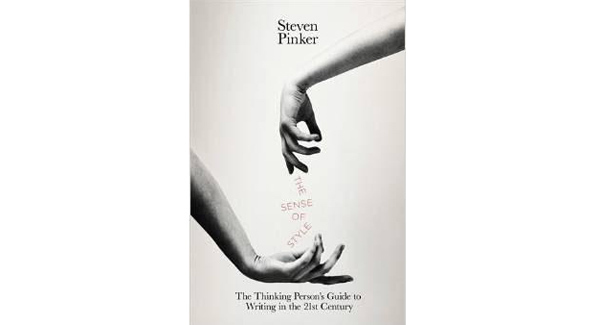
EVERY generation believes âthat kids today are degrading the language and taking civilisation down with itâ. This can be traced all the way back to ancient Sumerian clay tablets, some of which âinclude complaints about the deteriorating writing skills of the youngâ. Yet in Stephen Pinkerâs opinion it is the professionals and not the âtweeting teenagersâ whose work is frequently unreadable. Peruse a legal document or one of the more obfuscating examples of academic writing out there and one might readily agree.
Chair of the Usage Panel of the American Heritage Dictionary â a body at once obscure and intimately concerned with how language is used in everyday life â Pinker is a Harvard scholar specialising in psycholinguistics, that being the psychological and neurobiological factors which enable the acquisition, use, and comprehension of language. He is probably best known beyond the academy for The Language of Instinct (1994) and The Stuff of Thought (2007) volumes which, like The Sense of Style, attempt to demystify dry technicalities for the general reader.
Despite its title, however, Pinkerâs latest is not simply a style guide in the vein of Strunk and White. It is neither a reference manual on, say, the use of hyphens or capital letters, nor âa remedial guide for badly educated students who have yet to master the elements of a sentenceâ. Instead The Sense of Style is a book for people who already know how to write and want to write better, those who are âinterested in letters and literature and curious about the ways in which the science of the mind can illuminate how language worksâ.
For Pinker, the use of language is innate, a faculty born of natural selection and honed by the needs of human communication down through the generations. The âconventions of usage are tacit,â he quite rightly tells us; âthe rules of standard English are not legislated by a tribunal of lexicographers but emerge as an implicit consensus within a virtual community of writers, readers, and editorsâ. Writing then is a living, evolving âconstructionâ and Pinker is here to wrestle it back from the rule-crazed âprescriptivistsâ.
A touch of neuroscience is involved in this process as the author investigates why we communicate the way we do. Diagrammed sentences and the âtangled spaghettiâ of looping arrows inside âknowledge websâ dominate the front half of the book but the reader should not fear these. They serve to illustrate Pinkerâs theories about âgoodâ writing and their schematic approach, totally at odds with the more intuitive manner by which composition is often thought to occur, certainly has its value.
By investigating the difference between ârightâ and âwrongâ modes of expression in this way, Pinker offers the reader an amusing history of âspurious rulesâ. He cautions against being âtoo logicalâ (spelling lose as loose, for example, âwhich would make it follow the pattern in chooseâ) and being afraid to begin a sentence with a conjunction (âwhatever the pedagogical merits may be of feeding children misinformation, it is inappropriate for adultsâ).
He is also happy to ignore âthe quintessential bogus ruleâ prohibiting split infinitives and backs up this position with evidence that there is, in fact, no grammatical basis for rejecting them. It is merely one of several holdovers from the writing guides of the 17th and 18th centuries, a time when âLatin was considered the ideal language for the expression of thoughtâ and guides to English grammar were written as âsteppingstonesâ to mastery of a language where infinitives such as âto goâ are a single word. Thus, says Pinker, Captain Kirk may continue âto boldly goâ without fear of linguistic reprimand.
Not that Pinker is accepting of everything. There are plenty of examples here of bad writing which he takes to task in demonstrative fashion. While it is impossible to ignore the fact that some of these are straw men, there are so many straw men to be found in writing today that it is difficult for the author to ignore them. For instance, no one can really argue with the need for a serial comma to clarify Peter Ustinovâs âencounters with Nelson Mandela, an 800-year-old demigod and a dildo collectorâ. Conversely, the âgoodâ writing Pinker praises includes several quotations from his wife, the novelist and historian Rebecca Goldstein. But then, one supposes, there is no style rule against favouritism.
Those questionable inclusions aside, the final and most traditional portion of The Sense of Style provides âa judicious guide to a hundred of the most common issues of grammar, diction, and punctuationâ. And yes (sentences beginning with conjunctions are fine, he says), it is this part of the book which will no doubt prove most useful.
Some of Pinkerâs advice is obvious â âstart strong, not with a clichĂ©â â but other insights â such as the crucial âdifficulty in imagining what it is like for someone else not to know something that you knowâ â are worth the attention of anyone working in prose.
âFactual diligenceâ, says Pinker, is always better than the pedantic adherence to the rules, especially when it comes to the issue of clarity.
Indeed, if there is one aspect of poor writing which aggrieves the author it is the kind of ambiguity which requires one to re-read material in order to determine what is actually being said. Does The Sense of Style itself always achieve this? No, not always, but even if the more involved aspects of grammar or linguistics occasionally waterfall past the reader, the book on the whole is informative, stringent when it needs to be, and, for all of that, even fun. It may not make a fully-fledged writer out of a scribbler but it will surely make better writers out of those âwho seek a cure for their academese, bureaucrarese, corporatese, legalese, medicalese, or officialiseâ.
Dr Val Nolan lectures on contemporary literature and creative writing at NUI Galway. His story âThe Irish Astronautâ was shortlisted for this yearâs Theodore Sturgeon Award.















