Pure Bliss for Panti aka Rory O’Neill
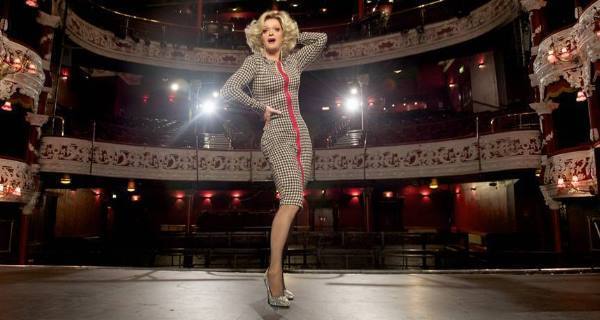
Rory O’Neill, aka Panti, tells Caroline O’Doherty we need to man up to legalising drugs and why he doesn’t want to marry as it’s way too boring.

Pure Bliss for Panti aka Rory O’Neill

When you’re a six foot tall male accustomed to addressing crowds in stilettos, it seems unlikely any audience would faze you.

But Rory O’Neill, otherwise known as Panti Bliss, the country’s best known drag queen and accidental gay rights activist, recalls the alarm that seized him when he saw his mum and dad scrutinizing his latest work— his newly-published memoir.

“I made it very clear to my parents I didn’t want them to read the book or at least that if they really wanted to then I would curate chapters and tell them the ones they could read, but my parents are sneaky.

“A few days after it came out I got a picture sent to me by my sister and it’s of both my parents sitting at the table reading the book and I was like, STOP THEM, STOP THEM!”

Instructions to avoid parts of Woman In The Making were hardly going to hold sway when O’Neill dedicated the book to his parents “who always let me be whomever I wanted to be”.

But you can see why he might have liked them to skip over pages that could be broadly be described as depicting sex, drugs and rocking the boat of social convention on a grand scale.

One early chapter in particular would make any parent’s hair stand up higher than one of Panti’s gravity defying wigs.

Rory takes off for Japan after college to teach English and finds a wildly hedonistic gay nightlife where a young western male is an irresistibly exotic species and he milks the madness to excess. He ended up with hepatitis and although he can’t be exactly sure when, he also contracted HIV.

“My niece is 21 and if I thought she was doing half the stuff I was doing when I was 21, I’d be locking her into her bedroom and never letting her leave,” says protective Uncle Rory.

“But do I regret my youthful excesses? No, they’re part of what made me who I am today and I’d be a different person if I hadn’t done that.”

Recreational drug use was among the excesses and Rory is unapologetic about it. He believes there is a need for a discussion about legalizing some banned stimulants.

“Not only did I sometimes have a great time [using drugs] but I also learned things about me and about life. The only issue that bothers me is the criminal element — where drugs come from.

“That bothers me on a moral level but I guess you could argue that the criminal element has actually been created by our silly attempt to stop drugs.

“The famed war on drugs has been a disaster and it has created more problems than it fixed. People can’t even mention drugs without being vilified for it.

“I think we need to have a realistic conversation about the best way to minimise the damage from drugs and protect people.”

It says something about how Ireland has changed that Rory feels he is more likely to cause outrage for suggesting drugs be legalized than for being an openly gay man parading his sexual exploits across the pages of his memoir.

He grew up in Ballinrobe, Co Mayo, one of six children of the local vet, and was an exemplary altar boy who loved the pageantry of the Mass. He may have been on an altar but to Rory it was as good as a stage.

After a while, however, the script began to leave him cold and he and Catholicism parted company when he was 11 years old, the visit of Pope John Paul II to nearby Knock — comically recalled in the opening chapter - being the over-hyped, underwhelming experience that broke whatever was left of the religious spell.

As a teenage boarder at the Franciscan run Gormanston College in Co Meath, he was lucky to escape with a mere groping by the infamous Fr Ronald Bennett who was convicted in 2006 of sexual assault against boys there in the 1970s and 1980s.

Others he knew were not so lucky. “I suspect it’s true of a lot of people like Fr Ronald where they really tended to pick on boys who didn’t have a support system. I had lots of friends and was a mouthy kid which, in retrospect, probably protected me.”

Being mouthy has its pros and cons, as Rory found out early this year when he took part in a discussion on homophobia on RTÉ’s Saturday Night Show and his comments ended up in an €85,000 payout by a groveling RTÉ and some lively Dáil debates about censorship and the national broadcaster.

Pantigate, as the affair became known, brought Rory to a much wider national audience but that audience became global soon after when the Abbey Theatre invited him to give one of the post-show addresses they were running after performances of The Risen People.

As Panti, he gave a heartfelt speech about what it’s like to be gay in a society where some people have a problem with homosexuality and no problem saying so.

The address went up on Youtube and became an international viral hit, much to Rory’s amazement. “I felt like I was just getting stuff off my chest. I had no idea that that stuff was on other people’s chests too.”

One of the outcomes has been the publishing deal for his memoir, a funny and frank account of a boy and a country getting to grips with homosexuality.

The other is that he’s come to be regarded as unofficial spokesperson on all things gay — a role he accepts with some bemusement, particularly when it comes to the upcoming marriage equality referendum.

“It’s a constant tension with me because marriage was never what I wanted for myself. One of the things I always liked about being gay is that it sort of relieved me of all of those pressures.

“ I didn’t really want to be respectable and normal and there is a part of me that is disappointed young gay people nowadays want to be like everybody else.

“ I will fight to the death for their right to be normal because they should be able to make their own decisions about their own lives but I do sometimes regret that sort of mainstreaming of gay culture. Thankfully you always find pockets of resistance.”

Keeping a foot in both camps is challenging for a drag queen, particularly when it’s clad in a stiletto, and Rory makes the shocking revelation that dressing to kill is damned uncomfortable.

“You have the padding and the corsetry and the tights and all of that and then you’re wearing this giant big thing on your head. I’m 45 now. When I wake up in the morning after a night on stage, I’m stiff.”

He even admits to dropping the corsetry on Sunday nights at the PantiBar gay bar he manages when he likes to lounge in kaftans and open-toed, though not casual, shoes.

He’s adamant he won’t end up in velour track suits though, and Panti will never bat an eyelid without her wind-generating lashes.

“No thank-you. I have standards. There are some things I’ll never compromise on.”

x

More in this section

Cookie Policy Privacy Policy Brand Safety FAQ Help Contact Us Terms and Conditions

© Examiner Echo Group Limited













