A healthy balance for children
RECENTLY, Feelgood reported that Kildare GP Dr Brendan O’Shea recommends that family doctors weigh children in the fight against childhood obesity.
According to a study which involved 500 children, almost 99% of the parents found this useful.
In a surgery setting and under the guidance of a GP, presumably with a dietician on board as well, and with the collaboration of the parents, I imagine this would be an important tool in helping a clinically obese child achieve a healthy weight.
However, I am deeply concerned that some parents might see this as a signal to buy scales to weigh their children at home, and that the scales will then be used incorrectly, because it’s very easy to become fixated on those numbers.
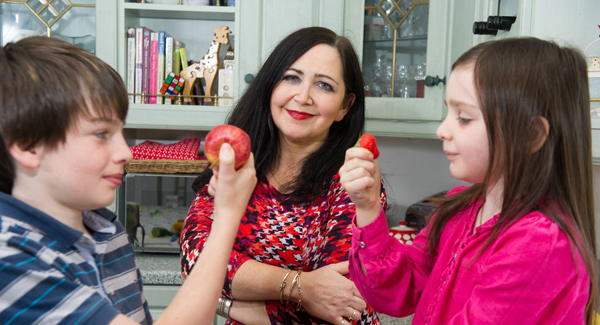
And it’s here I have to weigh in, if you’ll excuse the pun, as a mother of four and parenting writer. My advice is: do not buy weighing scales for your child to use at home.
Yes, some children are seriously overweight and need to be weighed by a GP so that a plan of action can be put into place. But as any person who has successfully lost weight will attest: it doesn’t all happen on the scales. It’s about your lifestyle, it’s how you look, it’s how energetic you feel and it’s how your clothes fit.
If using weighing scales is isolated as the way forward then we really are failing obese children. I feel the onus is on parents to make informed decisions about their children’s lifestyles. As a mum, I’ve made some pretty unpopular decisions, one of them around school lunches.
Recently, I was in a shop with my six-year-old daughter and she picked up a yoghurt — one of those yoghurt and chocolate ball combinations, where you tip the balls in, mix and enjoy.
Except, she wouldn’t get to enjoy it.
“When can I have one of those in my lunchbox?” she asked, hopefully. “Sorry darling, I don’t get those for lunchboxes. There’s a lot of sugar in them and they’re not very good for you,” I replied.
I could write a long list of the stuff that won’t get near my children’s lunchboxes. It’s the stuff that’s stacked high and wide in your local supermarket — the sort of novelty and dairy snacks and sugary drinks in cartons that scream: ‘Handy! Pick me! Quick, throw me in a lunchbox!’ They’ve got such an appeal for our busy lives, don’t they? Because it means we don’t have to think, prepare, chop or cook.
I’m not a nutritionist, just a concerned mum, who got fed up being bombarded by advertisers telling me what foods to buy my growing kids.
Instead of multi-pack yoghurts, which are full of artificial ingredients, we use natural live yoghurt and add berries and a teaspoon of Manuka honey. It takes more time to prepare but I’m satisfied that I know exactly what they’re getting.
I know it sounds really mean but I’ve become a purveyor of the classic old-fashioned lunch, the sandwich with savoury filling, plenty of fruit and a beaker of water – no juice. It’s not always basic and boring – the kids get fruit salads with dressing, tubs of noodles or pasta with veggies, cheese and crackers, chopped veggies with dips. I just tend to avoid products that you rip open and suck out in three seconds flat. I don’t need to read the label to know that these products have little nutritional value.
We used to buy those small yoghurt drinks that are good for the gut. But when my kids starting raiding the fridge for two and three each a day, I knew they had to go. I just stopped buying them. The kids’ guts are okay, by the way.
And before I’m condemned, we have our down days too and the kids get treats. We all love chips and pizza. And who doesn’t love to dunk a biscuit in their tea? But as the main carer, I have the biggest say in my children’s overall nutrition and if I have to put my foot down I will.
What I have found is that if you buy the junk, they’ll eat the junk. That’s why I rarely bring fizzy drinks, or even squash into the house. I don’t buy supermarket cakes or buns. That doesn’t mean we go without, however. We bake them ourselves so I know what’s going into them. There’s always a ‘healthy’ twist and I like to teach the kids about nutrition as we go along. We prepare a lot of vegan meals and we examine the labels on food products.
Kids know when they’re full. But how many times have you found yourself saying: ‘Finish up. If you don’t eat up you won’t get dessert.’ We’re teaching our children how to ignore their own vital body cues about when they are full, that they’ve had enough. We have to allow our children to self-regulate. We can blame advertisers all we want, but whoever is doing the household shopping is responsible for what goes into the trolley. Whoever is doing the cooking at home is responsible for what the kids are eating.
There are children who don’t eat vegetables because their parents don’t buy, cook or eat vegetables. I know grown men and women who wouldn’t know what to do with a packet of lentils. And yet they are one of the most nutritious and best value foods available .
I have regularly seen babies who are still in the period of being weaned onto solids (under 18 months old) sitting in fast food outlets chewing on chips, eating a packet of crisps or being fed a fromage frais and washing it down with a ‘fruit drink’ from a purple plastic bottle. This is their lunch!
A seeming plateau in obesity trends in older children in recent years shouldn’t bring much comfort and it’s far too early to be reassured because, according to Dr Cliodhna Foley Nolan from Safefood, obesity in children in Ireland remains at ‘dangerously high’ levels.
“One in four children at the age of three are either overweight or obese,” says Dr Foley Nolan. “10% of eight year olds are showing signs of high blood pressure, a pathology is starting to happen.’
Fighting obesity and teaching children about making healthy food choices starts at home. It starts with the shopping list. It starts inside the fridge and the larder. It starts when we’re pregnant, when we’re weaning them off milk and onto solids.
It doesn’t start on a set of weighing scales in the bathroom.
1 Stop buying junk. Avoid the sweets, biscuits, crisps and drinks aisles.
2 You have the final say on what you buy. Be mindful of advertising. Read the labels on products.
3 Don’t be pressurised by the kids. Explain what you’re doing and get them on your side.
4 Plan what you’re going to cook a week in advance. Think ahead so you’re not relying on ready meals at the last minute.
5 Make a salad with every single meal. Hand this job over to the kids — they’ll love deciding what goes in and they’ll enjoy the chopping.
6 Teach your child how to make smoothies. Experiment with combinations and colours.
7 Look at your weekly dinners. Too much meat? Replace some meals with vegetarian or vegan options.
8 Talk to your child about looking after their body, keeping it strong and healthy and choosing foods that work like ‘fuel’ for good energy.
9 Eat meals at the table rather than on the sofa or in front of the TV.
10 Use the money you’ve saved on junk food and take the kids to the cinema — but bring your own healthy snacks.








