Mary Black talks life and motherhood
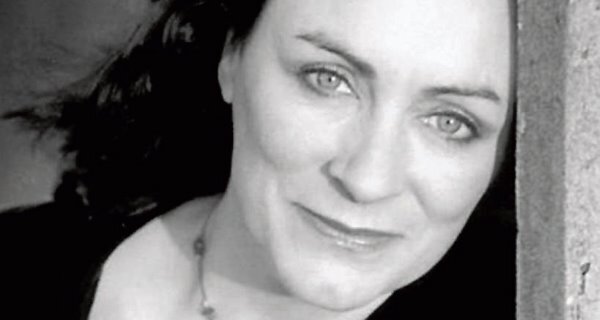
MARY Black uses her recentlypublished autobiography to announce she’s retiring from touring — just as she gets ready for the first of 43 gigs across North America and Europe.
“I know, I know. I tell everyone I’m cutting down on my work and I’ve never been busier,” she says of juggling tour preparations with the book publicity and the launch of the accompanying album.
“It’s the Last Call Tour but someone said to me, I suppose after that you’ll have the Lock-in Tour.”
She’s adamant, however, that it will be her final multi-venue expedition. She’ll be 60 next May — a milestone she plans celebrating with a 1960s theme party in the holiday home she’s recently bought in Spain — and after 30 years on the road, she says it’s time to retire her suitcase.
“I’m still involved in the record company [Mary and her husband and manager, Joe O’Reilly, run the 3u label) and I’ll be gigging in Ireland and doing one-off things here and there — festivals, maybe some collaborations, tv , radio, whatever,” she says, her semi-retirement plans sounding less convincing with every word.
The only thing she’s ruling out is an appearance on The Voice. She dislikes the X Factor school of reality tv talent shows and refuses to criticise a vulnerable hopeful based on a single under pressure performance.
“But I have to sing. I sang before I ever started touring. There will always be singing. It’s a matter of deciding how much of it I want to do. I just made the decision I don’t want to do the hard slog any more.”
The hard slog is recorded with candour and affection in Mary’s autobiography, Down the Crooked Road, the title of which is taken from the lyrics of ‘Carolina Rua’, a hit from her 1989 album, No Frontiers.
That album sealed her reputation as one of this country’s outstanding performers and earned her an international profile that brought recording invitations from the likes of Joan Baez.
But long before then, Mary was singing for the love of it and not the limelight it ultimately brought her.
She grew up in a musical household with a mother who loved singing and a Rathlin Islander father who escaped the burgeoning sectarian tensions in the North by taking his plastering and playing skills to Dublin.
Home for her newly-married parents was one room in a tenement building on Charlemont Street with an indoor toilet her father built to the envy of neighbours.
Gradually they took on two more rooms but Mary shared a bedroom with her three brothers until baby sister, Frances, came along and her DIY dad partitioned the parents’ bedroom to create a space for the girls.
When her mother started working nights as a cleaner to supplement the family’s income, eight-year-old Mary took over the household duties, and when money was needed for her school uniform, she worked six days a week during school holidays, at the age of 13, to pay for it.
“As a child I thought our family was rich and they were poor,” she writes of the destitute neighbours she saw from her window. “But as I got older I realised we were all poor on Charlemont Street, there were just different levels of poverty.”
There were other hardships associated with the time. At the school in the well-to-do area her mother was so proud to have her attend, the nuns made clear their disdain for her humble background — an experience that dented her confidence well into adult life.
And her younger brother, Martin, was almost a prisoner in a hospital run by a religious order who kept him bed-bound as an apparent treatment for seizures for two years before her mother demanded him back.
“It turned out the hospital received money from the government for every child that was in its care. Many believed the hospitals purposely kept children in for as long as they could in order to receive the maximum funding,” she writes.
She says she hasn’t considered herself Catholic for a long time, although she does believe in God. “I am spiritual and I pray and I talk to my mother who I think is often listening to me,” she reveals.
But anyone expecting an Angela’s Ashes style of reminiscing will have to go elsewhere because Mary grew up happy, healthy and full of the songs that would shape her life.
She struggled at times to stay that way, however, and she writes frankly about being a guilt-ridden touring mother leaving her children behind and about her bouts of depression.
“I wanted to share it because there is an awful lot of people suffering from depression and the more it’s spoken about, the less of a taboo it is,” she says of her decision to write about those difficult times.
“The first time it happened me, it was the worst feeling I ever had in my life. This darkness descends and you can’t understand how people could be laughing or happy about anything.
“It’s a weird thing, because the first time it was post natal but the second time, I couldn’t explain it. I was at the highest point in my career and at the lowest point personally.
“But coming through it made me say I won’t be as frightened again. The first time is very frightening. You think, am I going to feel like this forever? I needed help and I didn’t go for it in time. I always said I wouldn’t do that again and I didn’t.”
As for being torn between home and stage, Mary says despite all the times she anguished over her choices, she doesn’t regret them and her children have turned out none the worse for having to share their mother with an international audience.
Conor, her bass guitar playing eldest, is a local authority land surveyor who has made Mary a doting grandmother twice over in the past two years; Danny is lead singer with The Coronas, who release their fourth album next month, and youngest, Roisín, performs as Roisín Ó, with an indie folk-rock sound that is fast gaining attention.
“Conor’s the only one in our family with a real job,” says Mary, whose own siblings shared the musical gene and have sung and recorded together over the years as The Black Family.
She remains close to them all and in particular Frances, the one-time wild child of the family whose early, unplanned pregnancy received an unusually cruel response from their otherwise loving father, and whose battle with alcohol led her to set up the RISE Foundation to support the families of alcoholics and addicts.
“It was quite emotional talking about certain things. It was almost like you’re reliving certain aspects of what went on,” Mary says of writing her autobiography. She was approached by a publisher twice before she agreed to do it, and even then it took her friend, poet and writer Theo Dorgan, to convince her she could.
“It was a daunting thing but Theo said, Mary, singing is telling stories so you’ll be grand telling stories on paper. Just make sure you do it in your own voice.”
- is published by Transworld Ireland. The accompanying album, which includes recordings from key moments featured in the book, is available from October 17th.















