Infant sleep therapist, Lucy Wolfe, is put to the test
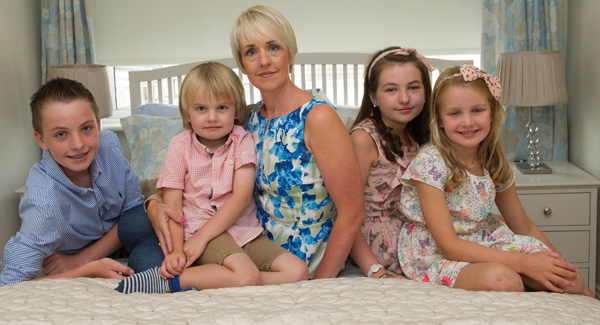
I took it for granted my third baby Alex would be a sleeper like my other two children. Unfortunately it was third time unlucky on that front.
We had gone through months of having a very cranky baby who needed to sleep but really didn’t want to. Although he was getting some naps during the day, it would take up to 30 minutes to get him to nod off. He was also waking every few hours during the night.
Being an Irish mother I took this to mean he was hungry, so I had gotten into the habit of feeding him. This had become part of his routine so he was waking at least once, if not twice, for a bottle during the night. We thought that Alex might be suffering from colic in the early stages but this was as difficult to diagnose as it was to treat.
I went through a range of emotions, from wondering what I was doing wrong, to was there something wrong with him. Finally when he reached seven months, a friend suggested Lucy Wolfe, a paediatric sleep consultant.
My first impressions of Lucy were that of a head mistress. She wasn’t there to hold your hand and tell you she had the magic cure; her role was to teach you and be strict about it. She explained that consistency with sleep is crucial and that I needed to act on my baby’s cues (eye rubbing, yawning etc) at the early stages, because children this young can quickly become overtired and too wired to sleep.
Any time after 6am was the start of the day— a wake up before it was considered a night waking. I wanted to wean him off feeding at night so settling techniques were going to be used instead of bottles to get him back to sleep. Most importantly a consistent routine was key.
She sent me a questionnaire to fill out prior to meeting her, from what I hoped to gain from the session to our current routine. Even writing this out was a learning curve as I realised I had no exact timings for anything.
Before we met Lucy, Alex’s “routine” looked something like this: 6 - 7am wake; 7.30 - 8am bottle; 9 – 10am breakfast; 9.30am - 10am nap (this was probably the only consistent nap); 12 – 1pm wake; 1pm lunch; might have nap around 3pm and bottle; 6 – 7pm dinner; 7 – 7.30pm bottle; 7.30 – 8pm bed; 2am and sometimes 4am, bottle.
She went through the questionnaire explaining why certain things were happening, what I should be doing and what the timelines should be. That was key for me — to understand why.
The biggest eye opener was when she said he wasn’t getting enough sleep during the day and how this was impacting on his sleep during the night. I had been in the mind frame that he’d sleep better at night if he was awake more during the day, but the reverse was true. He was exhausted going down each night — hence the crying. It was taking him ages to get to sleep and he wasn’t getting enough, hence the crankiness during the day. I was beginning to feel what I thought was colic in the early days was most likely pure exhaustion. Lucy set out a new routine for me and told me she was going to call in four days after my first visit. I was nervous about how I was going to implement this routine while still looking after my two other young kids as well.
I started on day two by moving him into his own room as recommended by Lucy. The night before was the usual routine of a bottle at 2am and 4am and then back to sleep until 7am.
The day went as follows: 8am bottle and breakfast; 9am nap (45 minutes; I had been letting him sleep too long for his first nap, the second nap was most important); 12.45pm lunch (he went straight to sleep without crying. This was a first); we missed the third nap which she advised was important at this stage; 5pm dinner (should be no later than 5.30pm); 6.30pm bottle downstairs. At 6.45pm I took him to a quiet place for 20 minutes and then used settling techniques that Lucy recommended.
He cried a little but went to sleep very quickly. I realised that before bedtime he had been playing with the kids, with everyone screaming and shouting, and then I was putting him into bed still hyper. Obviously he didn’t want to sleep. At 2.30am he woke and I gave him a feed. Even on day two, I could see it was going to take a lot of hard work. The hardest part was trying to juggle school runs and play dates while still adhering to the new routine.
Over a three-night period, Lucy had recommended I reduce the amount of bottle I gave each night.
The day went like this: 6.30am awake; 7am bottle; 7.30am breakfast; 8.45am nap (straight to sleep with no crying); 12.30pm lunch and bottle; 1.30pm nap (straight to sleep with no crying, another first); 3.30pm 20-minute nap in the car; 5pm dinner; 7pm bed (cried a little and asleep after 10 minutes). I was beginning to see the benefits of sleeping more during the day. At 2am I gave him a reduced bottle.
This was the target date to have Alex weaned off the bottle; this was the hardest part. Instead of bottles I now had to use the settling techniques. Normally he had a bottle and went back to sleep. The settling techniques would take time and patience. There was no option for me to go back to bed the next day after being deprived of sleep if he woke in the night. I went through the day plan and for the 2am wake-up, relented after 30 minutes and gave him a bottle.
My call with Lucy was on day seven and she pulled me up on the bottle and reminded me that this was one of my objectives. I felt like a school kid being scolded, but to be honest I needed that push to stick to the plan. That night when he woke, I used the settling techniques and he fell asleep after 20 minutes. The bottle had become a quick fix for me but it wasn’t helping him. I was getting better at my day routine at this stage and he was becoming a much happier baby during the day but I still needed to master the night.
At 6am he woke and I brought him downstairs — although I was very tempted to bring him into the bed and get him back to sleep, I knew it had to be done. The rest of the day very was routine orientated: 7am nap (Lucy had recommended to avoid naps before 8am but because I had to drop my daughter to school, this was my only option); 8.05am woke himself; 10am nap (straight to sleep); 11.30am awake; 12.30pm lunch; 2.15pm nap; 4.30pm awake; 5pm dinner; 6pm bottle downstairs; 6.45pm settling techniques; 7pm bed (took 15 minutes to settle).
Finally, a full night’s sleep. He woke at 6am. We’re now on day 18 and he’s just done a 7pm to 7am sleep. There have been some hiccups with teething and a head cold. The urge to give the bottle is always lingering, especially for my husband, but it’s been worth the hard work.
I now feel in more control and more equipped to deal with the hiccups.
He’s happy, which for me is the most important outcome — happy baby means a happy family.
An age appropriate bedtime
A relaxing and calm bedtime routine
A peaceful sleeping environment
Try to avoid night time feedings once they are no longer necessary
Put the child to bed more awake than asleep
Be consistent in your responses during the night
Ensure adequate daytime sleep
Lucy Wolfe, CGSC, MAPSC, Paediatric Sleep Consultant (birth-6 years) promotes better sleep habits for infants and children – without using controlled crying or leaving your child alone to cry.
Based in Cork, she helps parents all over Ireland and overseas, in person or via phone, Skype and Facetime. She is mum to four children aged 12, nine, seven and three.
www.sleepmatters.ie
ROUTINE is key when it comes to sleeping babies — but there are aids that can help too. A dark room is essential to teach baby the difference between day and night.
The looming winter can be a favourite for parents, with bright sunlight no longer streaming through curtain cracks at 4.30am.
But when summer comes around again, check out the the Gro Anywhere Blackout Blind. It allows you to easily darken any room. It fits any window up to 135cm x 200cm.
It attaches directly to the glass using suction cups instantly creating a darkened environment.
Another option for older kids is the Gro Clock, which operates on a stars at night, sun by day method, giving children an easily understandable visual method of telling the time. The clock face remains blue and the stars go out one by one throughout the night and when morning comes (at an appropriate time set by parents) — the sun comes up on a yellow clock face indicating to kids that it’s okay to get up. It’s ideal for children who don’t understand that 5am is not a good time to rise.
There is also digital display as children get older and want to learn to read the time themselves.
The Gro Clock, €39.95, and Gro Blind €34.95, are available at Butterslip, Rose Inn Street, Kilkenny, www.butterslip.com
CONNECT WITH US TODAY



Be the first to know the latest news and updates