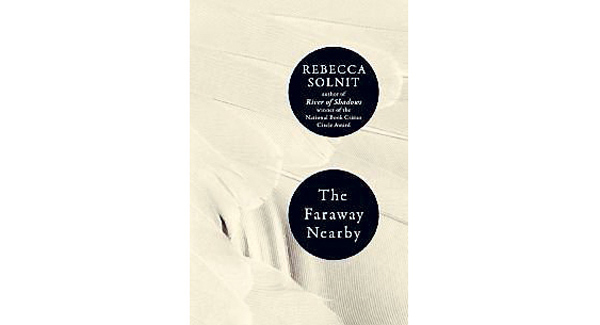
The Faraway Nearby
REBECCA Solnit’s new book is a collection of memoir-based essays, each of which focuses on a break-up, a significant personal health problem or, most prominently, her mother’s worsening struggle with Alzheimer’s.
From the opening essay, the narrative tone is set: thoughtful, provocative, meandering. This collection is a philosophical consideration of the nature of storytelling that conflates fact and magical fiction, past and present, ripeness and inevitable decay.
The catalyst for such mind associations takes an unexpected shape: one hundred pounds in weight of apricots delivered in three big boxes, harvested by her brother from their mother’s tree, “from the home she no longer lived in, in the summer when a new round of trouble began.”
From here, the stories arrive, scattershot and seemingly at random, and with them comes the unfurling of a life, and the search for identity.
We glimpse the author’s childhood, as a daughter made to live in the shadow of three golden sons, and the object of her mother’s illogical jealousy, because she had been gifted with blonde hair, as opposed to the family’s genetically darker colour.
Leaving home at 17, Solnit was unsupported apart from the parental ‘gifts’ of a worn suitcase and a broken travel clock, and left, financially unaided, to the ways of a cruel world.
Later, she found refuge in the bleak landscape of Iceland, a ‘world’ rich in metaphor, and dealt with her own crisis of health, a breast cancer diagnosis.
Solnit is the author of 13 previous books of non-fiction.
This new offering has already been lauded and shortlisted for one of America’s biggest literary prizes, the National Book Critics’ Circle Award, and might well stand as a career-defining work.
With a title fashioned after a letter written by the American painter, Georgia O’Keeffe, which was signed off “from the faraway nearby”, this collection makes sense of the author’s life stories by setting them against the fantastic or the exotic, such as Mary Shelley and her novel, Frankenstein, the Marquis de Sade, Wu Daozi, an artist of the Tang Dynasty, Che Guevara, jousts with Buddhism, and, perhaps most significantly, given that this book is so crammed with criss-crossing narratives, the thousand and one tales of the Arabian Nights.
There is no easy formula for Solnit in trying to make sense of her own circumstances and those of her surroundings, and her mind rambles along endlessly presented tangents and constant digressions, following the fairy tales and crumbs of history, philosophising on the notion, nature and value of stories, of memory, and of familial bonds, and clinging to sudden recollections that, in hindsight, offer a flavour of enlightenment.
The result is strange and extremely thought-provoking, and, in its best moments, inspires nothing short of awe.















