Inside the Jesuits: How Pope Francis is Changing the Church and the World
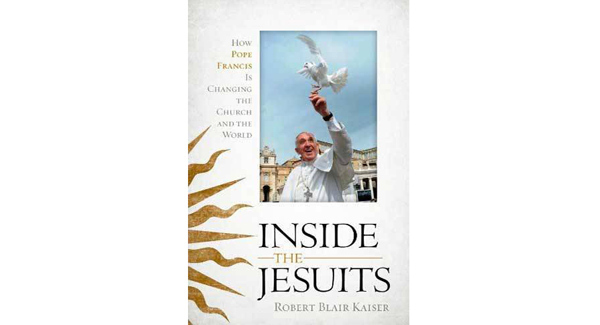
The main thesis of this book is that Pope Francis’s Jesuit DNA is central to understanding how he has captured the world’s attention since his election in 2013 following the shock abdication of Benedict XVI. As the first Jesuit Pope, Jorge Mario Bergoglio has captivated many Catholics (and others) by abandoning the trappings of a monarchical papacy and committing himself to a Church that is “poor and for the poor”.
It was clear, even from his choice of name after his election, that Francis was going to be a breath of fresh air.
“After the disastrous papacy of Benedict, Francis’s basic mastery of skills like smiling in public seemed a small miracle to the average Catholic,” wrote Mark Binelli in his long essay on Francis for Rolling Stone magazine.
“....Pope Francis, the 266th vicar of Jesus Christ on Earth, a man whose obvious humility, empathy and, above all, devotion to the economically disenfranchised has come to feel perfectly suited to our times....” concluded Binelli.
All of this, says Robert Blair Kaiser, can be sourced back to Jorge Mario Bergoglio’s formation as a Jesuit, the order founded by Ignatius Loyola in 1540. And the secret of the Jesuit DNA is to be found in the Spiritual Exercises of Saint Ignatius. “Francis wanted all of us to embark on a new way of thinking. It turned out not to be so new at all,” says Blair Kaiser. It amounts to a desire to see the reforms of Vatican II fully implemented. The author is convinced the Pope’s Jesuit DNA “will help him make the right decisions at this crucial moment in the Church’s history”.
Kaiser should know a thing or two about the Society of Jesus whose motto is Ad majorem Dei gloriam — “For the greater glory of God”. He was a Jesuit-in-training for 10 years before leaving the order to pursue a career in journalism. And in that he distinguished himself. He was Rome bureau chief for The New York Times during Vatican II (1962-65), and produced one of the most insightful books on that momentous event entitled Inside the Council. He later worked for CBS News, Newsweek and Time magazine.
In the years since the Council he has been tireless in advocating the adoption of its reforms, especially in his book A Church in Search of Itself. And he even used a novel — Cardinal Mahony — as a vehicle to bring an understanding of the Council to a younger audience.
Kaiser has this time produced a book that can only be described as a hybrid. It is neither a history of the Jesuits nor a biography of Pope Francis, though it contains elements of both.
In preparation for the World Synod of Bishops in Rome later this year, the secretary of the Synod sent a questionnaire to the world’s bishops, asking them to seek the views of the people on the Church’s teaching on the family. Many of the questions zeroed in on the Church’s traditional prohibitions on premarital sex, remarriage in the Church after divorce, birth control, and even same-sex marriage.
“The meaning of this event — the survey and the worldwide response to the survey (which is sure to be the same almost everywhere as in was in Germany) — has just begun to dawn on me. For the first time in history, a pope was turning to the people of God to find out
what they thought about the Church’s positions on sex,” says Kaiser.
The reference to Germany is to the fact that the bishops there took an initiative (unlike the usually subservient Irish bishops) when the findings were in. “Imagine the world’s surprise when the German bishops, ignoring a Vatican request that the survey results should remain a secret, revealed that huge percentages of the people (as many as 97 per cent on some questions) had been ignoring the Church’s traditional teachings in these areas.”
The Synod will be the first real test of the Pope’s commitment to reform, a commitment Kaiser believes is real and serious. “As I have tried to show my readers here, Pope Francis hardly had a choice. His Jesuit DNA has driven him to rediscover, redefine, and set out new frontiers and new boundaries with a holy boldness.” But that boldness comes with risks.
It is clear already that Francis has made enemies, both within the Roman Curia and further afield. Will he last? Some are beginning to worry for the Pope’s safety. Interestingly, Kaiser quotes from a column by Liz O’Donnell (former junior Minister in the Department of Foreign Affairs) in the Irish Independent on December,16, 2013: “His reforms will inevitably upset many conservatives, and his celebrity status could make him a target for assassination. Unique people like Pope Francis come along once in a generation, and they can be taken away in a second of madness or evil. What a tragedy if his safety was compromised by any relaxation in his security detail”.
Given his disregard for protocol and his willingness to pose for “selfies” in the midst of large crowds in St Peter’s Square, it is doubtful if any security detail could guarantee his safety. Kaiser, somewhat disingenuously, seeks to reassure us that, because Pope Francis dines in the Casa Santa Marta cafeteria, along with 50 other clerics, this “means that if someone wanted to poison the pope’s dinner, he would have to poison 50 other dinners as well”. On the contrary, the daily situation in the cafeteria of the Holiday Inn-style hotel offers numerous options for would-be assassins.
Shortly after his election, the new Pope received a telephone call from an old friend in Buenos Aires, the human rights lawyer Alicia Oliveira: “Be careful Jorge,” she warned him, “because the Borgias are still there in the Vatican.” The Pope laughed and said: “I know”.
You don’t have to subscribe to the David Yallop thesis in his 1984 book entitled In God’s Name to appreciate that a court conspiracy against a reigning Pope can never be ruled out. Yallop, in his bestseller, implicated a number of top Vatican clerics in making the case that Pope John I was murdered after just 33 days in office. Pope Francis may already be a marked man.
CONNECT WITH US TODAY



Be the first to know the latest news and updates

















