A conflict carefully unspooled
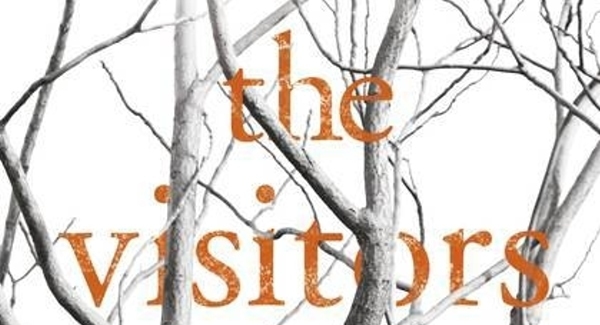
James Dwyer is a Munster-man who has emigrated from Ireland to make a home for himself in the sleepy college town of Ann Arbor, Michigan.
Kevin Lyons was a troublesome schoolmate who now also lives in the US. Yet where James has not just put the past behind him but eschewed it entirely in favour of a new life, Kevin is determined to reconnect with their childhood. Which would be fine except that he needs James’s help do so.
Their conflict, spanning decades and continents, is carefully unspooled by Patrick O’Keeffe in a novel which explores not just the emigration of people but also the exportation of local grudges and parochial bad blood. As the day of their meeting approaches, James delves back into memories of their families, specifically Kevin’s troubled, mysterious father, as well as the boy’s sister Una, with whom James had a passionate romance.
In the process the reader sees how James has blossomed in his new life, his delight in discovering American fiction, and the more varied cross-section of society he associates with. Despite which O’Keeffe repeatedly links the character’s state of mind — one might call it a poetic temperament, were it not an Irish stereotype — to the drunks and funerals and the literal cattle market of the Ireland he has left behind. Which is to say that James is satisfied in America, yes, but for all of that he remains an outsider.
O’Keeffe, like his protagonist, was born and raised in Co Limerick before moving to the United States in his twenties. He now teaches on the creative writing programme at Ohio University and his collection of novellas, The Hill Road, was awarded the prestigious Story Prize in the US in 2005. That volume’s flashes of despondency recur in The Visitors, in this case as James is haunted by the thought that he could have saved a life but didn’t.
The re-emergence of charismatic bully Kevin thus brings back memories which James would rather forget. It is these which form the structure of the novel and O’Keeffe’s use of them as a kind of free-association, flitting between Ireland, the bars of Boston, Michigan, and, eventually upstate New York, ensures a genuine sense of satisfaction when the various fragments of family secrets eventually cohere.
Evocative descriptions of place (bolstered by O’Keeffe’s obvious familiarity with everywhere from rural Limerick to the Hudson Highlands) grant an extra layer of verisimilitude to The Visitors, but it is perhaps his short, sharp insights into characters which are more striking. “They were beautiful to look at in that sunny, faultless American way,” he says of Ann Arbor’s inhabitants, “good-natured, free-thinkers, secretly and viciously ambitious”. Dialogue too is a strength of the novel, marred only by the incessant refrain of “my dear” in James’s conversations with his girlfriend. For the most part, however, mundane chit-chat and even his characters’ seemingly most inconsequential asides convey tangible emotional depth.
It all combines to make The Visitors a solid example of contemporary literary fiction, one respectful of the reader’s credulity and conveyed in crisp prose. “He smelled like dry rotted wood,” we are told of the homeless man who initially delivers Kevin’s missive to James. “The shirt he wore was faded blue, Western-style, Sears or Levi’s from the sixties or seventies, with that fine stitching around the collar and the chest pockets.”
It is a highly visual language and O’Keeffe’s novel, obsessed with questions of how the past defines us, is all the stronger for it.














