Diving into Dublin’s past ...
HOW TO tell the story of a city over a millennium and a half? Like eating an elephant, in not-so-small, but definitely digestible, amounts. In writing Dublin, the Making of a Capital City, TCD Modern History Professor David Dickson sets about his own elephantine task with some relish, on a subject to which he has enormous overview, and equal appetite.
His is a majestic span: the first millennium up to 1600 is despatched in a prologue simply called âDublin Town and the First Thousand Yearsâ. A newspaper sub-editor today wouldnât quibble with the pithy headings on his subsequent 12 chapters, spanning 1600-2000, such as âInjured Lady,â âApocalypse Deferred,â âEruptionâ (Eruption covers momentous events of 1913-1919) and âWhose Dublin?â
Whose Dublin indeed? The city has always had, and continues to have, a somewhat equivocal or ambivalent role in the country/nationâs history: itâs been the centre of national power and influence, yet frequently influenced more from abroad than within, it nonetheless became an international player too in the world of the colonies â and in literature, thanks primarily to Joyceâs epic Ulysses. Its history was rarely in parallel (more tangential) to that of the wider island, and the by comparison poorer countryside, and Dickson easily sketches the enormous urban poverty of a gentrified capital over centuries, and the way in which paupers were chosen for relief â locals favoured over provincial blow-ins. Divisions as deep as the Pale, like the Provos in that memorable more modern line, may not be entirely gone away, you know.
Dicksonâs view is hugely wide-ranging, obviously over historical events that shaped a nation and a city (whilst bringing fresh perspectives) but also encompassing social changes, civic planning gains and failures, architecture, geography and demography, church and private charity, economy, industry and ambition, intrigue and scandal â the latter, too have not gone away, as well we know.
The bookâs notional end is the year 2000, so much of the past decadeâs Planning Tribunal findings fall outside its remit as too recent history to contextualise; but, the patterns laid down in lax local government and legislation since the 1950s and prior generations of atrophy are acknowledged. The siting of the Liffey Valley Shopping Centre, cited in the bookâs last few pages on the run-up to the Millennium, is mentioned as leaving a notorious legacy, along with some prior âinappropriateâ roads projects.
Sub-groups weave like back roads and byways in and out of Dicksonâs impressive and easily read, opus, some 700 pages, of which the latter 150 are notes, bibliography and indices. With erudition, elucidation and enormous synthesis, it ranges over a chronological 400 year-span that saw Dublinâs uneven rise, falls and rise again to become a city of stature, with deft pen-pictures of (in no particular order or moral merit) of Protestants and priests, prostitution, poverty and the dispossessed, patriots and Parliamentarians, prisoners, politicians, penal stamp duties and penny stamps (introduced around 1840, leading over decades to six-times daily postal deliveries,) publishers and planners, physicians and philanthropists.
Dublin has, of course, long been Irelandâs melting pot, from Norse and Norman to the English, from early names such as Ath Cliath to Dubh Linn/Dyflin, it became for a period the second city of Empire and the English-speaking world after London, and now the Googles and the Facebooks and their international entourages and energies have given it another global profile and position. After centuries of provincial population drift to the capital, EU employment changes in 1992 precipitated a wave of international migration: âRainbow Dublin had finally arrived,â says Dickson of the arrival of a new Millennium, casually propping up his theses with Census figures (and Garret FitzGerald analyses) as required.
Itâs a fascinating cornucopia and the period from 1600 is when the capitalâs physical transformation ramped up, notes Dickson as the city started to swell to accommodate a megapolis/metropolitan population of 1.2 million, or more if outlying counties are factored in (they have to be, after the boom years saw commuters scattered to Cavan and Carlow)
Dicksonâs target audience is wider than just students of history, interested citizens and curious visitors. The period since Dublinâs millennium celebrations, in 1988, saw a dam-burst of publications, âmore than over the previous millennium,â notes Prof Dickson, acknowledging with some modesty that his tome âis a report of work (of many peopleâs work) in progress, and my enormous debt to that small army who have been writing on Dublin and Dubliners will, I hope, be apparent throughout the volume.â
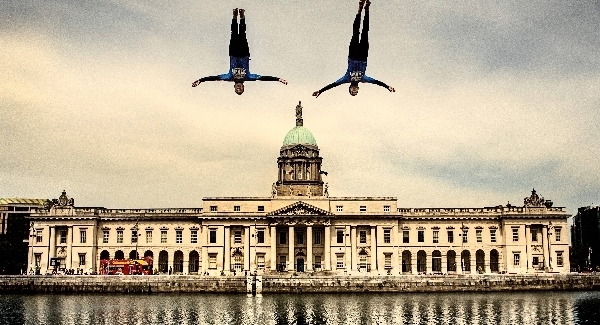
It is, and its strength is its wide compass, its coherence and divergences down lesser-trammelled alleys of the past, recalling old lanes and streets, not averse to variously range from Gandonâs Customs House, to the state of tenements and the city sewers. Cathedrals, hospitals, poorhouses, workhouses, breweries, stadia, department stores, theatres, cinemas, universities and the rise of religiously divided private schools on the south side get passing acknowledgement and perspective in this inclusive volume, which also brings learned scholarship to events as entrenched in, or half-recalled from, school-text simplicities such as Battle of Clontarf, the 1913 lockout or the Easter Rising.
The writing is an easy, assured and flowing, free of academic tropes â but those who want references will find them aplenty in the appended notes.
As a tale in the telling, Dublin the Making of a Capital wears its years of study and learning without affectation, in language thatâs accessible and more than occasionally deliciously barbed with irony. Just as Charles Haughey laid foundations for some of the Celtic Tigerâs prosperity and international financial services, Sean Lemass had a similar role in the mid-1900s. Lemass retired in 1966, on the 50th anniversary of the Easter Rising with what Dickson wryly notes an âuninhibited display of new wealth in his city. Historians still debate whether this was what the pipe-smoking teetotaller from Capel Street with a fondness for the horses had really wanted.â
In the bookâs final chapter, âMillennium City 1972 â 2000â, he hits a bit of a different stride. In a chapter of elegant concision, he fairly covers changes in popular culture and events familiar to a current generation as diverse as Wood Quay marches to the IFSC and Temple Bar (the hand of Haughey again) and the dockland renewal.
In his preface, David Dickson says that by stopping at 2000, âwe gain some small space and distance from recent events,â noting this book was conceived in Tiger Town times, but took its final shape in an intense economic depression: âdrilling deep is a great antidote to present discontents,â he muses. In the same preface, he acknowledges Maurice Craigâs 1952 Dublin: A social and architectural historyâ, saying âit marks the beginning of rigorous scholarship on the cityâs history. A strikingly elegant and subtle reading of 200 years of Dublinâs physical history, it wore its scholarship lightly but made its argument cogently.â
Much the same could be said for David Dicksonâs Dublin.















