Jammin’ sean-nós style in Bantry at Masters of Tradition Festival
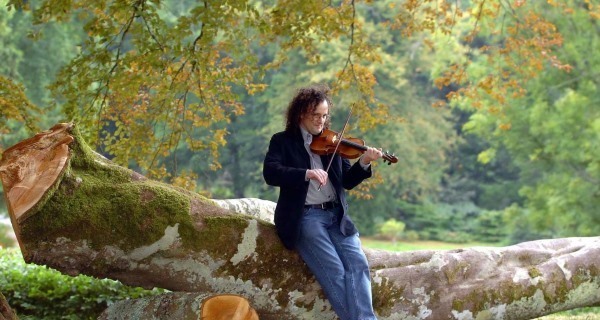
YOU never can tell, says Martin Hayes. Sometimes a musical collaboration works, sometimes the chemistry fails to manifest. He shrugs: Often it’s only in the moment the truth of the thing is laid bare. Music isn’t a science — and who would wish it to be?
“There is no predicting anything,” says Hayes, one of Ireland’s foremost fiddle players. “You don’t know the outcome — have to live with some uncertainty. You can minimise the risks by working with good musicians. Nonetheless, the chemistry isn’t always as it should be: The dynamics aren’t always the way you want them to be. No matter who it is you are playing with you are taking a chance. That’s where the excitement lies.”
He should know. Through his career, Hayes has collaborated freely and ferociously. There is his high-profile partnership with Chicago guitarist Dennis Cahill of course, a musical union of 20 years standing. But that’s simply the start of it. He’s worked with céilí bands, sean-nós singers, jazz virtuosos, classical composers — everything, really. Later this month he will have more opportunity to showcase his improvisational talents as curator of the Masters of Tradition festival in Bantry, Co Cork.
“I’ve been doing it 12, 13 years,” he laughs. “Actually I’m losing count. It is something I enjoy. You don’t just pick musicians — you put them in a sequence that makes sense, place them in a context with other players in order to give a spectrum of music. You want to convey a broad picture of the foundations of the music.
“People often invite me on stage. I don’t force myself on them, they ask. I get to play with a lot of them. There is a spontaneity that appeals.”
As musical director of the Bantry festival, Hayes is hands on. He draws on a formidable list of contacts to ensure the line-up is robust, of interest both to hardcore trad fans and a mainstream audience. This year, for instance, he and Cahill will play with Ricky Skaggs, perhaps the foremost exponent of the Southern United States genre of bluegrass. Also on the bill are Ghost Trio, the new ensemble led by vocalist Iarla Ó Lionáird and hugely respected sean-nós singer Máire Ní Chéilleacháir.
“One of the things that is not fully appreciated is how subtle and nuanced this music can be,” says Hayes, setting out the ethos behind Masters of Tradition. “I’ve made a special effort to ensure that [side of trad] gets heard and that musicians have an appropriate environment in which they can play — it turns it into a refined version of the music. I am blown away as I sit there listening to it.”
When he speaks like this, you have a sense Hayes sees his job as that of educator as much as performer. “The festival has been programmed in such a way that you hear what uilleann piping is really about. You get a strong sense of what fiddle playing is, what sean-nós singing is.”
He takes issue with the idea that traditional music is a thing of whirling, upbeat energy. Yes, that sort of trad has its place. However it is merely part of a wider canvas. If the music was manic all the time, it would have burned decades ago. “If you think it’s all lively and upbeat… well that can get monotonous. You want to give people a more balanced experience.”
The setting of Bantry contributes to the continued success of Masters of Tradition he feels. There are two principle venues: Bantry House and St Brendan’s Church and each brings a distinctive atmosphere.
“Bantry is a beautiful place. It makes for a wonderful vacation. You have great areas to explore, wonderful food. I know people who come down and spend a week here. They see the sights have dinner, then go to Bantry House and enjoy an evening of music.”
Hayes is himself of no fixed abode. Nominally based in his native Clare, in reality he spends much of the year on the road, frequently travelling to the America which is close to his heart. It was where he met Cahill and the US served as his home for over a decade (he kept a house in one of the wilder parts of Connecticut).
“America is a very wide open place — a very free place. It is a place where you have a lot of independent free-thinking. It is full of incredible music. You meet musicians of all calibres and backgrounds. I can’t say specifically if any one encounter has impacted on me. Collectively it has certainly affected my world view. Often I am absorbing [jazz and classical] as a punter: I don’t just love to play, I like to sit and listen to music. It all goes into the melting pot.”
He sounds mildly perturbed that his keening style should be regarded as melancholic. He tries not to be pigeonholed in that fashion. Labels are reductive — so why use them?
“Maybe it was more melancholic at one point,” he says. “Now I prefer joy, if I can have it. There are a range of feelings of expressions. Melancholy has a place, as does joy. I put all kinds of wildness and excitement into the music — I feel Irish music should be capable of touching on all of those elements.”
For the past several years, Hayes has played with the Gloaming a loose collective that also counts Cahill, Ó Lionáird and American pianist and producer Thomas Bartlett as members. Described as ‘trad for people who don’t like trad’ the outfit splices Irish folk, Scandinavian minimalism and the sweeping sensibility of a movie score. Having started the project with low expectations, all of its members have confessed their surprise at the swooning reviews and packed concert halls.
“We got together simply to see what would happen,” says Hayes. “We are happy it has been received so well. It feels like a band to us — although we come together only occasionally and are not on the road all the time. In fact, we feel like we don’t spend long enough in the same room. If you have the courage to make the leap, experimentation brings a lot of excitement into your life.”
Considered one of bluegrass’ most influential players, Kentucky-born Skaggs is no stranger to improvisation. He’s jammed with Jack White’s Raconteurs, the psychedelic group Phish, ’80s rocker Bruce Hornsby and, most unlikely of all, Bee Gee Barry Gibb. He’s also delved into the links with Irish music and at Bantry he collaborates with Martin Hayes and Dennis Cahill.
Skaggs got started early, making his debut at Nashville’s Grand Ole Opry aged seven. He became a true country star in 1981, with his chart topping album Waitin For The Sun To Shine, a showcase for his dexterous picking and soulful voice. By the 90s, he had moved away from mainstream country towards bluegrass, promising to carry on the work of the genre’s founder Bill Monroe. Wednesday August 20
The Chicago-born son of Kerry parents, Cahill took up guitar aged nine and was classically trained at Chicago Music College. For the past 20 years he has been recognised as one of traditional and folk music’s most important talents. His minimalist style draws on neoclassical, jazz and minimalism: above all he brings a sense of American openness and possibility to trad. From the early ’90s he has worked with Martin Hayes, with whom he has released several albums. Wednesday August 20.
A Brooklyn-based Dubliner, Goff’s specialty are uilleann pipes, pennywhistle and wood flute. He’s toured with trad staples such as Dervish, Lunasa and Danu. Not one to confine himself to a single genre he has worked in jazz, with saxophonists Matt Darriau and Paul Winter and performed in music installations at New York’s Museum of Modern Art and Guggenheim. He has also composed classical pieces for the pipes, and performed with orchestras in the United States and Europe. On top of all that, Goff has undertaken a PhD in Music at New York University. He recently began a new project, Ghost Trio, with vocalist Iarla Ó Lionáird. Friday August 22 with Ghost Trio.
Ní Chéilleachair has won acclaim for her haunting style. Introduced to the form growing up in Kilnamartrya, part of the Muskerry Gaeltacht in Co Cork, she went on to win the prestigious Oireachtas na Gaeilge prize. Sean-nós can claim a storied history, though its importance to traditional music is sometimes overlooked. Expert Seamus Mac Mathúna stated: “Sean-nós singing is at once the most loved and the most reviled, the least often heard and the least understood part of that body of music generally referred to as Irish Traditional Music ... It is the least understood because, technically and emotionally, it is the most complex part of that.”
Saturday August 23.
The singer has recorded with Dublin’s Crash Ensemble, is a member of the trad ‘supergroup’ the Gloaming and has pursued a successful solo career. His vocals have graced the soundtracks to such movies as The Gangs of New York, Hotel Rwanda and Calvary. “I would like to get beyond genre,” he told the Irish Examiner in January. “Young people don’t think in genres. I suspect it’s our generation which had these problems.
“I have a background in sean-nós singing. I don’t think in terms of traditional songs at all. I’m always trying something else.” As one third of Ghost Trio he “explores timbre in voice, pipes and strings through innovation and experimentation”.
Friday, Aug 20 with Ghost Trio.















