Lisa Dwan’s acclaimed Beckett trilogy pushes performance to the limits,
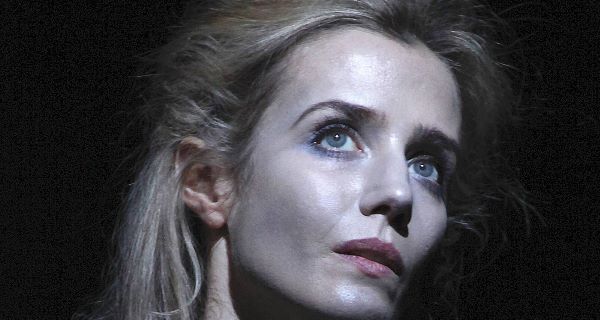
âI canât tell you what performing in Galway means to me,â says the Westmeath native, who lives in London. âThe Taibhdhearc was the first place I worked professionally in theatre, and all my dreams were realised in Galway. So itâs so important to be going back there.â
For that first Taibhdhearc gig, in the late 1990s, Dwan was a choreographer (she had started out as a dancer). Dwan has since acted onstage, in film and on TV. However, she has become synonymous with Beckett.
Dwan first performed Beckettâs intense and challenging Not I in 2005, and it altered her career. A short-monologue play in which a disembodied mouth babbles compulsively at âthe speed of thoughtâ, Dwanâs performance was greeted as the finest since Billie Whitelawâs in 1973. It led Whitelaw, who had been coached by Beckett, to collaborate with Dwan on further productions.
Its phenomenal success prompted Dwan and director Walter Asmus â Beckettâs friend and assistant â to integrate Not I into a conceptual âtrilogyâ with Footfalls and Rockaby. The latter premiered at the Royal Court earlier this year, gaining enormous plaudits and transferring to the West Endâs Duchess Theatre. The one-woman show is now at the outset of an extensive international tour.
âWe were constantly told that Beckett doesnât sell, which is hilarious. We were told that these three pieces of modernism wouldnât be commercial and yet theyâve sold out everywhere.â
Not I, Footfalls and Rockaby are all pieces from the later period of Beckettâs writing for theatre. Though they are quite varied, the protagonist in each of them is not so much a human being as the human mind itself, exposed to itself like a raw nerve, jarred and jangling with images and memories that it cannot resist summoning, yet by which it is bemused and tormented. In Footfalls, a young woman treads the same pattern on the landing outside the bedroom in which her mother may lay dying. In Rockaby an ageing woman rests in a rocking chair while stewing morbidly in her thoughts, the chair seemingly moving of its own volition. As with Not I, these are minute dramas that hinge upon the eeriness, delirium, and terror of cognition and consciousness.
Dwan confesses there have been times when after performing Not I she has phoned Whitelaw up in floods after tears, having been brought to extreme limits.
Whitelaw herself had described performing in Not I as being akin to âfalling backwards into hell, emitting criesâ. But it is to such limits that Beckett himself wished to plunge both the audience and performer alike. Beckett had instructed that Not I be performed at the speed of thought.
âHe wanted to bypass the intellect and play on the nerves,â says Dwan. Whitelaw had delivered the playâs dense and intense spiel in 14 minutes. Dwan does it in less than 10. And she does so with her face plunged through a small hole in a board raised above the audienceâs eye-line, a board upon which her body is restrained. Of course, this confinement is much in keeping with the extraordinary physical âstucknessâ of Beckett characters in so much of his theatre, from Play to Happy Days. Yet in the midst of such confinement, Dwan says Not I transports her somewhere âexpansive and liberatingâ.
âIâm going to tell you something weird and hopefully you can present it without it making me sounding lofty or nutty. Iâm tied into the harness during Not I. My mask is on, so I canât see. My headâs lodged into the headboard. I canât hear because my ears are closed off. My arms are locked into brackets and my bodyâs pressed against the board. So I canât move. The only thing thatâs moving is my mouth. Yet every single cell in me is completely utilised. But what happens in that thick, utter blackness is that I start to feel like Iâm floating around the theatre. I have a sort-of out-of-body experience. And Iâm pretty sure thatâs not just because Iâm hyperventilating.â
âBut what I find bizarre is that the audience start to think that Iâm floating around the theatre, too. The audience have a collective optical illusion where they see my mouth travelling. And yet itâs individual for every member of the audience because of how their brain is responding to the light and to the sensory deprivation. Some people feel Iâm floating to the right, others to the left. Some feel that Iâm floating right up to them, that the mouth is getting bigger or smaller. And itâs not. Logically, we know itâs not. And, logically, I know Iâm not moving. But I feel that I am. I feel like Iâm taking flight across the auditorium.â
In addition to the demands Beckett makes of performers, itâs also notable that at the centre of each of the pieces is a female character who is tormented and yet resilient, fiercely clever yet drastically enclosed. Itâs not something thatâs mentioned much but Beckettâs women are some of the most complex female creatures in modern theatre.
âI could be wrong but I feel that most of his real self â his autobiographical pain and angst â is hidden in his female characters,â says Dwan. Yet she points out too that, ultimately, Beckett depicts all humans the same way, as creatures that venture upon a strange outer region of experience. âThese characters are so expansive that thereâs not a cell of mine that isnât required to perform them,â she says. âAnd it is a privilege to perform them. Beckettâs characters, regardless of whether theyâre men or women, are a portal into something unfathomably vast.â














