Giving away money doesn't always bring happiness
Giving away cash sounds like a surefire way to be popular, until it turns sour, writes Rita de Brún

Giving away money doesn't always bring happiness

THE pursuit of money has long been linked with the pursuit of happiness. But for some, such as San Francisco-based property investor, Jason Buzi, the joy comes not from the hoarding of it or from any self-indulgence, but from giving it away.

He recently revealed himself to be the benevolent mystery man behind @hiddencash — a Twitter handle that generated more than 465,000 followers eager for treasure-hunt style clues as to where to find the sums of money (usually between $40 and $200) he had hidden across the state of California.

Since confirming his @hiddencash involvement, Buzi has seen public perception of his generosity do a U-turn. Intrigue and gratitude have been replaced with criticism as to the way in which he made the money he seemed so keen to give away. The reproach focuses on an article published in 2012 on www.paloaltoonline.com in which he defends the way he conducts his business; which involves the buying and selling of homes for profit.

Couch psychologists who presume his @hiddencash endeavour may have been a response to the questions raised in that article are probably wrong, given that he did much the same thing back in 2008 when he hid money in tomato containers around NYC. The CashTomato endeavour also ended badly, with riots ensuing as crowds flocked to find the cash. Buzi’s response was a somewhat ominous announcement that he would ā€œplan it better next timeā€. As to what was behind the giving, the reason he offered the Los Angeles Times was a clear and simple: ā€œI love to give back.ā€

While Buzi most recently hid his give-away cash in plastic Angry Bird models, Pavel Durov, founder of Russia’s largest social network, followed an equally childish impulse in his effort to give money away. He made paper airplanes out of 5,000 rouble (€106) bills and flew them out the window of his St Petersburg office to the crowds waiting below. Unfortunately the fun turned sour when carnage ensued in the scramble to catch the windfall.

This surprised few, as giving money away with the intention of bringing joy to others has a habit of doing the opposite. When author Elizabeth Gilbert had this experience, she was inspired to pen an article about it for www.oprah.com in which she confessed that when sales of her book Eat Pray Love sold ā€œabout a bajillion copiesā€ it gave her the opportunity ā€œto not only over-give, but over-over-giveā€. Describing the houses she bought for her friends and the mortgages and credit card debts she paid off for them, she wrote: ā€œI swept into their lives with my big fat checkbook, and I erased years of obstacles for them overnight — but sometimes, in the process, I also accidentally erased years of dignity.ā€

As to why people feel compelled to give away money, research from the University of British Columbia confirms money can only buy happiness when it’s spent on others. But for Donegal-born Mark Boyle — aka Moneyless Man — giving money to others would never been enough, so in 2008, he banished it from his life. At the time he was 28 years and managing an organic food company in England. As to why he gave up money, he told the Irish Examiner: ā€œI felt it was the only authentic way forward, and I was in a position to do it. I know many others whose lives are ensnared with mortgages and debt would like to do similar, but their personal circumstances don’t allow it.ā€

Describing money as a toxic substance, he continues: ā€œIf you saw people working in sweat-shops or under military presence, to make the things you buy, you wouldn’t support that regime by buying those goods. Nor would you buy them if you saw the ecological devastation and the harm caused to life on earth by their production. But you don’t see that, because money allows us to buy without doing so. It’s a very useful tool, in that it separates us from all of that. It’s also an addiction. You only have to think of the arms trade, human trafficking and annihilation of the rainforest to realise what people are prepared to do, to make an extra buck.ā€

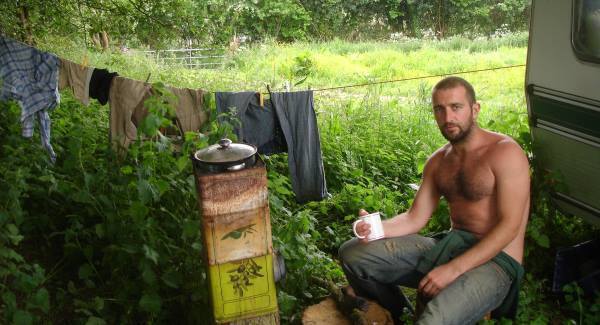
Boyle, who now lives in Loughrea, in An Teach Saor (The Free House), a project which he describes as ā€˜a merging of permaculture and gift-economy’, survives by growing his own food, foraging and ā€˜the odd bit of barter’. ā€œIt’s all doable,ā€ he says. ā€œI didn’t start out as a hippie; I had a lot to learn about survival. Now my life is freer. I live more like the birds. That has been incredibly liberating; the best thing I’ve ever done.ā€

More in this section

Cookie Policy Privacy Policy Brand Safety FAQ Help Contact Us Terms and Conditions

Ā© Examiner Echo Group Limited













