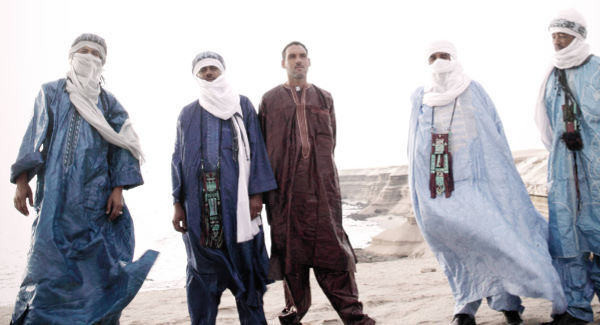
Malian desert music group Tinariwen embraced by Western rock
Happily, Ag Lamida was released and rejoined his band.
Producing an earthy, pre-blues guitar sound, Tinariwen could send a tinkle even up the spine of the most battle-hardened Islamist fighter.
On discovering Tinariwen’s music, Led Zeppelin singer Robert Plant said: “I felt this was the music I’d been looking for all my life.” He went on to produce and collaborate with the group. Lauded by some of rock’s other great exponents — Brian Eno, Carlos Santana and, er, Bono — Tinariwen’s music captures something ineffable. With a nod to their Tuareg culture, the group melds traditional rhythms with modern guitar sounds: the effect is mesmerising.
The band are no strangers to picking up guns themselves — some of them participated in the Tuareg rebellion in northern Mali in the 1990s, and in 2012 backed the breakaway region of northern Mali (Azawad).
Also no strangers to Ireland, this Malian ensemble — band is too precise a description — are superb exponents of that iconic rock instrument, the electric guitar. When Plant joined the relatively unknown Tinariwen, the music world sat up and took notice. Who were these guitars heroes from the desert? Toting an instrument more associated with the streets of London or Seattle, rather than the sand dunes of Timbuktu, Tinariwen were soon attracting world attention. The music awards followed. This year saw the release of the bands sixth album, Emmarr.
Mali has such an embarrassment of riches in contemporary music: maestros of the kora, Toumani and Siddiki Diabate (visitors to Cork Opera House earlier this month); the late great guitarist Ali Farka Toure; the diva, Oumou Sangare; one of the world’s greatest singers, Salif Keita; and the recent Tinariwen imitators, Chatma. Tinariwen are just one example of an amazing flowering of musical culture in one country, in one generation.
Much of Tinariwen’s music involves the singer’s phrasing being echoed by a ‘chorus’, with occasional ululating by female backing singers. Is this music being sentimentalised by a Western audience? Perhaps. The song ‘Amassakoul ‘N’Tenere’, from the album Amassakoul, captures their earlier nomadic existence in the Sahara. “I am a traveller in the lone desert/It’s nothing special/I can stand the wind/I can stand the thirst.” Doesn’t sound like fun. But when you back it up with the grooviest guitar this side of the Mississippi, accomplished singers, and slick production, you have a great sound.
The band were regular performers at the Festival in the Desert in Timbuktu, but it has been cancelled due to the dangers of the recent war. But at least Irish fans have the opportunity to see the group over the coming days.
CONNECT WITH US TODAY



Be the first to know the latest news and updates

















