A house on the ocean waves
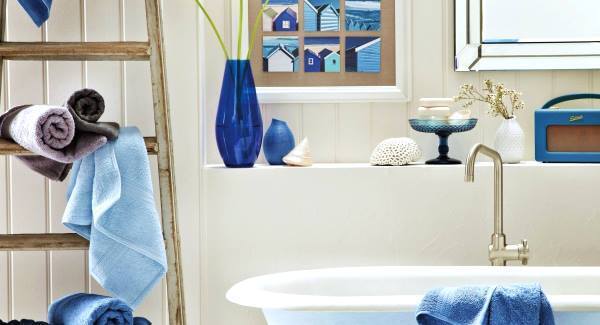
Think of the expanse of sky and sea at a beach, cliff or rocky coast. It’s wide-open, fresh, full of shifting light and the soul-pounding alchemy of nature’s very best. Call it coastal chic, the nautical look, the beach house — the beautiful briny keeps us coming back to this interior style, season after season. The look should draw on inspiring colour, materials, and signature elements in a restrained, comfortable way. Coax the imagination, rather than clobbering the senses with crowded, Bray beach memoirs. If you set sail with wall-to-wall framed seascapes, beach trinkets, striped fabric and nautical everything, the results will wash up as ‘Carry On Captain’.
Sand and driftwood: Buff, gold, silvers, even the muddy greys of our uncomfortably stony beaches.
Sea: From deepest, sapphire blue of Irish oceans to braver azure as tropical accents.
Sky: Pale blues can be used all over the walls in paints, papers, or left as feature walls, if you’re happier with white. Blue, tamed in a blue/white stripe, can alter spatial problems.
Shells and waves: The bone white of shells, whitewashed picket fences, and the frothy, pure blue/white of wave crests and gull wings.
Maritime green: Play it up to emerald waters, or down to seaweed shades and shallow water, with an ochre undertone. Pale green is a good alternative to blue walls.
Primary red: Tanbar red, used in the sails of West of Ireland boats, and combined with blue and white in a classic, nautical palette.
Blue and white: These hues are the obvious choice for a coastal-themed space, but pure white, white and sand/gold, and primary red and blue set on white expanses are as uplifting as a sea breeze. For blue walls, take it up to sky colours, rather than a literal, ocean blue haunted by schools of ornamental fish.
Dark blue can drown a room in 1980s kitsch, if allowed a tidal surge over every wall. Try a palest-of-pale grey or green/grey, with white woodwork, instead. Use white-on-white finishes, sheers, and wall art featuring simple line drawings of shells or whales.
The beach is a well-worn environment of shattered stone and changing weather. A traditional beach house facing into the elements celebrates honest, earth-born materials. Early modest sheds, used as sleep-overs in summer, may have doubled as boat-houses too.
The appeal is the rough beauty of twisted ropes and lines, the silky surface of tortured driftwood thrown up on the shore after a century in the tide, china-delicate shell structures and the toe-swallowing give of dry sand under bare feet. Whether West Cork, Connecticut or Cornwall, much of the decoration would be salvaged from the drama unfolding at the water’s edge and the dock, with topographical and maritime history included in ornaments and artwork.
White, limed boards, set with soft rugs, tease memories of paddles in cool water, giving way to warm sands. The use of maps in decorating is huge this year, and if you don’t want to buy-in, root out old, tea-stained road maps or dog-eared Atlases. Pick areas or places that mean something to you, and, tearing them out, frame them up. Maps can be used to cover lampshades in a simple wrap, delivering a lithograph when lit. Channel the texture of drifting sails with washed-out linen cushions and throws, simple, cotton Roman blinds in white, and sheer window treatments with ties and eyelets rather than formal tracks.
If you live by a tidal lake or near the ocean, a nautical lifestyle will sit comfortably all over the house, framed up on windowsills and set out on every shelf. To push the beach style out a little, keep floors in timber and add waist-high, plank panelling finished in white. Look around the web for imagery of waterside homes — the scale can slide from sophisticated Carmel, California backhouse to West of Ireland coast guard cottage. Further from shore, the bathroom, transition areas, decks, conservatories, even kitchens, can all go to the seaside in subtle beach togs from sea grass loungers, nautical print fabrics, and more. Bathrooms feature a lot of white, and can pick up accents of blue, sand and glints of tumbled sea-glass perfectly. Rustic beach pieces include timber, ladder towel racks, molten driftwood set in a bowl, chunks of sustainably sourced coral on a glass shelf, fish, and boat accessories from towels to bottle-style glass. A blue-and-white stripe says Navy-days at a glance.
One of my favourite things at home is five, large impossibly round, speckled stones we collected from a beach in Cleggan, Co. Galway many years ago.
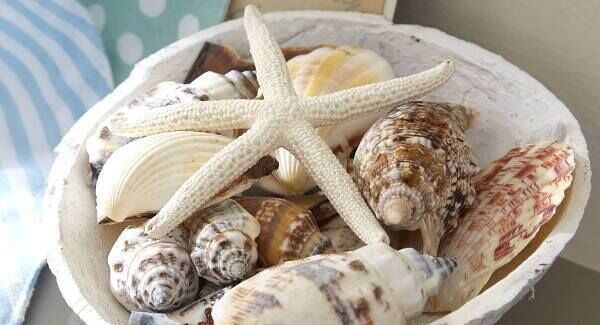
So long as you bring a pail rather than a quad and trailer, found objects from the beach offer a wealth of free decorating possibilities. Children will spend hours at this adventure, even on a wild day.
Heap stones and shells together in open bowls or glass jars after every walk you take. Look for jewel bright sea-glass, melted to opaque softness by the salt water and decades of travel.
* Take a glue gun, small clam shells and hemp twine to fashion necklaces for small votive holders, and as seasonal tie-backs.
* Stud jam jars and flower pots with a maritime mosaic of lightweight beach finds.
* Work up a simple set of chimes with long razor shells set close enough to clatter in the wind. (Leave the living wildlife alone).
* Empty crab shells have a prehistoric charm, but scrub them out of all sinew or they will stink up the entire house like Davy Jones’ Locker.
CONNECT WITH US TODAY



Be the first to know the latest news and updates









