A Doughty ambition to be a writer
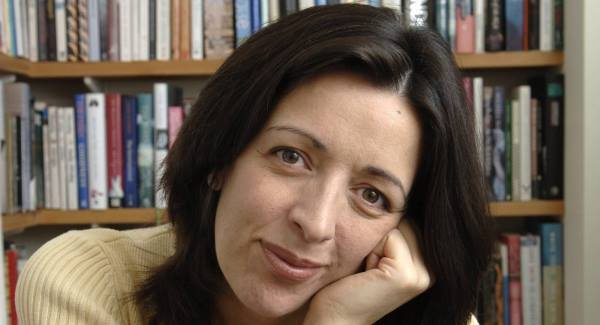
LITERARY festivals are a great antidote to the solitariness of writing, says British novelist Louise Doughty, who will be interviewed at Listowel Writers’ Week (May 28-June 1).
Doughty, whose seven novels include Whatever You Love (2010), which was short-listed for the Costa Novel Award and long-listed for the Orange Prize for Fiction, enjoys meeting readers on the festival circuit. “When you’re a writer, if you’re not careful, you can forget about the reader. Because you deal with your agent or your editor or publisher, it’s almost as if you’re writing the books for the publishing industry. That’s why it’s important to go to festivals. You sort of leap frog the publishing industry and you get to meet readers face-to-face. They can often be very blunt. But it’s great. It reminds you of what writing is all about. I also love the social side of festivals.”
Doughty’s latest novel, Apple Tree Yard, has been described as a psychological thriller. “The thriller tag is odd. I didn’t set out to write a thriller. What I did was to put a woman at the beginning of the novel, in a witness stand at the Old Bailey, facing a murder charge. It was slightly naive of me not to realise that I was writing a thriller. It’s a classic woman-in-peril story. It’s about a highly intelligent, fifty-something woman, who makes one mistake that makes her whole life unravel.”
Doughty’s life nearly unravelled: she didn’t have the talent to pursue her ambition to become an actor. At Leeds University, she joined drama clubs to be “the next Glenda Jackson. Then, I had a rather awful year, as students do, where I wondered what I was going to do with my life. I asked myself what activity I enjoyed most. It was clear I loved writing. I used to write stories as a child. It was like a religious conversion. Once I made that choice, that was it.”
Accepted onto the MA in creative writing at the University of East Anglia, under Malcolm Bradbury and Angela Carter, Doughty says Irish writer Anne Enright was the star of the class.
“I had a lot to learn. I’m a tortoise rather than a hare. I don’t come from a literary background. My father left school at 13 and my mother left at 15. Both are from very working-class backgrounds,” Doughty says.
After East Anglia, Doughty says she spent the whole of her 20s in one dead-end job after another. “I did the classic writer’s thing: doing secretarial work, bar work, making beds in old people’s homes and some teaching. I was writing all the time, but in an unformed manner. The places I lived in, in London, were one step up from squats.”
A couple of breaks in the early 1990s quelled Doughty’s fear that she was “insane” to pursue writing. A short story and a radio play of hers were both runners-up in competitions, and the play was produced on BBC Radio 3. She also started writing “bits of journalism” and was made theatre critic for the Mail on Sunday.
Doughty’s first novel, Crazy Paving, based on her work as a secretary for London Transport, was published in 1995, when she was 31. Writing saved her, she says. It also gave her the perfect excuse to research her Romany ancestry, leading to two books on the Roma people.
In 1999, Doughty was writer-in-residence at Masaryk University in Brno in the Czech Republic. “I started researching the history of the Roma in central Europe. I did it partly out of curiosity and to find out what my family would have been like if, many centuries ago, they had stayed in central Europe. I came up against the events of the Second World War. My fourth novel, Fires in the Dark, is set during the war. My fifth novel, Stone Cradle, is set in rural England in the late 19th and early 20th century. It’s about my family history.
“As far as I know, our family came over from Europe in the middle of the 19th century, on a ship with a big white sail on it. At least, that’s what my great great grandmother used to say. I’ve never been able to trace the truth of that, but my family, on my father’s side, were English Romanichals. My father really hated the word ‘gypsy’, because it’s used pejoratively,” Doughty says.
Doughty says she is the go-to-writer when news stories about the Roma people break. Three Guardian newspaper editors rang her when the so-called blonde angel child was taken from her adoptive parents in Greece last year.
“I wrote a piece in the comment section of the Guardian and received several hundred racially abusive responses. Every time I stick my head above the parapet, that happens,” she says.
Doughty’s only non-fiction book, A Novel in a Year, written in 2007, is based on a year-long series of Daily Telegraph columns on writing.
“The conceit of the column was that if you followed it and did all the exercises suggested, by the end of the year you’d have the raw material for your first novel.
“At the end of the process, it seemed daft not to turn it into a book. So I did that, rewriting the columns and linking them. I’m a great believer in people having a go at writing. People tend to get very sniffy about people who want to write a novel. I really disagree with that, because it worked out for me,” she says.
At Listowel Writers’ Week, Doughty will be in the company of writers such as Douglas Kennedy, Gerbrand Bakker, Jim Crace, Donal Ryan, Eimear McBride and Belfast’s inaugural poet laureate, Sinead Morrissey, to mention just a few. The festival will also celebrate the late Seamus Heaney, with a number of students reading from the poet’s best-loved work.
* www.writersweek.ie.















