75 years later Batman’s crime-fighting crusade continues
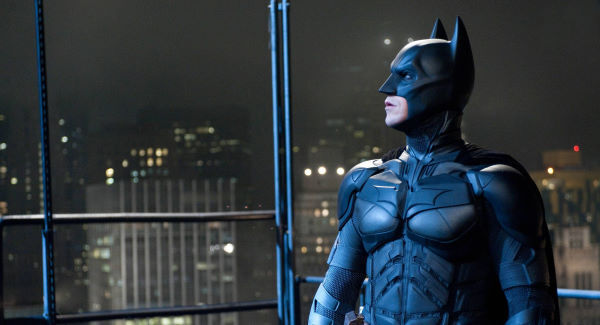
Batman is 75 years old today, still battling crime in Gotham City, in comics and film spin-offs, and in a camp TV show in the ’60s, but his appeal is his human frailty, says Jonathan deBurca Butler.

75 years later Batman’s crime-fighting crusade continues

FOR the children of Charlie Haughey’s bedraggled Ireland, Saturday morning was special. During the week, Ireland’s televisions were grey with endless news stories of Dublin dole queues and Belfast bombings, but on Saturday mornings sitting-rooms were lit up by the colour of Gotham City’s guardian, Batman.

The famous 1960s series, which starred Adam West, was an overacted camp parody, full of puns and bad one-liners. Batman and Robin were bumbling — not helped by West’s paunch — and their epiphanies never fitted their meagre intelligence. But the villains seemed real; made more sinister by the strange, narrow-angled camera shots. The colourful, noxious gases looked very poisonous and, for most of us, it was the first time we saw pop art — POW!

Adam West’s Dark Knight was the least dark of all, and maybe that’s just as well; life in bedraggled Ireland was gloomy enough, so a gentle introduction was probably best.

Batman is 75 years old today. His first appearance was in issue 27 of the now legendary Detective Comics (DC). He was devised by Bob Kane and Bill Finger, who were spurred on by the success of Superman.

The Caped Crusader’s first story, ‘The Case of the Chemical Syndicate’, came out in May, 1939 and featured a merciless and remorseless crime-stopper. He was such a hit that by 1940 he had a strip and series of his own.

In 2011, gaming and comic site, IGN, voted Batman number two in their list of top 100 comic superheroes, while askmen.com also have Bruce Wayne’s alter ego at number two. In both cases, Superman was number one.

“In the pantheon of superheroes, he’s pretty much at the top,” says Dave Malone, of Other Realms comic shop in Cork. “If you look, you’re always going to find Judge Dredd, Wolverine and Batman have always been at the top. Even if you were to look at the most popular graphic novels of all time, and from a critical point of view, Batman The Dark Knight Returns and Watchmen are always debated over as to which is the greatest graphic novel ever printed.”

The Dark Knight Returns was first published in 1986 and tells the story of 55-year-old Bruce Wayne, who, after 10 years, comes out of self-imposed retirement, and returns to tackle a resurgence in Gotham City’s crime. His methods embarrass and irritate those in power, who send the clean-cut Superman to sort him out. The pair fight and Batman suffers a heart attack, apparently dying. His passing is perhaps a clue to the Caped Crusader’s popularity. “He’s human,” says Malone. “He doesn’t have any powers. He has no magic ring. It’s just up to a man and his wits and, basically, what he has to sacrifice and what he’s not willing to sacrifice, as a man, to get the job done. Also, I’d say a lot of his stories deal with not so much the supernatural or the fantastical, it’s basically crime-bosses, the mob. I wouldn’t say overly-realistic situations, we are still talking about comic books here, but situations that are easier to relate to, as in: what can a man do? He is a detective really.”

Professor Will Broker, who lectures at Kingston University, London, has dedicated much of his life to the study of the Dark Knight. A PhD on Batman was followed by two books; Batman Unmasked and Hunting the Dark Knight. “I think Batman has remained attractive and popular because of his ability, as a cultural icon, to change with the times and to continue to say something about society’s current concerns,” he says. “From World War Two, during which Batman comics had propaganda messages on their covers, through the McCarthyite 1950s, to the pop art of the late ’60s, to the post-9/11 climate of the early 21st century. So, the most obvious case of Batman exploring post-9/11 issues, for example, is Christopher Nolan’s film, The Dark Knight, of 2008. Many reviewers identified key scenes as connecting with, or reflecting, aspects of the ‘war on terror’. For instance, Batman’s interrogation of Joker, which verges on torture; Batman’s extraction of a suspect from Hong Kong in order to bring him to justice in the US [extraordinary rendition]; and Batman’s decision to infringe civil liberties through surveillance of all citizen’s phone calls, in order to catch Joker.”

“All these issues seem to touch on concerns of the post-9/11 climate,” says Broker. “Namely, how far are we justified in going in order to stop terrorism? When does ‘fighting fire with fire’ through black ops make the government as unethical as the terrorists it is attempting to combat?”

Though Batman has altered radically in appearance and behaviour, his core self is unchanged. “That core is essentially that he has no powers,” Broker says. “He represents what human beings can do, both physically and intellectually, if they really try and never give up. For all Batman’s flaws, and they are many, I think that’s the most positive aspect people draw from him. He is about never giving up, and pushing yourself to the limits. For that reason, generations of fans have connected with, and in some cases aspired to be like, him.”

That aspiration depends on interpretation and there have been many of those. Batman’s sexuality is often a matter of discussion. The older Batman and younger Robin, living in luxury in a rich man’s house and on more than one occasion waking up in the same bed, suggest there is something to it.

“I think it’s very possible to read homosexual meanings into many Batman stories, especially, of course, those involving Robin,” says Professor Broker. “Even a person who disliked those meanings could not deny that others have found those meanings in the stories and the truth is that many young men, from the 1950s onwards, have valued and found reassurance in those meanings. That Bruce Wayne and Dick Grayson have a relationship that could be construed as homosexual, or homoerotic, is a powerful and enduring interpretation. However the producers try to repress it, it frequently returns.”

“My own personal view is that Batman would not allow himself much of a romantic or sexual life,” he says. “I think he is committed to that ‘war on crime’. However, I think it very likely that Dick Grayson would have developed a crush on Batman at some point. I think it would probably have remained unrequited, and that if Bruce felt anything in return, he would probably have guiltily repressed it.”

For the denizens of Gotham City, and for most readers, Batman’s sexual orientation is never an issue. Far more important are the Dark Knight’s motives. Is he forever taking revenge for the murder of his parents, which he witnessed in a dark alley? Are his foes his own creation? And, ultimately, is he a good man? “This is a fascinating question that I don’t think people ask enough,” says Professor Broker. “I believe Batman thinks he is doing good, genuinely. However, I don’t think he is necessarily a good judge of that. He is so locked into his own driven, stubborn, narrow world-view, his [self-professed] war on crime, that he very rarely questions his motives or behaviour.

Even fascist police officer, Judge Dredd, has questioned himself more often than Batman. I think a billionaire could find far better ways of ‘fighting crime’ than beating up thugs and putting costumed characters, who arguably only exist because of him, temporarily into an asylum. But I don’t think you would actually want to say that to Batman’s face.”

Of all the costumed thugs that Batman combats, it is perhaps the Joker who gives him his toughest tests. At 74, the green-haired gurrier has been there nearly as long as his caped adversary, and has always maintained his sadistic, and often funny, nature, which makes him perhaps DC Comics’ greatest villain.

“His greatest foe is The Joker, without a doubt,” says Dave Malone. “That’s not even up for debate. There’s been many others who can give a solid challenge, most memorably Bane, when he actually broke Batman’s back, but it’s always been the Joker, and definitely not from a physical standpoint. The Joker has always been about the psychological, with his own, twisted set of rules.”

For Malone, it is that psychological side of the Batman story that fascinates. As a lifelong fan of the Caped Crusader, he was more than satisfied with director Nolan’s recent movie trilogy, which featured Christian Bale and delved into the superhero’s darker side. He also has a soft spot for Michael Keaton’s Batman. Malone says, however, that the mind of the Dark Knight is still best seen through a comic.

“A lot of people just see the cape and the mask, and that’s great when you’re younger and all you want is action; it draws you in,” says Malone. “But as you grow older, you’re more interested in character development, the man behind the cape. He’s a broken man and yet he’s willing to continue on.”

For the people of Gotham, and the readers of DC Comics, that’s a reassuring thought.

x

More in this section

Cookie Policy Privacy Policy Brand Safety FAQ Help Contact Us Terms and Conditions

© Examiner Echo Group Limited













