Vintage view: Lalique glass
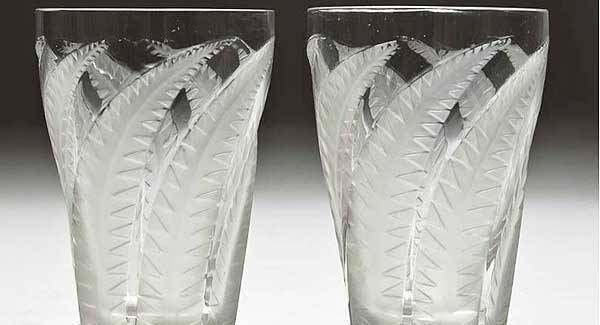
Kya deLongchamps takes a look at the extraordinary glass legacy of René Jules Laliques.

Vintage view: Lalique glass

IT’S taken me a while to get around to Lalique glass, as his ethereal imaginings from the 1920s forward make me rather swoony, turning my fingers to over-cooked green beans. Divine, transcendent — what are the words for the work of René Jules Lalique? Artist, industrialist and visionary, it’s easy to forget the diamond bright core of a very modern man when mesmerised by the unearthly, fragile beauty of even his mass-produced moulded glass.

Born in 1860, Lalique’s first great success was not even in glass but in designing and crafting jewellery in Paris for Boucheron and Cartier among others. Apprenticed to Louis Aucoc, at just 16, his fame flashed into vivid life and by 1890 he had set up his own jewellery firm and was supplying the iconic Paris design house of Maison de L’art Nouveau, a perfect showcase for his naturally inspired creations.

As with his hero and predecessor Emile Galle, Lalique’s attention to gems and precious metals flowed seamlessly to his inclusion of glass in jewellery, treasured objects d’art and architectural masterpieces, including the luxurious glass columns of the SS Normandie and the glass fountain at les Ronds-Points des Champs-Elysees (now sadly dismantled). His shop in Place Verdom nestled close to the salon of perfumier Francois Coty, and there began Lalique’s long association with the design of both labels and bottles for the World’s top perfume houses.

This elevation of an ordinary object with new character typifies Lalique’s approach to immersing art within modern design and marketing. He went on to fashion the still extant glass windows for Coty’s store on Fifth Avenue in New York. His glass car mascots, lit from within and coloured with integral filters, were badges of unfettered luxury in the 20s and 30s. The most highly prized of his glass work throughout the period of Art Deco are the 700 unique pieces of ‘cire perdue’ or lost-wax masterworks that quite literally broke the mould for quality in the period of 1900 to 1933. A liberal at heart, Lalique expanded his factory in 1921 with the intention of increasing production, lowering the price of glass and introducing his work to every home that wanted it.

So where can you start on a slender budget finding and collecting early authentic Lalique from the age of its original master? Glass is notoriously hard to date, and many of René Lalique’s innovative pieces from 1921-1945 have been reproduced by the firm over the years in a heavier lead crystal. Fake R. Lalique signatures have been engraved onto honest editions of his work by the Lalique factory. Buy from a reputable source (I would preclude eBay for this one unless you are an experienced internet raider) and ask for a detailed receipt for the piece. The least expensive area to start would be in moulded glass tableware — stemware, bowls and desert size plates. Vases of a small size from the 20s and 30s start in the lower hundreds, rising to hundreds of thousands for his energetic cire perdue pieces, even with mild damage.

Elect for nothing short of perfection in glass. Every nibble, chip and rub will influence price and the clarity and refraction of the glass. Where you would expect to see age is on the foot of a vase or bowl, where it has grazed the supporting surface over the years. Lesser perfume bottles remain affordable — and if you are lucky enough to find one with contents intact, watch out Pandora — don’t open it!

Look for pieces with Lalique’s touch for three dimensional flair. The look of the glass should also speak its time. Clear glass is generally less expensive than colours or opalescence. Work by Marc, René’s son and Marie-Claude his granddaughter from the period after 1945 to 1977, are quite distinct from Rene’s work but now gaining a following and show the master’s influence.

x

More in this section

Cookie Policy Privacy Policy Brand Safety FAQ Help Contact Us Terms and Conditions

© Examiner Echo Group Limited













