Ireland’s top foodies recall the meals they loved as children
There’s nothing more heart-warming than the comfort food of childhood — dishes usually made by mum.

Ireland’s top foodies recall the meals they loved as children

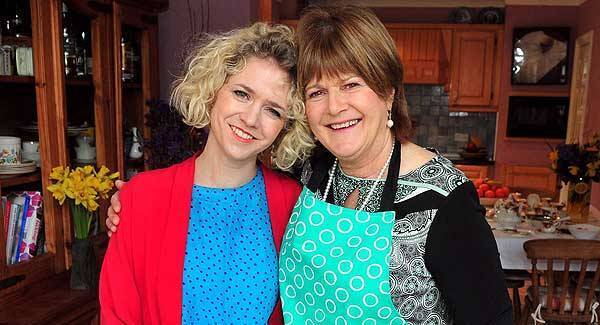
MICHELLE DARMODY

Michelle Darmody is the proprietor of The Cake Café, in Dublin, and has just opened a sister-restaurant, Slice, also in Dublin. She writes a weekly food column for the Irish Examiner and is the author of The Cake Café Bake Book. She is the eldest of five children and her mum, Mel, lives in Carrigaline, Co Cork.

Mum grew up in Meath and met my dad, who was from Tipp, in Dublin. He got a job in Cork which is how we ended up in Carrigaline, they just fell in love with the place they were living in. We are a very close family, and I’m up and down all the time to Cork and she’s always up and down to Dublin. And she’s always up and down to her family in Meath as well. She has always been hugely interested in cooking, baking in particular.

We were a big enough family, five kids, so baking was a bit of a necessity. as well as a treat.

She’s an absolutely instinctive baker, she’d bake something for school every day. Banana bread was a big one and she’d use it as a way of sneaking something healthy in to us, nuts or fruit. Back in the ’80s, there were a lot of dinner parties with friends coming over to the house. I used to love to help her although some of the others weren’t so keen [laughing].

If there was a dinner party on a Saturday, the whole day would be spent preparing and I used to get so excited and would be helping with the shopping, the preparing, the baking, the cooking. She’d do coq au vin, a real ’80s dish. She makes a great lasagne, it’s the family dinner. She’d do a lot of traditional roasts, like chicken with stuffing. I remember thinking coleslaw was very exciting.

She makes amazing pavlova — that would be her signature dish and it reminds me of home and holidays when I was a child. She’d even do lemon soufflés or Turkish delight, complicated things, just to experiment. During the week, it was more the healthy side for school. Even now, she’d bake loads, not just five scones, she bakes a huge pile of them.

She loves the making of the food as well as the social side of sitting around afterwards eating it.

I was down with a big gang staying in Kinsale last weekend and called into her first. She sent me down with pavlova and chocolate swiss roll and everyone dived on me. And she loves sharing — the neighbours always get well-fed.

Banana Bread

We always had a wedge of her banana bread going to school. We had some last weekend and it reminded me of primary school, it transported me right back. The riper the bananas, the moister the cake and if you are using glacé cherries, it is best to soak them in warm water, then pat them dry. This removes some of the sugar and will also help prevent them sinking in the cake.

Set oven to 180°C (gas mark 4).

Line a 2lb loaf tin with baking parchment.

225g self-raising flour

Half a level tsp of salt

100g butter

175g caster sugar

100g sultanas or dried cranberries

25g chopped walnuts

100g glacé cherries or chocolate chips

2 eggs

450g bananas, mashed

Sift flour and salt, rub in butter until it looks like large breadcrumbs. Add sugar, sultanas, walnuts and cherries/choc chips. Mix together and make a hollow in the centre. Crack in the eggs and add mashed bananas. Beat thoroughly. Pour into tin and spread evenly. Bake for 1hr 30mins. Cool before removing from tin. Keeps really well for a few days.

Ross Lewis and his mother Margaret Lewis in the Chapter One kitchen.

ROSS LEWIS

Ross Lewis is the chef/proprietor of the Michelin-starred Chapter One Restaurant in Dublin and author of the recently published and award-winning Chapter One: An Irish Food Story. He is the eldest of three children and his mother, Margaret (Maggie), lives in Cork with husband Gethin. His three daughters are pictured on the front cover.

I KNOW everybody probably thinks this about their own mum but my Mum is incredibly loving, patient, kind, unflappable — she doesn’t stress at all. She loves food, the garden, flowers, making things, curtains and so on, she’s very talented and she’s always been a great supporter of mine. She worked with me for the first few weeks after Chapter One opened, baking all the cakes and pastries and she even provided £10,000 from her savings to help open the place after the bank manager refused me a loan. Our relationship is built on great love and fondness. We wouldn’t talk every single day but there’s an intimacy there between mother and son. She’s an amazing woman, she’s the kind of woman who, at age 57 or 58, said if she could, she’d have another family. She loves children, playing with them, minding them and has often taken our three daughters for a week or more at a time. Some of my earliest memories are in the kitchen, annoying the bejaysus out of them, rolling out scone mix, licking spoons and bowls. She’s a great cook — what she did mightn’t be considered too exotic now but there weren’t many housewives in the ’60s and ’70s doing things like beef stroganoff and a great curry. She has Welsh heritage so she made things like faggots and Welsh cakes. Friday was a banker, you’d always have T-bone steak, mushrooms, deep-fried onions, chips and French mustard. And she did amazing baking, gooseberry tarts, raspberry tarts and fantastic pastry.

I’m not at home much during the week, it’s just too busy, but I’m off on Sunday and Monday and we always make a point of eating out on one day and cooking at home on the other. On Sunday, we go to the People’s Park Farmer’s Market in Dun Laoghaire for meat, breads, cheese, veg. I also make a policy of bringing home lots of food we use in the restaurant like cep mushrooms, lobster, scallops on the shell and cook them simply and make the children try them to introduce them to the taste. As a chef, I would love to expose them to as broad a range of tastes as possible, to develop their palates. They mightn’t always like the taste but maybe they will remember it at some stage in the future — “oh, that’s a cep mushroom, my dad used to give me those”.

Margaret Lewis’ recipe for crumbly pie shortcrust

9oz plain flour

4½oz butter

2oz sugar

1 egg

Drop of lemon juice

Mix flour, sugar and butter together until it reaches ‘breadcrumb’ stage, then add egg and lemon juice. Bring together in a ball and roll out quickly. Use as required for all sorts of dessert pies.

Rachel Allen at work in the kitchen with her sons Joshua (centre) and Luca.

RACHEL ALLEN

The internationally renowned TV chef and cookbook author Rachel Allen was born and raised in Dublin by her Irish father, Brian, and her Icelandic mother, Hallfridur. She also teaches at Ballymaloe Cookery School where she first came to study aged 18. She has one older sister, Simone. She is currently working on her latest book, out later this year.

My dad had a shoe factory and my mum had two clothes shops in Dublin but I had a very loving, stable childhood with lots of good home-cooked food, which has inspired me in my career. We always baked quite a lot together and I don’t know how she managed to juggle her shops with the two of us and yet always have food on the table. She does everything with an air of ease and grace and she’s still the same: if I have to go away but am busy with the kids, she’ll say, not a problem, I’ll hop in the car and come down.

Traditional Icelandic foods would be things like dried fish, and skyr, which is a thick, sweet yoghurt, but Mum didn’t recreate it at home. She cooked things that would be a lot more familiar to anyone growing up here. It’s certainly not the only thing she cooks but roast chicken just comes to mind. People always say their mum’s is the best but her gravy and stuffing is beautiful. And now I always have to put in stuffing, well, in the winter at least. She would always put in lots of fresh herbs and a tiny bit of lemon zest. If I had been away or was coming home from school or a hockey match and I smelt roast chicken, I knew I was home.

My mum is very wise, very open-minded, quite calm, quite liberal as a mum and she doesn’t get het up about things. She’ll listen first and won’t say anything to you until she’s thought about it or considered it.

My sister, my mum and I are very lucky, we have such a close relationship. She’ll often advise me. For example, she’ll say, don’t forget when you’re raising children, that the most important thing is communication.

Baked Egg and Soldiers

It is a very, very simple recipe but they always remind me of when I was little. We’d have them for an easy and quick brunch or supper.

6 eggs

6 tbsp single cream

Salt and freshly ground black pepper

15g (½ oz) butter, divided into six portions

Bread, for toast

Preheat the oven to 160C (gas mark 3). Bring the kettle to the boil. Break each egg into a ramekin, add 1 tablespoon of cream, then top with butter and a pinch of salt and pepper. Place in a roasting tin, pour boiling water into the tray so it comes to halfway up the sides of the ramekins and place carefully in pre-heated oven. Bake for 10 minutes or until eggs are almost set. Cut toast into soldiers (fingers), butter and serve on the side.

Giana Ferguson, her son Fingal Ferguson and grandson Euan Ferguson.

GIANA FERGUSON

Giana Ferguson is one of Ireland’s original legendary farmhouse cheesemakers, responsible for the renowned Gubbeen Cheese. She is also one of the original co-founders of the Irish chapter of the international Slow Food Movement. Along with husband Tom and their children Fingal (responsible for the Gubbeen charcuterie range) and Clovisse, they have turned Gubbeen into one of the most famous food brands in the country. She is currently working on a new book, Gubbeen: The Story of a Working Farm and its Foods (Kyle UK), to be published this September.

AS a family, we come from a kitchen culture in Gubbeen, everyone’s in the kitchen. The children have always been hanging around doing homework and so on from the tiniest age. One of the first dishes we’d have done together would have been ‘eggy bread’ back when they were tiny, using the very special bread from the Courtyard bakery, in Schull. We’d soak it in milk and eggs and then put it in the pan with lots of butter and a bit of sugar to caramelise it. When I started making cheese in a tiny little 25-litre vat, Fingal’s very first contribution was to throw his Lego into it.

I grew up in London, a kid of the ’50s. We came from the era of post-war austerity, eating dripping on bread. We had wonderful old aunts who lived in the country and used to send us up fruit and vegetables but other than that, food was simply fuel. My own mum was not a great cook, she didn’t cook much, she suffered from depression. My parents eventually split up and my father moved to Spain. My stepmother in Spain was Irish, June Tobin, and though I hate to say it, it seems disloyal to my own mum, I learned so much from her. They grew everything, olive oil from the trees, wonderful fruit and vegetables. I went to Spain for the first time when I was 13 or 14 and it was like someone threw the lights on: the smell of lemons and tomatoes and garlic, the colours, the immediate impact, everyone in the kitchen cooking.

In London, there was an element of be grateful you even have food, whereas in Spain, food was a celebration and even came in seasons. But there was one happy food memory from London — if someone came to visit, we’d have tea and crumpets and cakes. I think it’s a lovely treat to have tea on a Sunday: ham sandwiches, sponge cake made with a duck egg and cream and raspberry jam, honey biscuits.

When I came here, all the memories of the food of Spain were translated into the wonderful produce of Gubbeen. Tom came from a tradition with a great love of food. His mum and his grandmother were always making, preserving, storing, pickling, nothing was ever wasted and everything was appreciated.

Gubbeen Sponge

This calls for equal quantities of sugar, butter, flour and eggs so it is easiest to weigh the eggs, still in their shells, record that weight and weigh out your sugar, butter and flour accordingly. Preheat oven to 180° (gas mark 4)

2 fresh free-range eggs

Unsalted butter, softened

Caster sugar

Self-raising flour, sifted

Pinch of salt

1 tsp of vanilla extract

Method: Grease a 26cm tin with butter and line with greaseproof paper. Weigh the eggs in their shells, record the total weight and set aside. Weigh same amount of butter.

In a high-sided mixing bowl, cream the butter with a wooden spoon till it becomes very soft. Weigh the same amount of caster sugar, mix it into the butter, a quarter at a time. Continue mixing till fluffy and light. Weigh out the same weight of flour. Crack the eggs into a jug and whisk. Beat the eggs into the sugar and butter little by little, incorporating fully each time. You run the risk of splitting the mix by adding too much egg at once. Add a tablespoon of the flour to the sugar and butter when you have a third of your egg left, this will help the last of the egg into the mix. Lastly, add the vanilla extract along with the salt. Sieve the flour over the cake mixture and fold the flour in gently using a tablespoon this time.

Turn the bowl as you fold so you aren’t just mixing in the one spot. Check the consistency isn’t too thick, it should “drop”, not run off the spoon. (A tablespoon of milk can be added if the mixture is stiff.) Pour the mixture into the tin and bake for 25-30 minutes, 180° (gas mark 4). Stick a skewer into the middle of the cake, if the skewer comes out clean, it’s ready. By tapping the tin on your work surface you allow some of the steam inside the cake to be released, preventing sinkage. Rest in the tin for 10 minutes then remove from the tin and allow to cool completely on a cake rack. Lovely whipped double cream and homemade raspberry jam are perfect fillings.

Catherine Fulvio and her children Charlotte and Rowan, who love to cook.

CATHERINE FULVIO

TV chef, cookery school proprietor, food writer and cookery tutor Catherine Fulvio runs Ballyknocken Cookery School and Ballyknocken House. She is married to Sicilian Claudio and has two children.

MY mum died in 1998 and I still miss her hugely. We would have cooked together all the time, that’s where I learned to cook. She set up a B&B and cooked three meals a day. Guests came and stayed for a week and had a choice of menus every day. My choice was to help dad on the farm or mum in the kitchen. I loved the farm but loved helping mum in the kitchen even more. We cooked everything: full Irish breakfast in the morning — she had a penchant for Scotch eggs — quiche for lunch and roasts for dinner.

She was a real dessert queen: she made profiteroles, baked Alaska, cheesecakes. You name it, she did it. And she was always experimenting, entering cooking competitions, like the Bord Iascaigh Mhara competition. All the family would go and support her, it would be a day out, but you’d be sick of the fish pie after eating it all the week before as she practised for the competition.

Chips would be a massive treat — we had no deep-fat fryer — and she never did burgers, fish fingers, waffles, that kind of thing. She’d buy the whole chicken and joint it. She’d do chicken Maryland, she taught herself everything.

My own children (Charlotte, 11, and Rowan, 10) love cooking and in the last six months I’ve noticed Rowan is getting really into cooking. They’re both very good, they obviously follow mum’s passion. They did a lot of sweets earlier when they were first getting into it but now they’re moving on to savoury, cooking full dinners from start to finish.

We cook together and they really enjoy it, I make a point of getting them to help and they understand what goes into it. It’s a very good interest, a life skill and it makes them conscious of what they’re eating, which makes for a healthier diet.

We run a head chef/junior chef course here — and it can be any adult, a dad, an auntie or uncle, not just mum — and it’s always full.

One dish that really reminds me of my mum is rice pudding. Because we are farmers, with four hungry children helping out on the farm, every once in a blue moon she’d make a vat of rice pudding from the cream from our dairy cows.

It was so creamy and just melted in the mouth. She’d make it on the stove, like a risotto. I didn’t like baked rice then and still don’t and, no, I can’t stand skin.

Mum’s Rice Pudding

Serves 6

1¾ cups milk

1 cinnamon stick

Zest of 1 lemon

¼ cup short grain rice

½ cup sugar

2 tablespoons butter

2 tablespoons Baileys (Catherine’s addition)

This rice pudding combines the creaminess of a traditional rice pudding with a little Irish twist. In a large saucepan, heat the milk, cinnamon stick and zest of lemon over a low heat. When hot, add the rice and cook for 40 minutes on a low heat, stirring frequently. Increase heat to medium and simmer until all the rice has puffed up and the milk has thickened, about ten minutes. Stir often. Add ½ cup of the sugar and the butter and cook for a further ten minutes. Add the liqueur, stir to incorporate and serve immediately.

More in this section

Cookie Policy Privacy Policy Brand Safety FAQ Help Contact Us Terms and Conditions

© Examiner Echo Group Limited













