Silent is golden for veteran film pianist at French Film Festival
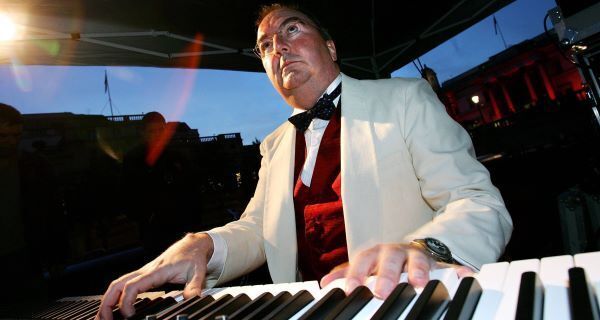
SILENT film pianist — it’s hardly a job that a career-guidance counsellor would recommend. But that’s Neil Brand’s job. He says “it’s a bit like saying you’re a stream-train driver”. But Brand has carved out this unlikely niche, reintroducing audiences to the delights of live-accompanied silent films. “Silent films,” he says, “are not sound films with the sound turned off; they are a different animal.”
The Briton is giving two performances in Cork, as part of this week’s French Film Festival. On Wednesday, he will present his one-man show, a retrospective on his odd career, at the Farmgate Café in the English Market. On Thursday, he will accompany ( ), Rene Clair’s 1928 farce. “It’s ironic, a comedy of manners,” says Brand, of Clair’s film. “You are dealing with people who are terrified of being caught out in embarrassing social situations.”
An opera version of the film was performed at the Wexford Festival last year. The plot is as trifling and convoluted as you would expect from an operatic comedy: on Fadinard’s wedding day, his horse eats a lady’s straw hat. She is hiding behind a bush with her lover and, of course, cannot go home without it being replaced, lest her husband find out she’s been trysting. Fadinard must replace this hat or have his day ruined — and so is forced into ever more ridiculous and compromising scenarios.
“What starts with the horse and the hat grows and grows, until everyone is complicit in what could be a major scandal,” says Brand. “It’s very funny. One of those great silent films that makes you forget it’s a silent film. If I do my job right, people will have a ball, they really will. I’ve found, when I’ve played in Dublin and Cork, that you get a wonderful sense of the Irish humour, and it’s great to be part of making it happen.”
For Brand, the clichés of musical accompaniment rarely apply. It’s not often the case of the damsel tied to the railway lines, and a suitably frenetic accompaniment. There is far more breadth, he says.
Brand says is a “wry character comedy” that needs to be approached delicately.
“I think it can come as a surprise to people that there is a vast breadth of culture in silent cinema,” he says. “People sometimes don’t expect the sophistication of these movies. Even the sophistication of the techniques that were being used can surprise them.”
People often expect a museum piece, but Brand says the reality is anything but. “They don’t sit outside and observe. People are sucked into it. They devour it like a piece of theatre. It’s the live music that makes it so all-encompassing. It becomes about that moment in the room, a unique thing that can’t be repeated. I make the films immediate in ways sound movies can’t be.
“After a while, you just don’t think how old the film is. And that is the beauty of it. I’ve done this job for 30 years and there’s not a day when I don’t think these films are valid entertainment for a modern audience. They are dealing with human behaviour, and the best of them don’t age, like the best of theatre and literature,” he says.
Brand improvises. Even for films with which he’s familiar, he does not use scores. Instead, he does some planning, and then reacts to the film, the audiences, and the auditorium. It’s a work method that developed from his very first steps into an accidental career. “I could play piano by ear,” he says, “so when I was asked to do an accompaniment job by a film society, I said okay. I really wanted to be a film composer, so I thought maybe this would be a good way to get into it. But it was only when I started playing along to this Buster Keaton film, that I realised that the audience made the music happen. I had planned a certain amount, but that went out the window when it started getting laughs. I had this sense of being part of the process of where the laughs were coming from.”
That was 30 years ago. Brand is now a regular at the British Film Institute, on London’s Southbank. He worked with Paul Merton on his documentary series, and travels the world as an accompanist. He has also found time to fulfil his goal of composing, having written music for two recently restored films, (1929), and Anthony Asquith’s (1928), a drama set on the London Underground.
Brand’s one-man show, , draws on his long career to give a potted history of his chosen material. “It’s based around clips I really like,” he says. “It’s not a straight history of silent film. It’s the wackier side. The things you wouldn’t expect. A laugh, too. At one particular moment, I get the audience to score a film.
“And I play at sight a piece that I’ve not seen before. That’s always fun and I talk while I’m playing, to describe what’s going through my head.”

CONNECT WITH US TODAY



Be the first to know the latest news and updates

















