Ten things you didn't know about the Winter Olympics
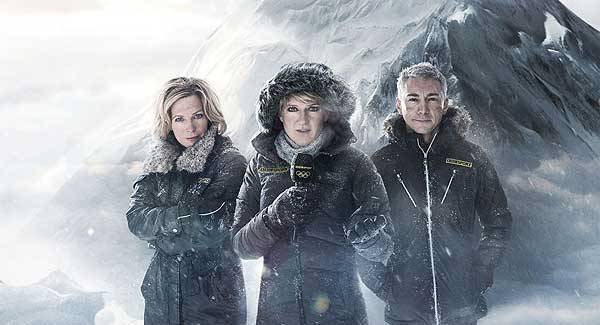
It’s not as prestigious as the track-and-field, but since its inception in 1924 there has been plenty of drama on the slopes, says Jonathan de Burca Butler

Ten things you didn't know about the Winter Olympics

THE Winter Olympics, the chilly little sister of the summer games, was ‘born’ in 1924. Its global audience is nowhere near that of the track-and-field. But with the 22nd games upon us, we look at the more interesting stories to come down its slopes.

Ireland (Yes, Ireland)

Ireland has been sending competitors to the Winter Olympics since 1992. We almost won a bronze when Clifton Wrottesley — doesn’t sound Irish, but he is — came fourth in the men’s skeleton in Salt Lake City. This year, we’re sending five competitors, among them 16-year-old snowboarder Seamus O’Connor, and 17-year-old skier Florence Bell.

All seasons’ athletes

Only four people have won medals at both the Summer and Winter Olympics. Christa Luding-Rothenburger, from East Germany (and, later, Germany) is the most remarkable. Luding-Rothenburger won speed-skating gold at 500m in 1984.

In Calgary, in 1988, she took gold again, in the 1,000m, and silver in the 500m. Seven months later, she took silver in the match-sprint cycling in Seoul, making her the only athlete to win medals in both winter and summer games in the same year.

Curlers

Britain’s curlers won the gold medal at the first Winter Olympics, in Chamonix, in 1924. They had a lengthy wait before getting their medals. Having claimed that the event was a demonstration, the International Olympic Committee (IOC) ruled in 2006 that it was part of the official 1924 programme. Thus, the eight Scots received their medals 82 years late.

Flying Englishman

Eddie Edwards holds the dubious honour of finishing last in every round in which he competed at the 1988 Calgary Games. When he appeared at the top of the slope, for his first and nearly last ski jump of the tournament, he waved to the crowd and instantly became a hit.

He was, ironically, dubbed Eddie the Eagle. Eddie’s story inspired a top-50 hit in the UK by the group Chumbawamba. In Finland, he made the charts twice, singing both times in Finnish; a language he cannot speak.

Sarajevo

When Sarajevo was awarded the 1984 Winter Games, in 1977, the Yugoslavs proudly readied their city for the event.

Among the constructions built was a 1,300-metre bobsleigh track that would accommodate 30,000 spectators. Its position, on Trebevic mountain, overlooked the city and was one of the visual highlights of the games. Yugoslavia was to soon fall apart and, eight years later, during the Bosnian War, the track was being used by Bosnian Serb forces to shell the city.

Thanks, but no thanks

Although the economic benefits of the games are questionable, most cities bend over backwards to play host.

In 1970, Denver edged out cities in Finland, Canada and France for the honour of holding the party in 1976.

Organisers and politicians were beside themselves with joy, but the average citizen was sceptical. When the IOC asked the Colorado city to stump up $5m for their share in hosting the games, its citizens said ‘no’, rejecting the issuing of bonds, and thus giving the games to Innsbruck, in Austria.

’S no snow

At the 1964 games, in Innsbruck, a lack of snow meant the Austrian army was drafted in to ship snow and ice down off the surrounding mountains.

Having carried 20,000 blocks of ice and 40,000 cubic metres of snow, they packed the slopes down using their hands and feet.

Hardy fellas.

China crisis

Compared to its summer counterpart, the Winter Olympics are far less political. Only one country has ever boycotted the games.

Before the 1980 games, at Lake Placid, New York, the IOC had allowed China back to compete. It was their first time since 1952 and they would return as the People’s Republic of China. Up to then, Taiwan had competed as the Republic of China. Initially, the IOC encouraged the two countries to compete together, but this was unacceptable to Taiwan. When the IOC insisted that Taiwan then rename itself Chinese Taipei, they resisted.

Taiwan’s competitors turned up for the opening ceremony, but were stopped from entering. As a result, they boycotted the games — if such a thing is in fact possible.

German unification

At the other end of the spectrum was the curious case of Germany, who sent a unified team made up of competitors from both east and west in 1956 (two medals), 1960 (eight medals) and 1964 (nine medals).

No Gays here

Just under 350,000 people live in this year’s host city, Sochi. The city is unique in that, according to its mayor, Antoly Pakahamov, there are no homosexuals, or, as he later clarified: “I don’t know any of them”.

x

More in this section

Cookie Policy Privacy Policy Brand Safety FAQ Help Contact Us Terms and Conditions

© Examiner Echo Group Limited













