Laughing at the race lines
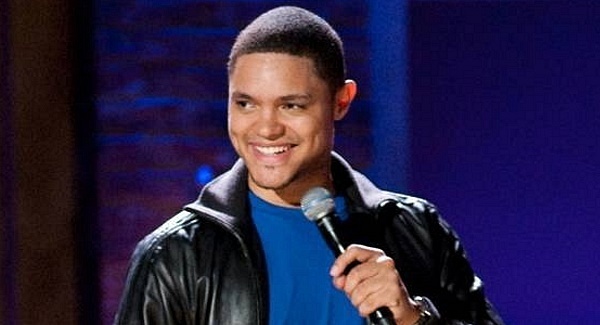
SOUTH Africa’s most popular comedian Trevor Noah brings his show The Racist, which was a big hit at the Edinburgh Fringe last summer, to Vicar Street in Dublin next Friday.
Noah’s mother is from Johannesburg and his father is from Switzerland. They met in Soweto during the apartheid years, when it was illegal for black people to fraternise with whites. His mother was often arrested and thrown into prison at the weekend for her socialising. When she gave birth, she couldn’t tell the authorities the father of her baby was white. As Noah says, he was “born a crime”.
Noah lived the first 10 years of his life under apartheid. When he was a kid, his father had to walk on the opposite side of the street to him, waving at him occasionally “like a creepy kind of paedophile”. If he was with his mother, she had to walk ahead of him, pretending not to know him. If the police showed up, she had to drop him. “I felt like a bag of weed,” he says.
He adds, though, that apartheid impaired his parents’ ability to live a normal life rather than his own — he was sheltered from the worst excesses, even though he was the only child for miles in the township he grew up in that wasn’t black.
“My world was so shielded,” he says. “I remember things happening in South Africa — in the street, protests and violence and those kinds of things — but in terms of my world personally I remember it being very tranquil and very stable.
“I don’t think most of us youngsters that were born into that generation had a grasp of what was going on at that time. If you’re born into a prison system, you don’t realise you’re in the prison until you see the free world.”
Racist incidents happened so often that you wouldn’t take any notice of them, he says. “Especially during the transition period, there was a heavy period of blatant racism where people weren’t used to the concept of not being allowed to be racist.
“On the street, somebody might drive by in a car and shout something racist or some guys would try and fight with you if they bumped into you in the street. It used to be random, isolated incidents — and it wasn’t all people, and it wasn’t all the time. It’s generally a small group of people that champion evil all over the world. The rest of the people sit by — they’re either too scared or too apathetic to do anything.
“If somebody was racist to you, you felt it, but if somebody is racist when now you’ve got your freedom, you’re like, ‘Nah, I don’t care’ because the flipside of that was racism and no freedom.”
People worked through it as best they could. “We lived our lives. You knew that some people weren’t progressive, but all the time that’s changing. People slowly evolve, as generations go from one to the next.”
Noah’s background — and rare perspective — gives him licence to explore issues of race like few others. He pokes fun at the awkward, politically correct way in which Americans deal with race. American people tend to be too afraid to even utter the word “black”. Instead, they’ll say things to him like: “Baltimore is going to be real urban, Trevor.”
The United States is, however, the country where he received his most unusual heckle, borne out of the exuberance that is unique to Americans.
“I got a heckle once — I can’t remember where, but it was in the United States — and it was a heckle of encouragement. I didn’t know what to do with it. The person shouted out something like: ‘Come on, Trevor — you can do it. You can make that joke funnier. Come on!’.
“It wasn’t in a mean way. The guy was just being classically American. He was urging me on, spurring me on. It was a very strange heckle to get.”
After a couple of marquee appearances on Jay Leno and David Letterman, Noah has become globally famous and has more than a million followers on Twitter. He is effortlessly charming and has an infectious laugh, which he often unleashes in anticipation of one of his punchlines.
Remarkably, he doesn’t write material down. He just lets stories and gags percolate in his mind, and says that one of the tricks he plays on himself is to walk on stage only a minute or two after being out on the street so he nurtures in his own mind the idea that his audience see him as a friend, not a performer.
He speaks five or six languages and his routines are peppered with convincing breakouts into the likes of Chinese and Spanish. He’s learning German to impress his dad, he says, and also speaks Xhosa, the wonderful, clicking South African language (“It’s magic. It’s like Chinese New Year in your mouth.”) It may be from his late grandfather that he gets his comedy genes. Noah says he was the funniest person he’s ever known.
“He would leave to go to the shops to buy milk and bread, and come back three hours later because he saw a beautiful woman waiting on the side of the road for a bus, and he believed that beautiful women shouldn’t be on buses so he’d give her a ride to her house. We’d be waiting back at home for the milk and bread. He’d come back without the milk and bread, but with a story about how he saved a damsel that wasn’t even in distress.”
* The Racist, 7.30pm, Fri, Jan 31 at Vicar St, www.vicarstreet.ie.
CONNECT WITH US TODAY



Be the first to know the latest news and updates

















