When your number’s up: fatality lurks in unexpected places
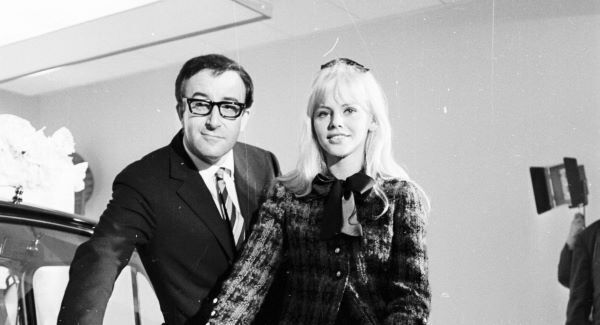
Sex is dangerous. One in 45 heart attacks occurs during it. Errol Flynn, Nelson Rockefeller and the late-19th century French president, Félix Faure, are all believed to have died while in flagrante. The actor Peter Sellers survived a heart attack while in bed with his second wife, Britt Ekland. Recovering in hospital, he supposedly told a friend: “I didn’t know whether I was coming or going.”
There can be no accounting for luck. “Risk and danger and chance are clashes of perspective,” says Michael Blastland, co-author of The Norm Chronicles: Stories and Numbers about Danger. “They don’t exist objectively. You can’t find them out there in the world, as some independently objective description of what’s going to happen to people.
“Probability is quite intuitive. Everybody says, ‘it will either happen or it won’t’. In a way, this is correct. We just don’t have the precise explanation of what’s going to happen to an individual. It’s because our behaviour is contingent.
“We don’t behave like ‘the average person’ behaves — whatever that is — when we cross the road. I can quote the average probabilities of being run over. You will say, ‘that’s the risk’, but it may not be your risk, because you may be drunk or you may be extraordinarily cautious.”
We can be certain about risk and danger in our lifestyles. We can measure the effect of lifestyle choices on our life expectancy. Some things are good for us; some are bad. Cocktail hour can be good, in moderation.
One alcoholic drink adds 30 minutes to the life expectancy of an adult; two strong alcoholic drinks take 30 minutes away. Watching two hours of TV a day saps 30 minutes from your life expectancy.
Lack of exercise and eating poorly add up day to day. They cut short a life. Blastland distinguishes between these cumulative damages and one-off risks, like skydiving, or running with the bulls at the Pamplona festival in Spain.
“There’s a funny thing about acute risk. If you go hang-gliding, you have a risk of dying that is about seven times the risk of going about your normal day’s activities. If you spend a normal day going to work, no frontline service in Afghanistan or wing-suit flying, the chance of death from violence or accidents is about one in a million. Marathon running is about seven times that risk. Parachuting is comparable.
“A lot of these adventure sports are about the same level. It’s almost as if people have a risk thermostat in their heads: ‘Oh well, I’ve had a boring week, so for a more exciting weekend I’m going to expose myself to seven times the usual level of risk.’ But as soon as you’ve taken that risk, once the exposure is over, your slate is wiped clean. You didn’t die. You’re fine. You can do it again. The risk the next time you do it is still seven times the normal rate.
“There might be additional factors. I can imagine, for example, that when Eddie Izzard ran 43 marathons in 51 days, he was putting huge strain on his body. There was a cumulative risk for him, but, by and large, if you drive your car recklessly today, your slate is wiped clean when you get in your car tomorrow.
“That’s not the same as the risks that derive from bad lifestyle. If you take the average effect of smoking four cigarettes, for example, it burns up about an hour of your remaining life expectancy. If you persist, you can add up all those hours to calculate what you’re going to lose at the end of your life,” Blastland says.
It is uncanny the pattern that numbers can put on life. It is easy to predict how many people will die by homicide in Ireland this year. It’ll be about 65. The numbers stay relatively the same each year. In The Norm Chronicles, the number of adult men who died from falling off ladders in England and Wales, in the five years to 2010, illustrates the point: 42, 54, 56, 53 and 47.
Remarkably, children under one are more likely to be murdered than any other age group. The dangers to a fragile child in its first year of life are roughly that of riding 30,000 miles on a motorbike. Life chances improve quickly past the one-year mark. Seven is the safest age.
Danger can lurk in places we don’t expect. “Looped blind chords on your windows turn out to be quite hazardous,” says Blastland. “Say you have a seven-year-old daughter and you’re worried about her going to school, even if you accompany her. You’re worried about the traffic, yet more kids around the age of two die strangled by looped blind chords on windows than seven-year-old pedestrians are run over and killed.”
Perception influences our understanding of risk. A person 1.5 miles from the atomic bomb dropped on Hiroshima in 1945, or 1.5 miles from the 1986 Chernobyl nuclear power station accident, exposed themselves to the same level of radiation as a person taking a CT scan. Asthma kills 20 times more people than tornadoes do.
“It does seem that people remember more vivid things as being more frequent,” says Blastland. “If it’s more likely to get on TV, you think that there’s more of it about. Tornadoes are exciting, dramatic, and they fix in our minds. That means they’re easy to recall.”
The Norm Chronicles: Stories and Numbers about Danger, by Michael Blastland and David Spiegelhalter, Profile Books, €13.99.















