Measuring obesity

OFTEN we have a visual image in our head of what constitutes overweight and obesity.

Measuring obesity

I once had a friend who defined it thus – “overweight is when you have a few extra pounds on board that hang over your waistband; obesity is when you’ve got a belly above and below your belt-line”.

This simple, if not altogether accurate appraisal, got me thinking about how we define overweight and obesity.

This is important, because if people don’t have a practical and straight-forward way of measuring their own weight status, how will they ever know if they have a problem? And needless to say, if they don’t recognise that they have a weight problem, they’ll be unlikely to do anything about it.

Traditionally, weight has been assessed by body mass index or BMI. This measure of weight for height is calculated by taking your weight in kilograms and dividing it by your height in metres squared. Ideally, it should fall between 18.5 and 24.9kg/m2. 25.0 to 29.9kg/m2 is categorised as overweight, whereas 30.0k/m2 or greater is classified as obese.

Even though the concept of BMI seems simple, many people have difficulty calculating it — for example, those who don’t know their measurements in kilograms or metres, and those who have difficulty with maths and numeracy. So while it’s used by clinicians and health scientists, the use of BMI for self- assessment by the general public is often less practical.

Apart from its relatively complex derivation, one of the other arguments against the use of BMI is that it doesn’t discriminate between those who are ‘fat’ and those who are of large or stocky build. The examples most commonly cited here include heavyweight boxers, rugby players and power athletes. Many of these individuals exceed a BMI of 30kg/m2 due to their large muscle mass, although they are clearly not obese by any commonsense interpretation of the word.

Taking this shortcoming into account, BMI needs to be qualified by body composition data that tell us whether the person is heavy because of an excessive fat mass (by far the most common reason) or because they’re very muscular (sadly, much less common).

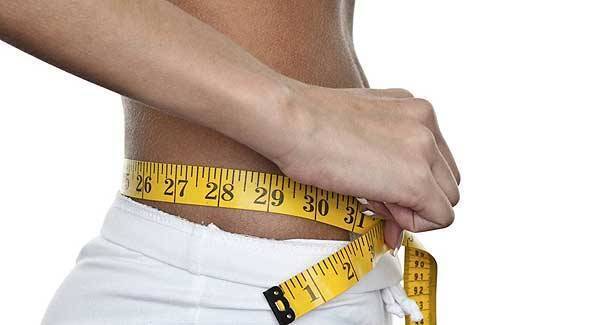
The use of waist circumference measurements has received greater attention in recent years. Here, health agencies now recommend that women should measure no more than 80cm (31.5 ins) and men no more than 94cm (roughly 37ins) around the waist (measured at the belly-button). Women with a waist measurement between 31.5 and 35 inches are said to be overweight while those with a measurement exceeding 35 inches are said to be “abdominally obese”. For men, the equivalent ranges are 37 to 40 inches and greater than 40 inches.

These thresholds are based on clinical risk. This is because it’s the weight we carry around our middle that’s most associated with high blood pressure and cholesterol, diabetes, heart disease and cancers. The drawback of using waist measurements in isolation is that they don’t adjust for overall body size. For example, a waist circumference of 38 inches has very different health implications for a man who’s 5’ 6” than for a man who’s 6’4”, yet no distinction is made between these two.

Then there’s the issue of where the fat around the middle is stored. Here, all the research indicates that the fat stored inside the abdomen (that is around our organs) is far more harmful to health than the subcutaneous fat or “flab” stored immediately below the skin. Indeed, there’s now evidence that slim people who preferentially store their fat inside the abdomen have greater risk than those with slightly higher waist measurements who store their fat on the surface of their abdomen.

If all of this sounds bewildering there is a revealing alternative. The measurement that I really like is a simple ratio between waist circumference and height. If your waist (measured in inches or cm) is greater than half your height (measured in the same units), this is a strong indicator that you’re carrying too much weight and that action is required.

nDr Daniel McCartney is a lecturer in human nutrition and dietetics at DIT.

x

More in this section

Cookie Policy Privacy Policy Brand Safety FAQ Help Contact Us Terms and Conditions

© Examiner Echo Group Limited













