When the past trickles away with 'The Memory of Water'
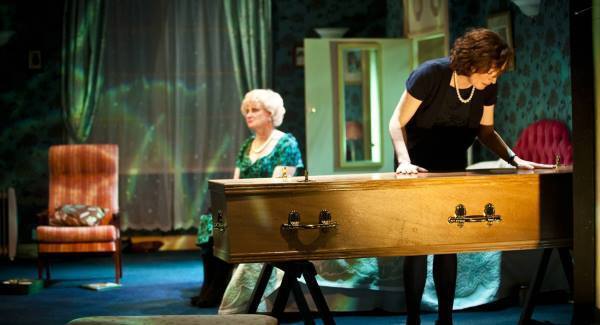
A reunion for a parent’s death is a much-used set-up, to generate friction and misunderstandings. In The Memory of Water, the charged atmosphere is mirrored by the bad weather, which prevents the women from venturing out.
Mary, a doctor, is the middle sister and interacts with her mother’s ghost. Teresa, the eldest sister, runs a health-food supplement store with her husband, Frank. She was responsible for the care of their mother, who had Alzheimer’s disease.
Teresa clashes with Mary, because of her job in alternative health. The youngest sister, Catherine, constantly tries to attract her siblings’ attention. She feels left out, and doesn’t know about a crucial aspect of Mary’s life.
Vi, the mother, is a pervading presence. For example, the sisters dispute what happened to a family cat, and one of them believes their mother killed it.
Described as a tragicomedy, the play “is very funny,” says Barnes. “There’s a lot of recognisability for people who’ve experienced the situation in the play. But it’s also quite profound, in the way it deals with memory. The characters remember things differently. What are you if you don’t have your memories?”
Memories suit the characters’ versions of themselves. “There’s nobody in the play who is more reliable than anyone else. But what’s interesting is one shared memory at the end of the play. The sisters talk of their ‘girls’ nights in’ with Vi, where they would drink lemonade and sing,” Barnes says.
Ultimately, the death of the mother brings the sisters closer, but not without twists and turns in the plot and the airing of resentments.
The humour is “very English and quite black. It’s very like the humour of Joe Orton. Accessing that type of humour, and underlining it, is something we’ve worked a lot on to be faithful to the play,” Barnes says.
The Cork dates for the play mark the end of a national tour. “We put it on about 18 months ago, at the Theatre Royal, and applied for funding to tour it, but were turned down. But, after our second application, we got funding and are happily touring it.”
Barnes, who resigned as artistic director of the Abbey Theatre in 2005, following controversy, says that working outside of Dublin “is much more difficult.” He says that plays in the provinces generally only run for seven or eight performances.
“That’s not very good value for tax payers’ money. Plays in Dublin can run for six to eight weeks. My proposition, to the Arts Council, is to resource me to do productions here in Waterford and tour them in the region, subsequently.
“I can then get 30 to 35 performances of a play. That, to me, represents good value. We can go to places like Carlow and Wexford and come back again that night. So, there are no bed nights or any of the costs associated with touring.”
Banres says that this touring model would also “decentralise a little bit of theatre activity out of Dublin.
“To some extent, that’s what we’re doing with The Memory of Water. We also did it with ‘The Beauty Queen of Leenane’ a few years ago.”

CONNECT WITH US TODAY



Be the first to know the latest news and updates

















