Misery outweighs merit in account of rural life
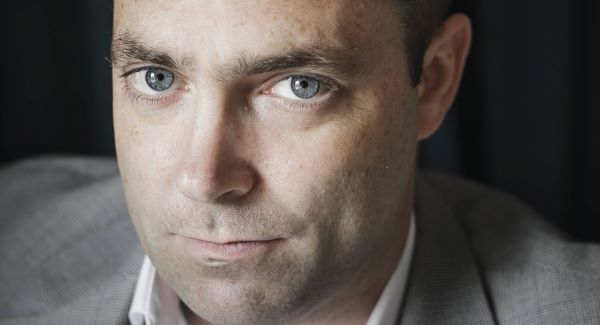
DÓNAL RYAN’S eagerly awaited second novel exemplifies the problem with much literary fiction in this country: it has ceased to be enjoyable. This is not to say that the work is artistically inadequate, indeed the opposite is true, often to a literal fault, but instead the conflation of merit with misery has been to the genre’s detriment. Too many Irish novelists seem to have only partially absorbed the lessons of their predecessors, recreating the aesthetic values of, say, McGahern’s prose, but not his measured approach to narrative or his careful respect for the reader’s credulity.
In the case of The Thing About December, this ensures that a very beautiful, very carefully wrought master-class in literary writing, sure to be highly praised by many, is also a novel which, as a reading experience, veers from the unpleasant to the unintentionally ridiculous.
Set about 10 years ago, it opens with its protagonist, a disaffected young man named Johnsey, contemplating suicide but relenting because what “if he did it arseways” and his tormentors mock him further? It is probably the most upbeat moment in a book depicting rural Ireland as a place where “loneliness covers the earth like a blanket” and “sadness plus sadness equals more sadness”.
Johnsey is defined by his misfortunes. His much missed father is dead and his mother, reduced to “only lonesome thoughts and muttered prayers”, soon follows. The farm is let to swaggering rat Dermot McDermott while the “dole boys” mercilessly bully the friendless Johnsey, eventually beating him so badly he is left with broken bones and damaged eyesight. Ryan piles on more and more — what’s that, somebody has set Johnsey’s jumper on fire? — until it is difficult to read the endless embarrassments and mortifications as anything but bad comedy, a freakish, unwitting hybrid of Frank McCourt with Pat Shortt; a parody of Irish misery fiction.
Except that it is not. There is a self-conscious seriousness, an Artistic Intent (capitalised thusly), woven through the fabric of this novel. Technique and precision are apparent in the way Ryan’s long sentences impart a rhythmic quality to Johnsey’s wretchedness, hammering home his misfortune over and over again: “Once, after Johnsey had paid for his burger and chips and was walking out the door, his mouth watering at the treat ahead of him, a lad kicked his bag from his hands and it flew through the air and landed in the middle of the street and his chips were everywhere, all over the ground, and a dog ran straight over and ate his burger in one big gulp”.
One must read almost halfway through before good fortune of any kind, in this case the valuable re-zoning of the family farm, smiles on Johnsey (at the time convalescing in hospital) and even then “nothing only misery” comes of it. The greed engendered by the planning decision is but an excuse for Ryan to spread his misfortunes more widely in the second half of the book, ladling on amputations and suicides and fatal car crashes to those around Johnsey as if they were going out of fashion. There’s even an Abbeylara-style siege which, in the story’s only real pacing issue, comes out of nowhere and disappears again just as quickly.
Needless to say the novel’s relentless gloom quickly becomes unbearable, and this despite Ryan’s striking prose, a kind of heightened vernacular which the author obviously relishes. His meticulous wordsmithery is the book’s one undeniable selling point but, even so, Ryan is not necessarily doing anything new with language. His writing is accomplished, absolutely, but in a way which readers will find familiar. Which, of course, is the other problem with Irish literary fiction these days: it is too often wary of formal or imaginative experiment.
To his credit, the author’s debut novel (last year’s The Spinning Heart) comprised polyphonic soliloquies which interlocked in a way that was both interesting and played to his strength at capturing the cadences of rural speech. Here Ryan sets that approach aside and tells the story from Johnsey’s point of view. The organising principle is instead calendrical, with each chapter corresponding to a month, and more than some other similarly structured books (for instance Black Swan Green by David Mitchell), The Thing About December functions well as a sustained narrative rather than as a loosely connected collection of stories.
The book might thus have succeeded if not for Ryan’s joyless thematic insistence that “everything eventually turns rotten and dies”. He places his protagonist at the centre of a black hole of doubt and self-hatred, and, while it is true that great writing ought to challenge us and make us feel uncomfortable, in this case the endless despair robs Johnsey of any genuine agency. Neither does Ryan fully resolve the ambiguities he raises about Johnsey’s intellect. Does the character have a cognitive impairment or is he an extreme example of someone who has never had to look after themselves? The former would lend poignancy but the latter is more readily supported by the text.
Johnsey has “never really spoken to a girl”, never owned a phone, and, having been overprotected by a doting father, never learnt about money or legal agreements. For all intents and purposes he is a refugee from 1960s fiction parachuted into 21st century Tipperary. Possibly there is some neat, allegorical way to read the character; perhaps a clever embodiment of modern fiction infantilised and made ineffectual by the overwhelming legacy of previous generations? Or maybe Johnsey’s calamities are meant to foreshadow the national distresses soon to follow the Celtic Tiger era? Either would give heft to this slight novel but, in the end, deeper meaning is a weight The Thing About December is not really designed to bear. It is all craft and no content. In that way the book betrays its origins as a work composed before The Spinning Heart, which attracted media attention when, after rejections by 47 publishers, it was plucked from the slush pile at Lilliput and went on to win Newcomer of the Year at the Irish Book Awards and, more recently, be long-listed for the Booker Prize alongside the likes of Colum McCann and Colm Tóibín.
BOTH Ryan’s novels are of their time and so underpinned by the same palpable anger at property developer types “making pure-solid fools of the whole country” during the Tiger years. Nonetheless, where The Spinning Heart lensed this through the kaleidoscopic interconnectivity of Irish village life, The Thing About December is a hollow itemisation of calamity which the reader eventually just wants to stop. Was it a mistake for Ryan to have published it? Quite possibly. Certainly it was a smart move to have released The Spinning Heart first and so gamble that this volume’s detractors might see it as a sophomore slump and not, as they should, an illustration of why aesthetic virtue is not reason enough to spend money on a novel.
Because, in the end, the primacy of aesthetics is what it all comes down to. Ryan’s prose style has undeniable literary merit but this novel irks rather than evokes. The Thing About December is wonderfully written but excruciating to read; it is a frustrating and, on occasion, even maddening book. Ryan never ceases to make things worse for his protagonist yet never provides the reader with any real reason to root for Johnsey. The result is a novel which broke this reviewer’s heart in a way very different from that which the author intended.
Dr Val Nolan teaches literature and creative writing at NUI Galway. He has published in journals such as Review of Contemporary Fiction and Irish Studies Review.















